Car loans explained: tenure, prepayment and getting the RC cleared
A longer tenure lowers the EMI but raises what you pay in total
A car loan pays for a car now, and you repay it in monthly instalments. Until you finish, the car itself is the lender’s security: it is pledged to them and their name sits on the car’s papers. That makes it cheaper than an unsecured loan, but it comes with three things worth understanding before you sign.
1. Tenure decides the total cost. A longer loan spreads the money over more months, so each EMI is smaller. But you pay interest for longer, so the total goes up.
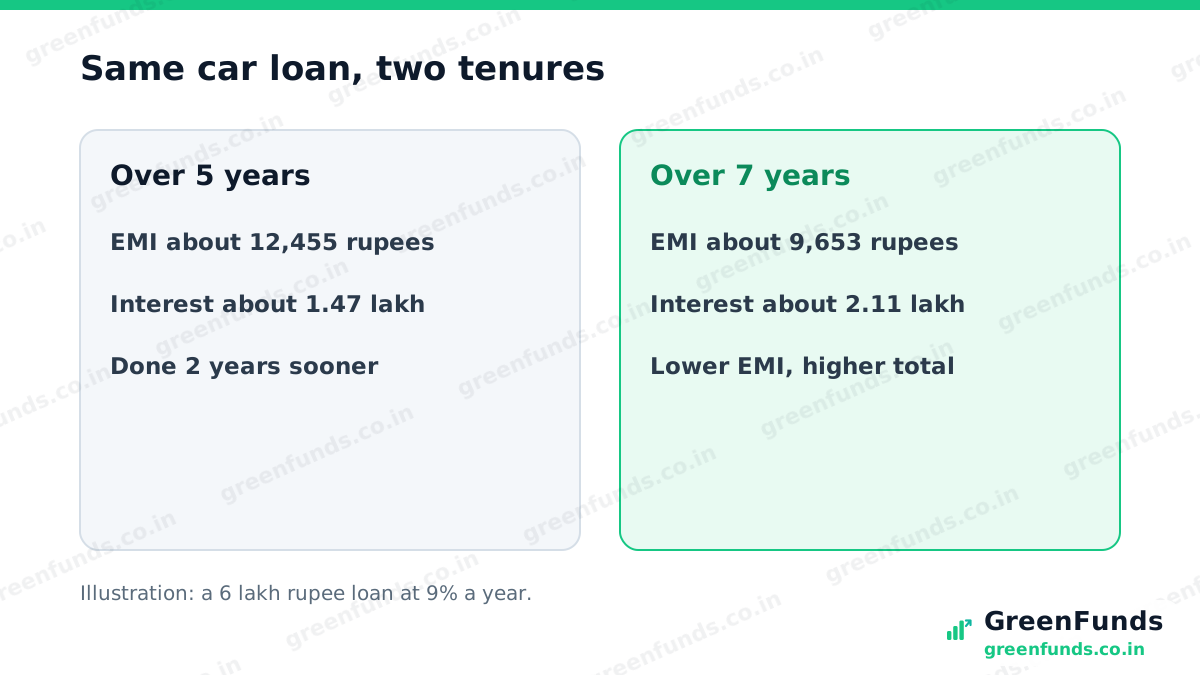
In this illustration, stretching from five to seven years saves about 2,800 rupees a month but costs around 64,000 rupees more in interest. The low EMI looks friendly; the total is what you actually pay.
2. Fixed or floating decides whether prepaying is free. RBI’s 2025 directions say lenders cannot charge you for prepaying a floating-rate loan taken as an individual for non-business use, in part or in full, with no lock-in. That covers loans sanctioned or renewed from 1 January 2026. Many car loans are fixed-rate, though, and then the lender’s own policy applies. Either way, any foreclosure charge must be shown in your Key Fact Statement, and a charge not disclosed there cannot be levied.
Did you know? Since October 2024, every new retail loan must come with a Key Fact Statement that shows the APR, the full yearly cost including the processing fee and other charges, per the RBI. Comparing two car loans on APR, not just the interest rate, shows which is really cheaper. And under the 2025 RBI directions, if the lender is the one asking you to prepay, it cannot charge you at all.
3. The step people forget: clear the RC. While the loan runs, the lender’s interest is recorded on the car’s registration certificate (RC) as hypothecation. Paying the last EMI does not remove it. You have to ask.
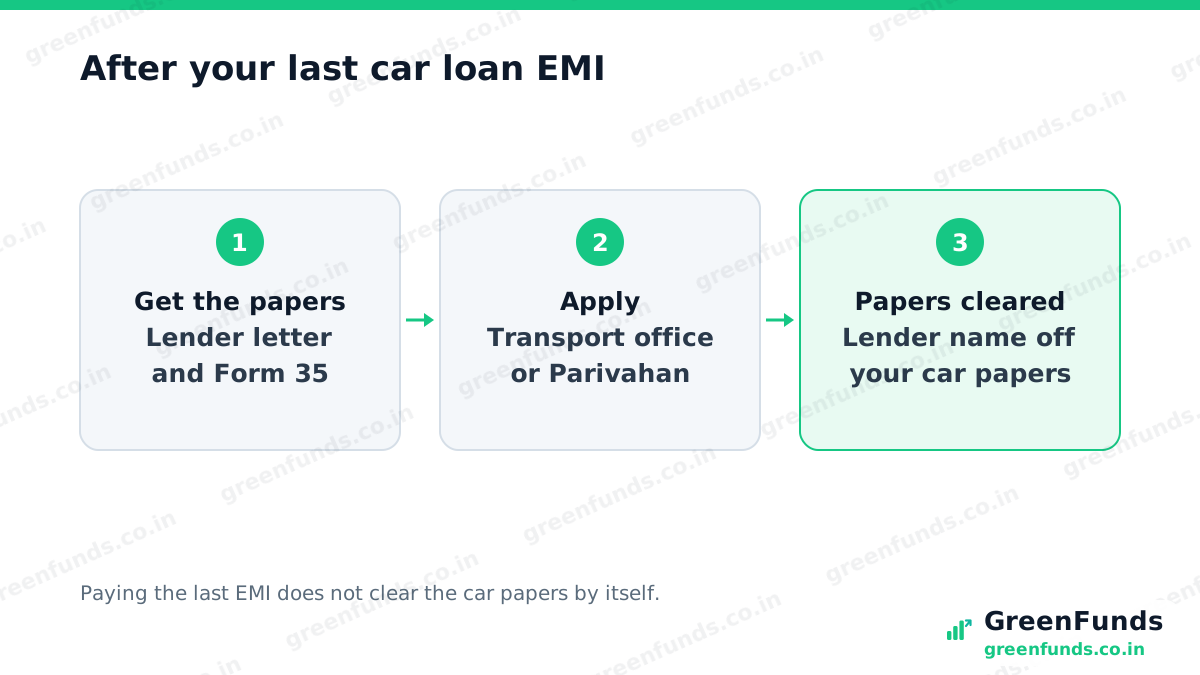
Skip this and the lender’s name stays on your RC, which can hold up a sale years later. Requirements vary a little by state, so check with your regional transport office (RTO).
The takeaway. Choose the shortest tenure you can comfortably afford, compare loans on APR, check whether the rate is fixed or floating before you plan to prepay, and clear the RC as soon as the loan ends.
More to read: should you prepay a loan, home loan basics, and how EMIs really work.
Questions people ask
Is a longer car loan tenure better?
It lowers the EMI, but you pay interest for more months, so the total cost goes up. In our illustration, a 6 lakh rupee loan at 9% costs about 1.47 lakh in interest over five years and about 2.11 lakh over seven. Pick the shortest tenure whose EMI you can comfortably carry.
Can I prepay my car loan without a charge?
It depends on the rate. Under RBI directions for loans sanctioned or renewed from 1 January 2026, lenders cannot charge for prepaying a floating-rate loan taken by an individual for non-business use, in part or in full. Many car loans are fixed-rate, and then the lender's own policy applies, which must be shown in your Key Fact Statement.
What is hypothecation on a car's RC?
Until the loan is repaid, the car is pledged to the lender, and the lender's name is recorded on the registration certificate (RC). After the last EMI, you need the lender's no-objection letter and Form 35, then apply to the RTO, often online on the Parivahan portal, to remove it. Until you do, the lender's name stays on your RC, which can complicate selling the car.
Does a car loan affect my credit score?
Yes. Paying every EMI on time builds your credit history, while a missed EMI is reported to credit bureaus and pulls your score down.
Source: RBI (Pre-payment Charges on Loans) Directions, 2025 (2 July 2025, for loans sanctioned or renewed from 1 January 2026); RBI Key Facts Statement circular, 15 April 2024; Parivahan / RTO process for terminating hypothecation (Form 35). Check the current rules with your lender and RTO.
Found this useful? You can buy us a coffee. It keeps GreenFunds free.Flag a possible issue
Was this helpful?
Thanks for the signal.
Comments
Share your experience or a question. Be kind, stay on topic. This is reader discussion, not financial advice.
No comments yet. Be the first to share.