Should you prepay a loan? When it pays, and when it does not
Clear high-interest debt early; weigh it against saving

Prepaying a loan simply means paying off part or all of it ahead of schedule, to save on the interest you would have paid. It feels good, and often it is the right move, but not always. The answer depends on the loan’s interest rate, where you are in its life, and what else you could do with the money.
Clear the expensive debt first. The clearest case for prepaying is a high-interest loan, like a personal loan or a carried credit card balance. Paying that off is a guaranteed, high return, because you stop paying that steep interest. A cheap loan, like a home loan, is a different calculation.
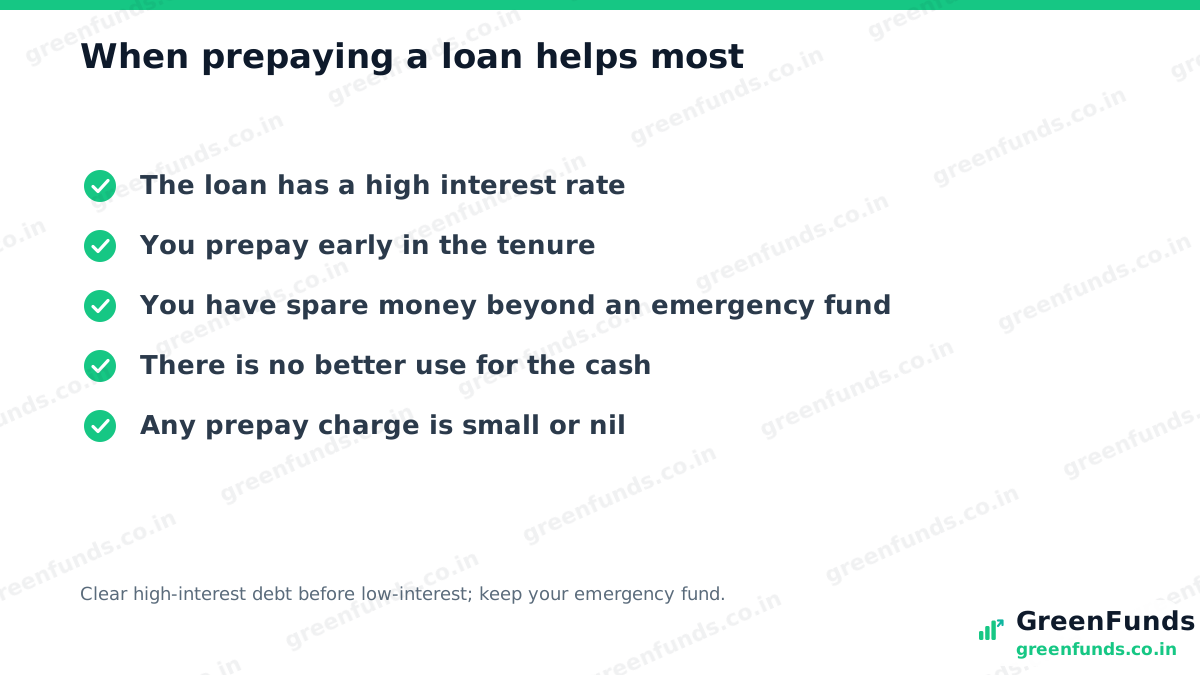
Earlier beats later. Because interest is charged on the balance you still owe, and that balance is biggest at the start, prepaying early in the tenure saves far more interest than prepaying near the end. A part-prepayment in the first years can meaningfully shorten the loan or cut the EMI.
Prepay, or invest? For a low-interest loan, weigh the loan’s rate against what you could reasonably earn, after tax, by investing instead. If the loan costs more than your investment would likely earn, prepaying is the safer win, because it is a guaranteed saving. If the loan is cheap and the investment could earn more, investing may be better. Either way, keep your emergency fund untouched.
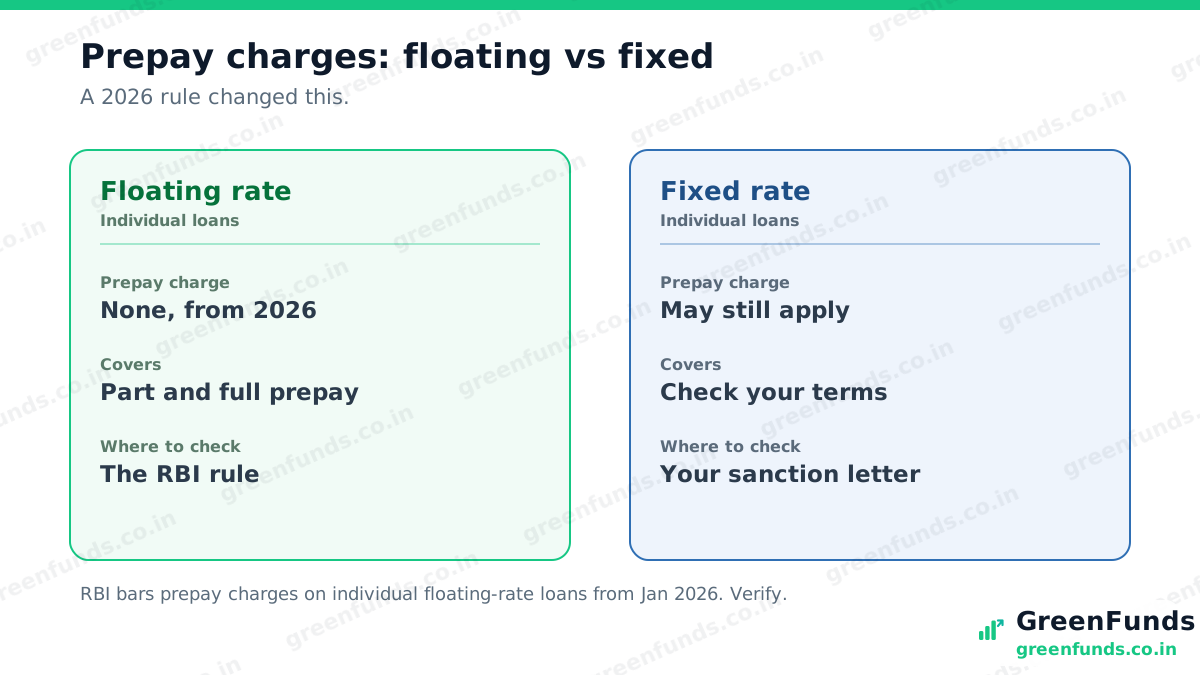
Did you know? Under RBI rules, individual borrowers with floating-rate loans face no prepayment or foreclosure charges, for both part and full prepayment, from 1 January 2026. That makes prepaying such a loan penalty-free. Fixed-rate loans may still charge, so check your loan’s rate type and sanction letter.
The order that works. Build a small emergency fund first. Then clear high-interest debt. Then, if you still have spare money, decide between prepaying a cheap loan and investing, based on the rates. Never empty your safety net to prepay.
The takeaway. Prepaying pays most for high-interest loans and early in the tenure, and floating-rate individual loans can now be prepaid without a charge. For cheap loans, compare prepaying against investing, and always protect your emergency fund first.
More to read: home loan basics, good debt versus bad debt, and how to get out of credit card debt.
Questions people ask
Is it a good idea to prepay a loan?
Often, but not always. Prepaying a high-interest loan, like a personal loan or credit card balance, almost always saves you money, because you stop paying that high interest. Prepaying a low-interest loan is less clear-cut, because the money might earn more if invested. The general rule: clear high-interest debt first, keep your emergency fund intact, and only then consider prepaying cheaper loans.
Does prepaying early save more than prepaying later?
Yes. Because interest is charged on the outstanding balance, and that balance is largest early in the loan, prepaying in the early years cuts far more total interest than prepaying near the end. A part-prepayment made early can shorten your loan or lower your EMI meaningfully.
Should I prepay my loan or invest the money?
Compare the loan's interest rate with the return you could reasonably earn after tax. If the loan rate is higher than what your investment would likely earn, prepaying usually wins, because it is a guaranteed saving. If the loan is cheap and you could earn more by investing, investing may win. Always keep your emergency fund before doing either.
Are there charges for prepaying a loan?
It depends on the loan. Under RBI rules, individual borrowers with floating-rate loans face no prepayment or foreclosure charges, for both part and full prepayment, from 1 January 2026. Fixed-rate loans may still carry a charge, which must be disclosed in your sanction letter. Check your loan's rate type and terms before prepaying.
Source: General debt principles. RBI directions bar prepayment and foreclosure charges on individual floating-rate loans (from 1 January 2026, covering part and full prepayment); fixed-rate loans may still charge. Confirm with your sanction letter and the RBI directive.
Flag a possible issue
Was this helpful?
Thanks for the signal.
Comments
Share your experience or a question. Be kind, stay on topic. This is reader discussion, not financial advice.
No comments yet. Be the first to share.