Personal loan vs credit card: which costs less to borrow?
Both let you borrow, but one is far costlier if you carry a balance
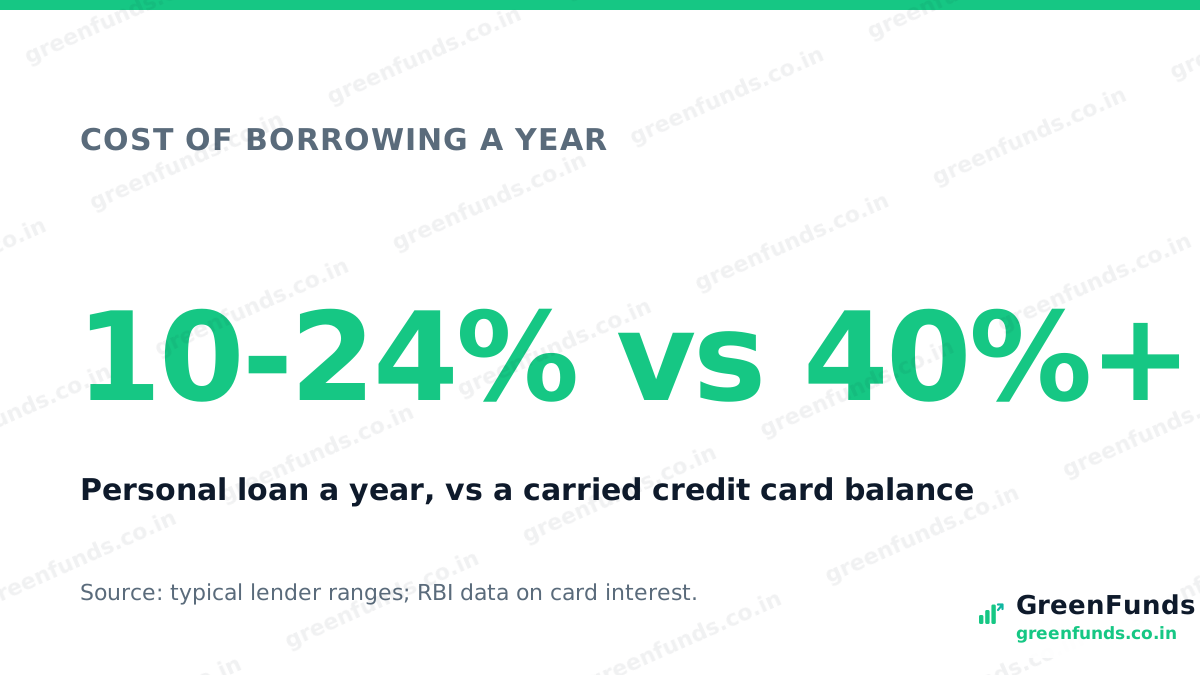
Both a personal loan and a credit card let you spend money you do not have in hand yet. That is where the similarity ends. They are built differently, and the cost of getting it wrong is very different, so it helps to know which tool fits which situation.
How each one works. A personal loan gives you a lump sum up front. You repay it in fixed monthly instalments over a set period, at a fixed interest rate, and when it is done, it is done. A credit card is a revolving line: you spend up to a limit, get a bill each month, and you choose how much to pay. Pay the full bill by the due date and you owe no interest at all. Pay less, and the rest carries forward at a high rate.
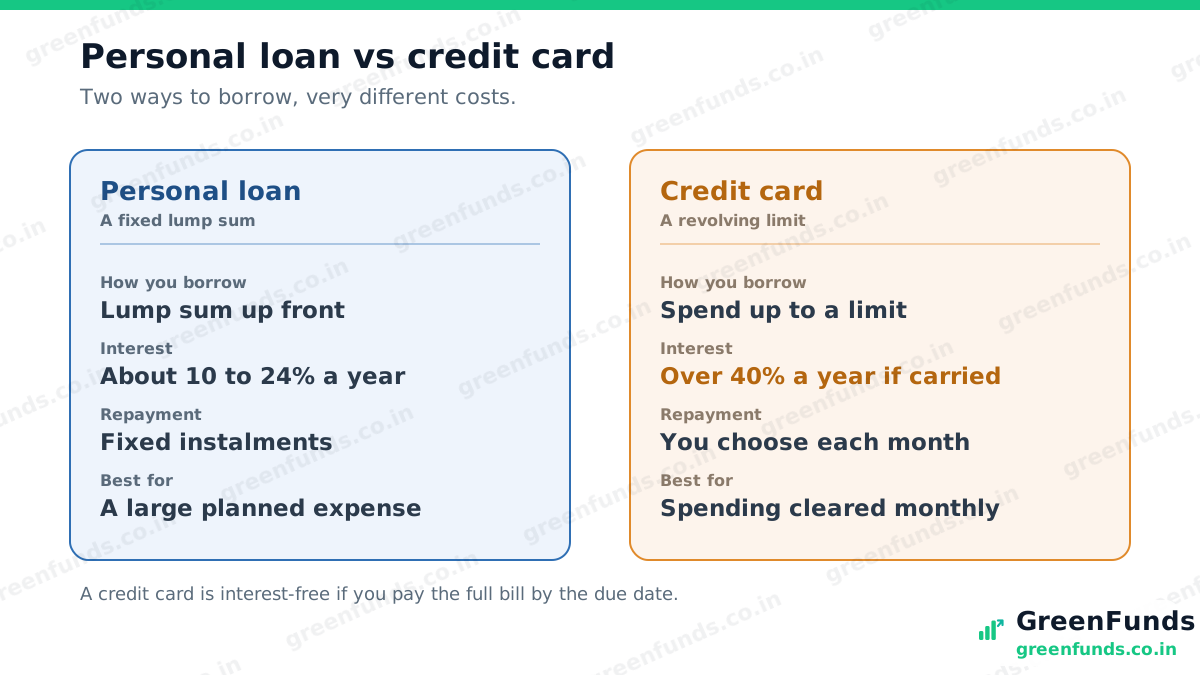
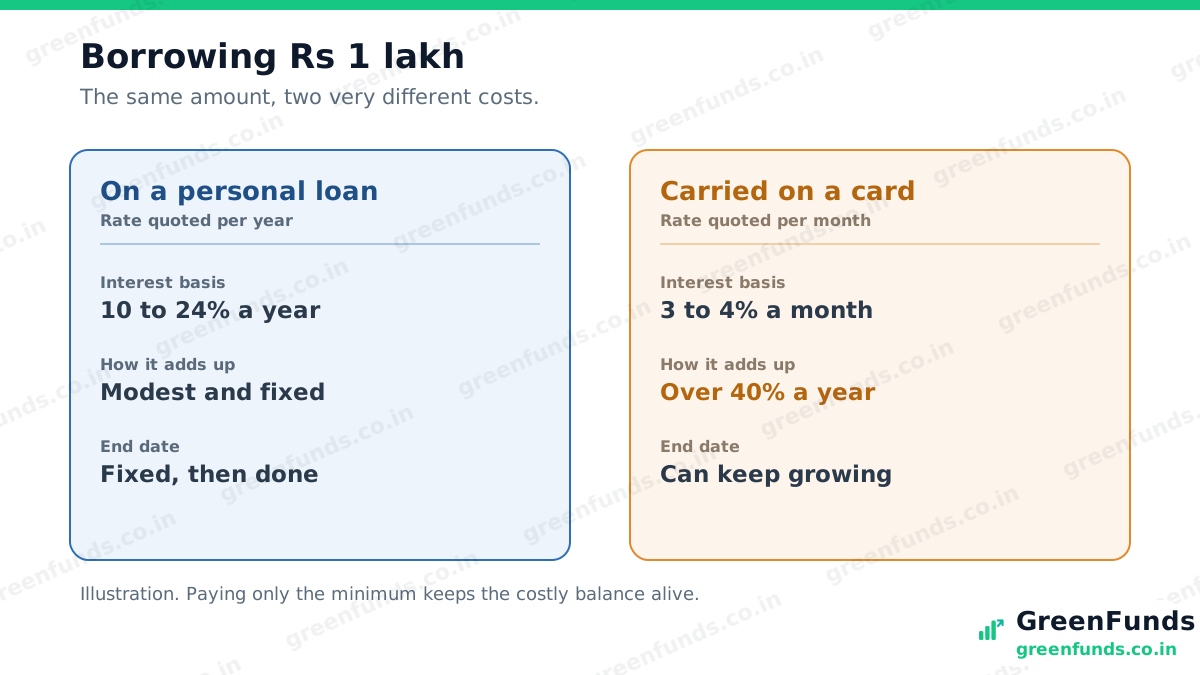
The cost gap is bigger than people expect. A personal loan in India typically charges somewhere around 10 to 24% a year, depending mainly on your credit score. Interest on an unpaid credit card balance is usually charged per month, often 3 to 4% of the balance, which adds up to more than 40% a year. So the same borrowed rupee can cost roughly twice as much on a revolving card balance as on a personal loan.
Did you know? Credit card interest is quoted per month, which hides how large it is. A rate of 3.5% a month does not mean 3.5% a year, it means over 40% a year once it compounds. That is why carrying a card balance is one of the most expensive ways to borrow, and why clearing the full bill matters so much.
So which should you use? For a cost you can clear in one billing cycle, a credit card is often the cheapest option, because that window is interest-free and may earn rewards. For a larger, planned, one-time expense you will repay over months, a personal loan is usually cheaper and more predictable than letting a card balance revolve. The worst of both worlds is treating a credit card like a loan and paying only the minimum.
One middle option. If a big bill has already landed on your card, converting it to an EMI is cheaper than letting it revolve at the full card rate, but it still carries interest, often close to a personal loan’s, plus possible fees. If the amount is large, compare a plain personal loan against the EMI offer before you choose.
The takeaway. A credit card paid in full is nearly free; a credit card carried forward is one of the costliest ways to borrow. A personal loan sits in between, with a fixed, known cost. Match the tool to the job, and never let a card balance revolve if a cheaper option exists.
More in this cluster: the credit card minimum-due trap, how to get out of credit card debt, and the principle underneath, good debt versus bad debt.
Questions people ask
Is a personal loan cheaper than a credit card?
Usually yes, if you would otherwise carry a credit card balance. A personal loan in India typically charges around 10 to 24% a year, while interest on an unpaid credit card balance is often 3 to 4% a month, which works out to over 40% a year. But a credit card is free if you pay the full bill by the due date, so for a cost you can clear in one cycle, the card can be cheaper.
When should I use a credit card instead of a personal loan?
For everyday spending you can pay off in full by the due date, a credit card is ideal: it is interest-free in that window and may give rewards. It also suits small, short-term needs. The danger is carrying the balance forward, where the interest is very high. A personal loan suits a larger, planned, one-time expense you will repay over months or years.
What is the interest rate on a personal loan in India?
It typically ranges from about 10 to 24% a year, set mainly by your credit score and income. A higher credit score usually means a lower rate. Rates, processing fees and foreclosure charges vary by lender, so compare the full cost, not just the headline rate, before borrowing.
Is converting a credit card bill to EMI a good idea?
It is cheaper than letting the balance revolve at the full card interest, but it is not free. EMI conversion usually carries its own interest, often in the range of a personal loan, plus possible processing fees and taxes. If the amount is large, compare a plain personal loan against the EMI offer before choosing.
Source: Typical lender ranges: personal loans roughly 10 to 24% a year; credit card interest on a carried balance often 3 to 4% a month, which is over 40% a year. Rates vary by lender and credit score, so check current terms.
Flag a possible issue
Was this helpful?
Thanks for the signal.
Comments
Share your experience or a question. Be kind, stay on topic. This is reader discussion, not financial advice.
No comments yet. Be the first to share.