How to get out of credit card debt, step by step
Stop the interest, then clear the balance
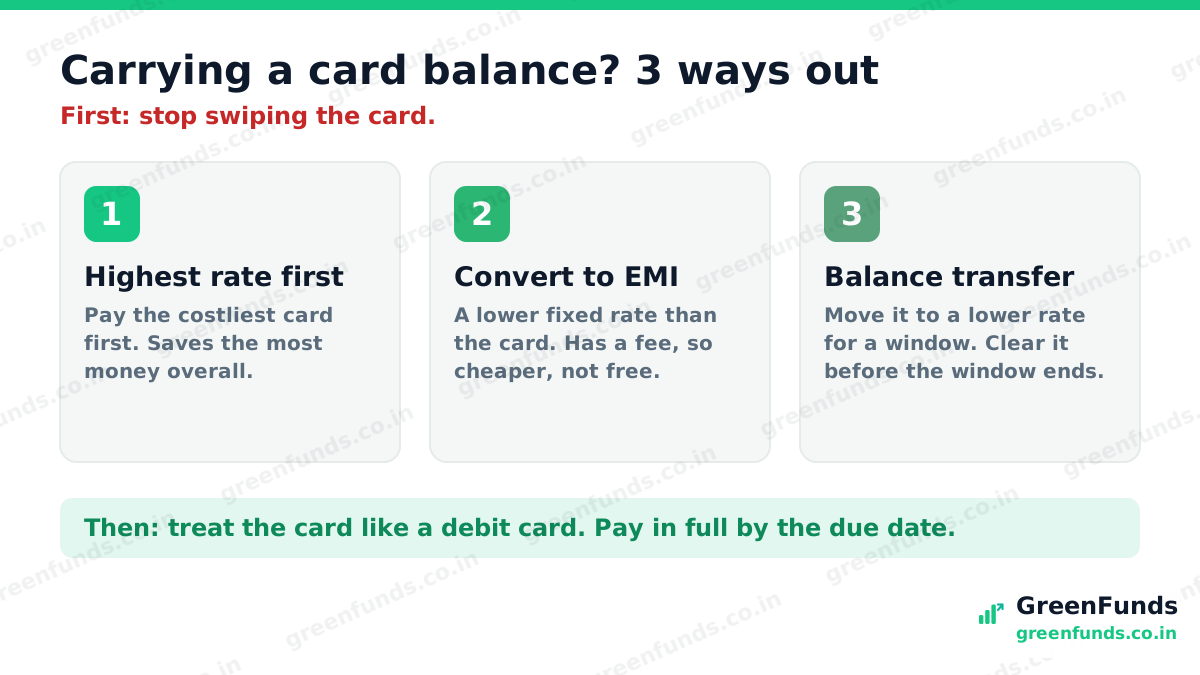
Credit card debt is simply the part of your bill you did not pay off, which rolls over to next month and gets charged very high interest. Getting out of it comes down to two moves: stop adding to it, then clear what is left in the cheapest order. Here is the plan.
First, stop the bleeding. The moment you carry a balance, your card charges interest at about 3% to 3.5% a month, roughly 36% to 42% a year, and new purchases start getting charged from day one. So rule one: stop swiping that card until it is clear. You cannot bail out a boat while water is still coming in.
Know exactly what you owe. List every card and loan, the balance on each, and its interest rate. The highest rate is your most expensive debt, and usually your first target.
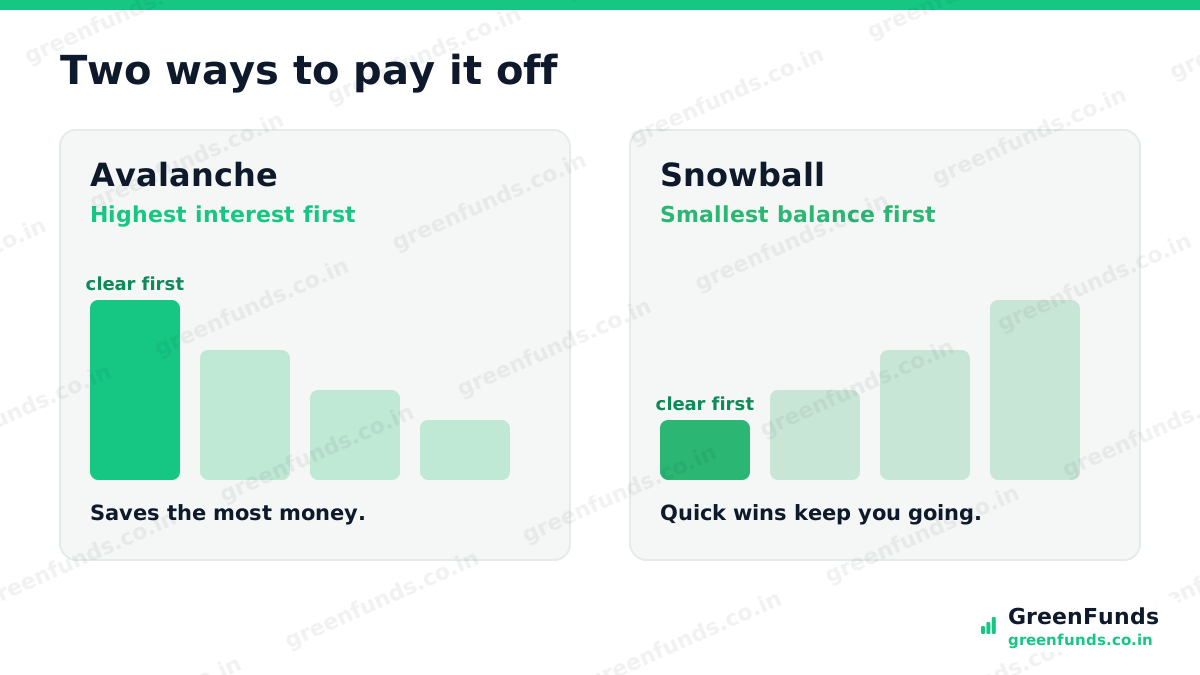
Pick a payoff method. Two work well. Pick the one you will actually stick to:
- Avalanche: highest rate first. Pay the minimum on everything, then put every spare rupee on the highest-interest card. This clears your costliest debt first, so it saves you the most money.
- Snowball: smallest balance first. Clear the smallest balance first for a quick win, then roll that payment into the next debt. It costs a little more in interest, but the early wins keep you going.
A rupee example. Say one card charges 3.5% a month and another 2.5%. On a ₹50,000 balance, the 3.5% card piles on about ₹1,750 of interest in a single month. Clearing that one first saves more, because it grows fastest. Every month you delay is money gone. Illustration only; your own rates will differ.
Cut the interest rate itself. Three tools can bring the rate down while you repay:
- Convert the balance to an EMI. Most banks turn your outstanding into fixed monthly EMIs at a lower rate than the revolving rate. Expect interest plus a processing fee, so it is cheaper than carrying the balance, not free.
- Balance transfer. Move the balance to another card or lender at a lower or promotional rate for a set window. There is usually a fee, and the low rate ends after the window, so only use it if you can clear most of it in time.
- A personal loan at a much lower rate can clear the card in one go. It only helps if you then stop using the card.
Protect your score while you do it. Paying on time and bringing your credit utilisation down lift your credit score over the months. Keep paying at least the minimum on every card so you never add a late fee on top of the interest.
The habit that keeps you out. Once the balance is clear, treat the card like a debit card: spend only what you can pay in full by the due date. That is the whole escape from the minimum due trap.
Need the basics first? Start with good debt vs bad debt.
Questions people ask
What is the fastest way to pay off credit card debt?
Stop using the card, then throw every spare rupee at your highest-interest balance while paying the minimum on the rest. Clearing the costliest debt first, the avalanche method, saves you the most money overall.
Should I pay the highest interest or the smallest balance first?
Highest interest first (avalanche) saves the most money. Smallest balance first (snowball) gives quick wins that keep you motivated. Both work; pick the one you will actually stick to.
Can I convert my credit card bill to EMI?
Most banks let you convert an outstanding balance into fixed monthly EMIs at a lower rate than the revolving rate. There is usually interest and a processing fee, so it is cheaper than carrying the balance, not free. Ask your bank for the terms.
What is a balance transfer?
Moving your card balance to another card or lender that offers a lower or promotional rate for a set window. There is usually a fee, and the low rate ends after the window, so it only helps if you clear most of it before then.
Will paying off my card help my credit score?
Yes, over time. Paying on time and bringing your credit utilisation down both lift your credit score across the months. Missing payments does the opposite.
Should I take a personal loan to clear my credit card?
A personal loan at a much lower rate can clear the card in one go and cut your interest. It only helps if you stop running the card up again, otherwise you end up with both debts.
Source: Typical Indian credit card terms and RBI data. Methods are general; check your card and lender for current rates and fees.
Flag a possible issue
Was this helpful?
Thanks for the signal.
Comments
Share your experience or a question. Be kind, stay on topic. This is reader discussion, not financial advice.
No comments yet. Be the first to share.