Credit card minimum due: the trap in your bill
The minimum due is not your full bill
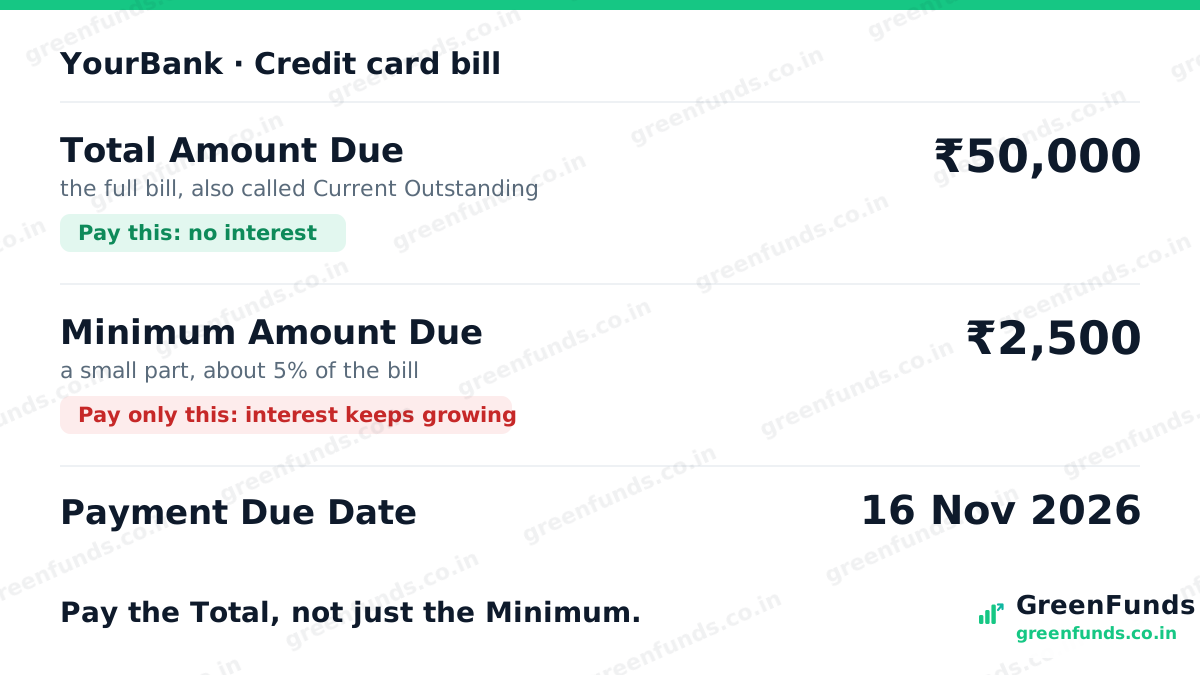
What it is. The minimum amount due is the smallest sum you can pay by the due date to keep your card active and skip the late fee. It is usually around 5% of what you owe, though it varies by card, so check your statement. This is a credit card thing only. A debit card takes money straight from your bank account, so it has no bill, no minimum due, and no interest.
The three numbers on your bill, decoded. Your statement shows a few amounts with similar names, and they are easy to confuse:
- Total Amount Due, sometimes printed as Current Outstanding: your full bill. Pay this by the due date and you owe no interest.
- Minimum Amount Due: a small slice of that, usually around 5%. Paying only this keeps the card active but leaves the rest to pile up interest.
- Payment Due Date: the last day to pay without a late fee.
The names look alike, so read carefully. The one that keeps you interest-free is the Total Amount Due, not the Minimum.
Why it feels safe, and is not. Paying the minimum stops the late fee, so it looks like you have cleared your bill. You have not. The rest of your balance stays, and interest keeps running on it at about 3.5% a month, which is roughly 42% a year.
A rupee example. Say you owe ₹50,000 and pay only the minimum, about ₹2,500. The other ₹47,500 is charged interest at about 3.5% a month, which is close to ₹1,660 in that one month alone. Your balance barely moves. Keep doing this and it can take years to clear, and the interest can add up to more than you first spent. The exact figures depend on your card, so treat this as an illustration, not a promise.
The part most people miss. The moment you do not pay the full bill, you also lose the interest-free period on new purchases. So every new swipe starts getting charged interest from day one, not after the usual grace period. That is how a small unpaid balance quietly turns into a growing one.
What about the late fee? Miss the minimum by the due date and the bank adds a late fee on top of the interest. It is slab-based on how much you owe: nil on tiny dues, rising to about ₹1,300 on dues above ₹50,000, plus 18% GST. For example, SBI’s published ladder runs from nil on small dues up to about ₹1,300, and HDFC and ICICI use similar ladders that also top out near ₹1,300. Banks revise these often, so check your bank’s schedule of charges, the Most Important Terms and Conditions (MITC), for the current figure. The late fee is a one-time charge; the interest that keeps running is usually the bigger cost.
What actually avoids it. The only way to pay no interest is to clear the Total Amount Due, the full bill, by the due date. If you cannot pay in full this month, pay as much above the minimum as you can, and stop using the card until it is clear.
Want the basics first? Start on the learn page.
This is general education, not financial advice. Rates and the minimum-due formula vary by card and can change, so always check your card’s statement and terms.
Questions people ask
What is the minimum amount due on a credit card?
It is the smallest amount you can pay by the due date to keep the card active and avoid a late fee. It is usually around 5% of what you owe, but it varies by card. Paying only this does not clear your bill, and interest keeps running on the rest.
Does paying the minimum due stop interest?
No. It only avoids the late fee. The unpaid balance still attracts interest at about 3.5% a month, and you also lose the interest-free period on new purchases.
How much is credit card interest in India?
Usually about 3 to 3.5% a month, which is roughly 36 to 42% a year. The exact rate is on your card's statement and terms, so check there.
How do I avoid credit card interest?
Pay the Total Amount Due, the full bill, by the due date every month. That is the only way to pay zero interest.
What is the difference between Total Amount Due and Minimum Amount Due?
Total Amount Due, sometimes shown as Current Outstanding, is your full bill. Pay it to owe no interest. Minimum Amount Due is a small slice, usually about 5%. Paying only the minimum avoids the late fee but not the interest.
How much is the credit card late fee in India?
It is slab-based on how much you owe, from nil on small dues up to around 1,300 rupees on dues above 50,000 rupees, plus 18% GST. For example, SBI's ladder tops out near 1,300 rupees, and HDFC and ICICI are similar. Banks revise these, so check your bank's schedule of charges.
Source: Typical Indian credit card terms and RBI data. Check your card's statement.
Ready to try your first ₹100? Open a free account.
Compare beginner friendly investing apps and open an account in a few minutes.
Compare apps →