85% of young Indians say the cost of living is their biggest money hurdle
Pay yourself first
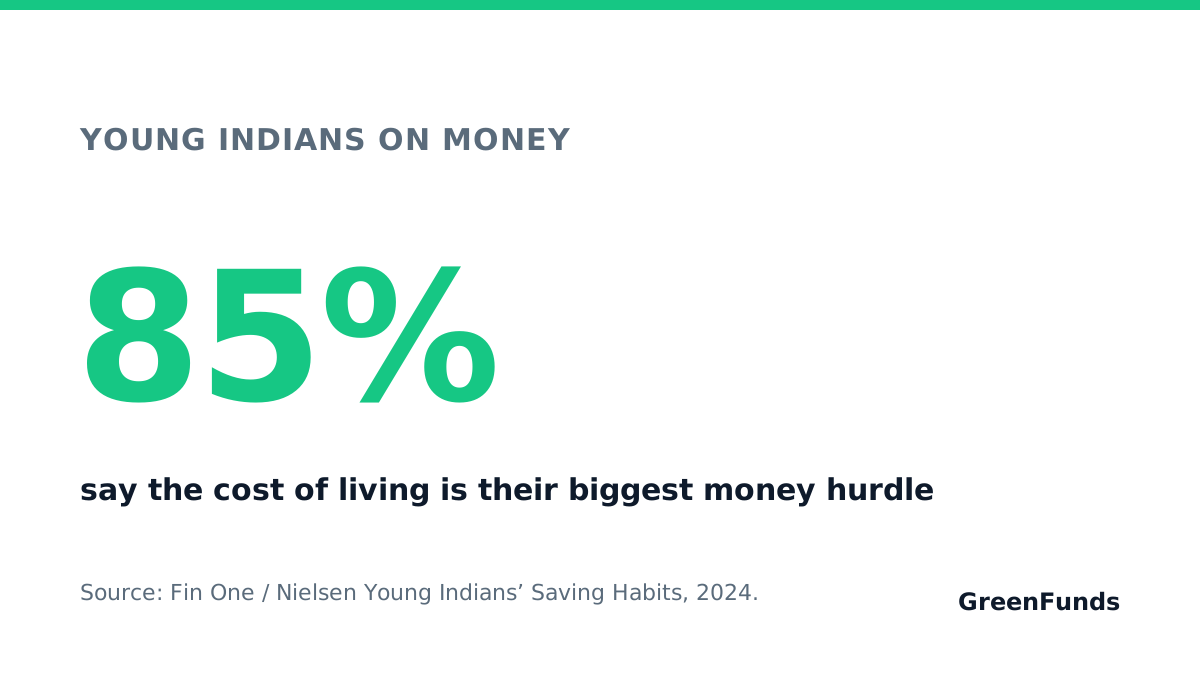
What happened. A survey of young Indians found that 85% named the high cost of living, food, rent, and travel, as the single biggest thing stopping them from saving. The same survey found most still call themselves savers and want to do better.
Why it matters to you. When money feels tight, saving becomes the thing you do with whatever is left. Usually nothing is left.
The concept. Pay yourself first. Move your saving out on the day your salary lands, before you spend, not after.
A rupee example. Say you take home ₹30,000. Instead of hoping to save at month end, set an automatic transfer of ₹3,000 to a separate account or an SIP on salary day. You then live on ₹27,000. It feels the same, but the saving actually happens, every month, without willpower.
Start with an amount you will not miss, even ₹500, and raise it a little each time your income grows. The habit matters more than the amount.
What the same survey found alongside it. 93 percent of those young Indians described themselves as consistent savers, with most setting aside 20 to 30 percent of monthly income. So the intention is not the problem. The sequencing is.
Why month-end saving fails. Spending expands to fill whatever is in the account. If the saving happens last, it competes with every want that came up during the month, and it loses, because the want is specific and the saving is abstract.
The three-account version. Salary lands in account one. A standing instruction moves your saving to account two the same day. A second transfer covers rent, bills and EMIs from account three. Whatever remains in account one is genuinely yours to spend, and when it runs out the month is done. No tracking, no willpower, no app.
When the cost of living really is the problem. Sometimes it is, and no amount of habit fixes a genuine shortfall. In that case the honest move is to protect a small automatic amount anyway, even ₹500, so the mechanism exists and can be raised the moment income does. A habit at ₹500 scales. A habit at zero does not.
This is general education, not financial advice.
Source: Fin One and Nielsen Young Indians' Saving Habits survey, 2024.
Ready to try your first ₹100? Open a free account.
Compare beginner friendly investing apps and open an account in a few minutes.
Compare apps →