45% of new credit cards go to under-30s. Here is the trap nobody explains.
Good debt vs bad debt
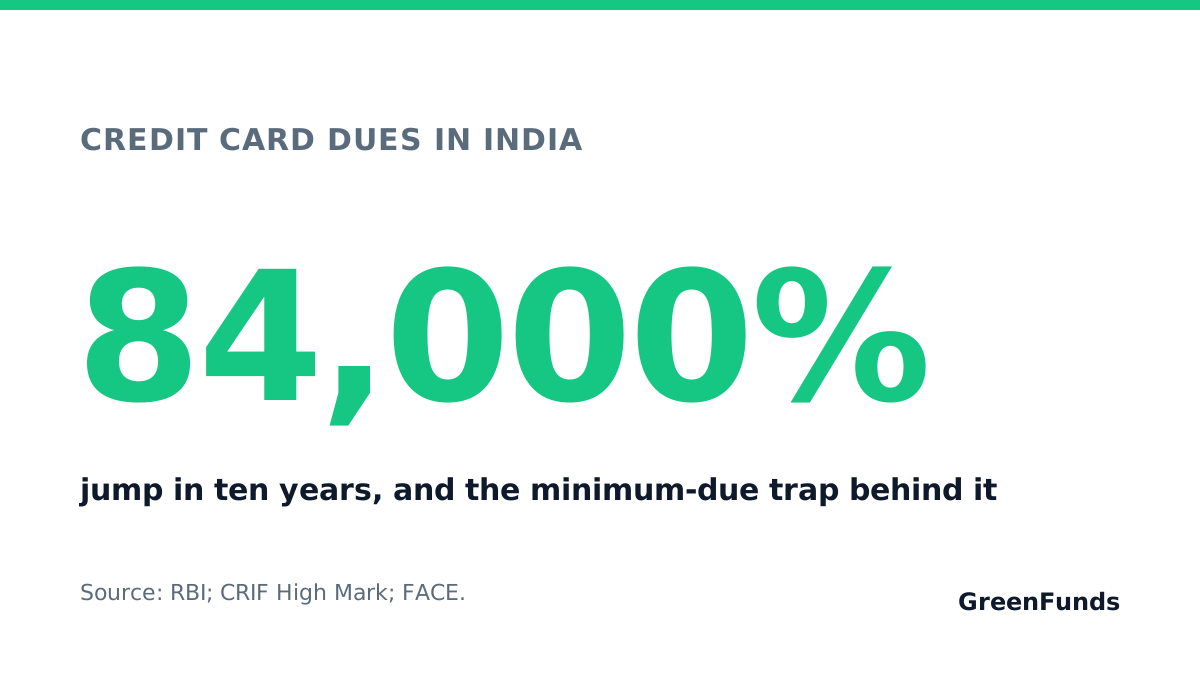
What happened. RBI data shows credit card dues in India grew from about ₹340 crore in 2015 to ₹2.88 lakh crore by 2025. Nearly 45% of new cardholders are under 30.
Why it matters to you. Paying only the minimum due is the trap. The rest stays on the card at very high interest, often around 3% to 3.5% every month.
The concept. Good debt buys something that grows, like a skill. Bad debt pays for things that lose value, at high interest.
A rupee example. You spend ₹30,000 on a card and pay only the small minimum due. The unpaid amount can cost roughly 3% to 3.5% a month, close to ₹900 to ₹1,050 in the first month alone. Next month the interest is charged again, on a bigger balance. This is how a ₹30,000 bill quietly becomes much more.
You are not alone in this. Unpaid credit card dues in India rose about 28% in a single year. The habit that protects you is simple: treat a credit card like a debit card. Spend only what you can fully repay by the due date, and always pay the full amount, not the minimum.
What that interest rate looks like annually. Roughly 3 to 3.5 percent a month works out to about 36 to 42 percent a year. Very few investments return anything close to that, which is why clearing a card balance beats almost any investment you could make with the same money. Paying off a balance costing 40 percent is a guaranteed 40 percent saved.
The part of the trap most people miss. Once you carry a balance, many cards stop giving you the interest-free period on new purchases. So the coffee you buy the next morning starts accruing interest from day one, not from the next statement. The trap tightens the moment you enter it.
How the country’s numbers are moving. Card circulation went from about 21 million in 2015 to roughly 112 million by 2025. Gross card NPAs sat at about 2.3 percent of dues, and loans more than 90 days overdue rose to 3.6 percent by March 2025 from 3.3 percent a year earlier. Plenty of people are finding this out the hard way.
If you are already carrying a balance. Clear the highest interest rate first while paying minimums elsewhere, which costs you the least overall. And stop using that card until it is clear, because spending on it while repaying is running up a down escalator.
This is general education, not financial advice. Interest rates vary by card and bank, check your own card’s terms.
Source: RBI credit card data; CRIF High Mark; FACE.
Ready to try your first ₹100? Open a free account.
Compare beginner friendly investing apps and open an account in a few minutes.
Compare apps →