Only 27% of Indian adults pass a basic money test. That is fixable.
The basics are learnable
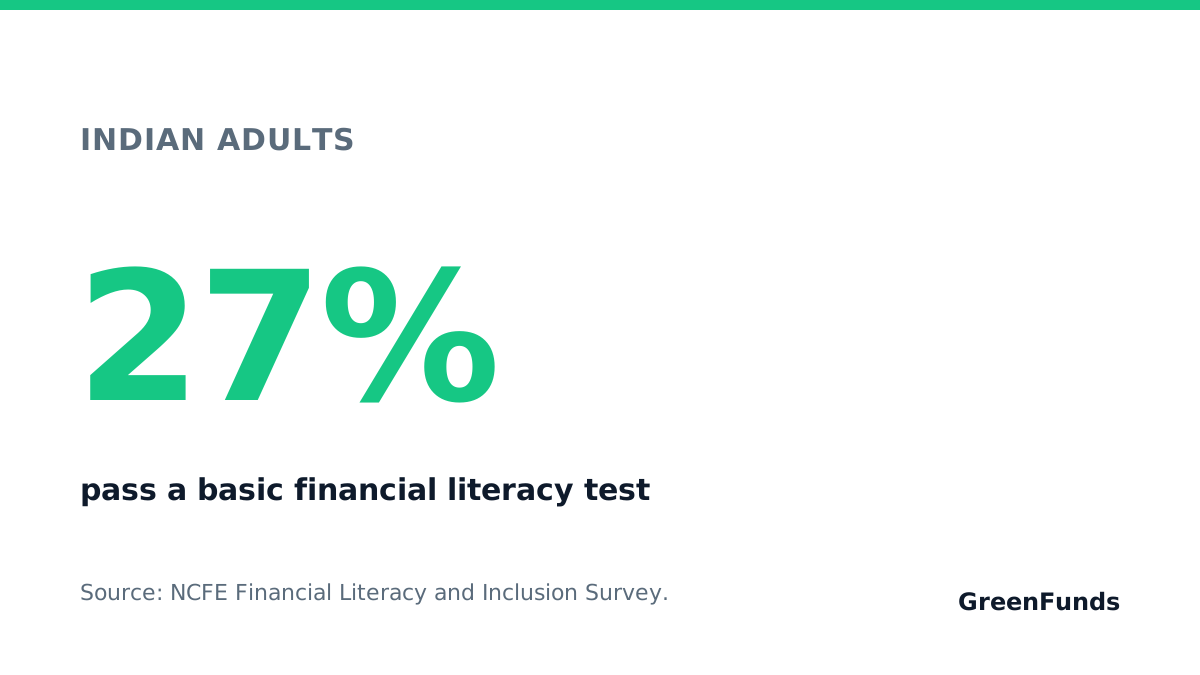
What happened. A large national survey found that only about 27% of Indian adults are financially literate, meaning they can answer basic questions about things like interest, inflation, and risk. Even for young adults aged 18 to 29, the figure is only around 30%.
Why it matters to you. Money mistakes are rarely about being bad with money. They are usually about never being taught. Nobody is born knowing what an SIP is or how a credit card charges interest.
The concept. Financial literacy is a skill, not a talent. It is learnable in small pieces, one idea at a time.
A rupee example. Take one idea, compounding. Once you truly get that ₹100 a day, left to grow, can become a large sum over decades, you start seeing every small daily spend differently. That single idea can change decades of decisions. You do not need all of finance. You need a few core ideas, learned well.
That is exactly what the free lessons here are for. Start with lesson one and build from there.
Where the gap is widest. The same survey put women at 21 percent and rural respondents at 24 percent, against 43 percent for the university educated. The gap is not evenly spread, and it tracks who got taught rather than who is capable.
Why formal education has not closed it. Money is rarely taught in school in a way that survives contact with a salary. Most people learn from whoever is nearest: 62 percent of young Indians say they learn about money from YouTube and 52 percent from family and friends. Both can be excellent. Neither comes with a fact check.
What actually moves the number. Not reading more. Doing one thing. Open the account, start the ₹500 transfer, read one lesson properly. Financial literacy is measured by decisions, and a decision teaches you more than a week of videos.
A reasonable order to learn in. What inflation does to idle cash, why an emergency fund comes before investing, how compounding works and why time matters more than amount, what debt actually costs, and then how funds and shares work. Five ideas. Most money mistakes trace back to missing one of them.
This is general education, not financial advice.
Source: NCFE Financial Literacy and Inclusion Survey, 75,000+ respondents.
Ready to try your first ₹100? Open a free account.
Compare beginner friendly investing apps and open an account in a few minutes.
Compare apps →