62% of young Indians learn money from YouTube
Check who is teaching you, and what they sell
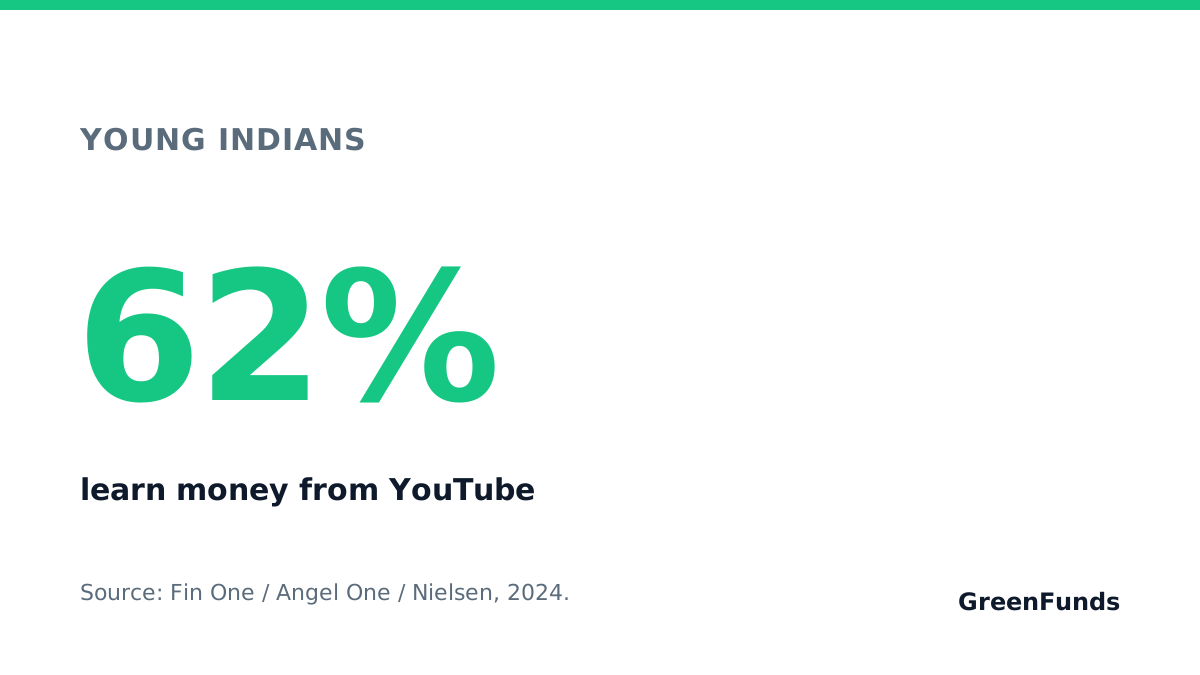
What the data says. In a 2024 survey, 62 percent of young Indians said they learn about money from YouTube and 52 percent from family and friends. Separately, the NCFE’s 2019 survey of more than 75,000 people found only 27 percent of Indian adults financially literate.
Why the gap matters. Most money education now arrives from people with something to sell: a broking account, a course, a trading service, a referral link. That does not make it wrong. It makes the incentive worth knowing.
Three questions worth asking of anything you watch. What does this person earn if I act on it? Is the number they quoted attached to a source? Would they say the same thing if there were no link in the description?
A rupee example. A video recommending a trading platform may earn its maker a few hundred rupees for every account opened. That is legal and common, and it is also a reason the pitch leans the way it does.
The fix is not to stop watching. It is to check the incentive, then check the number against a primary source before your money moves.
Why YouTube won. It is free, it is in the language people actually speak, and it answers the question asked rather than the question a syllabus wanted asked. Formal financial education in India reaches very few people, and the NCFE numbers show the result.
What good money content looks like. It names its sources. It tells you what it does not know. It talks about risk in the same breath as return, and it does not use urgency to move you. Anything promising a guaranteed return is either mistaken or lying, and in India that claim is also a regulatory problem for whoever made it.
The check that takes ten seconds. Before acting on anything, find the primary source for the central number. If the figure is from RBI, SEBI, AMFI or a government reply in Parliament, it is checkable. If it traces back to another video, it is not a number, it is a rumour with a decimal point.
This is general education, not financial advice. Figures are as reported by the source and may change.
Source: Fin One / Angel One youth survey with Nielsen, 2024. NCFE Financial Literacy and Inclusion Survey (FLIS) 2019.
Ready to try your first ₹100? Open a free account.
Compare beginner friendly investing apps and open an account in a few minutes.
Compare apps →