Home loan basics: EMI, tenure and the interest you pay
Buy now, pay over years; early EMIs are mostly interest
A home is usually the biggest purchase of a lifetime, far more than most people can pay at once. A home loan bridges that gap: the lender pays the seller now, and you repay the lender over many years, with interest for the privilege. Understanding how that repayment is built helps you borrow wisely.
What an EMI is. You repay through an EMI, an Equated Monthly Instalment: a fixed amount every month. Each EMI is split in two, a part that chips away at the amount you borrowed (the principal), and a part that is interest on what you still owe. The total stays the same, but the split shifts over the years.
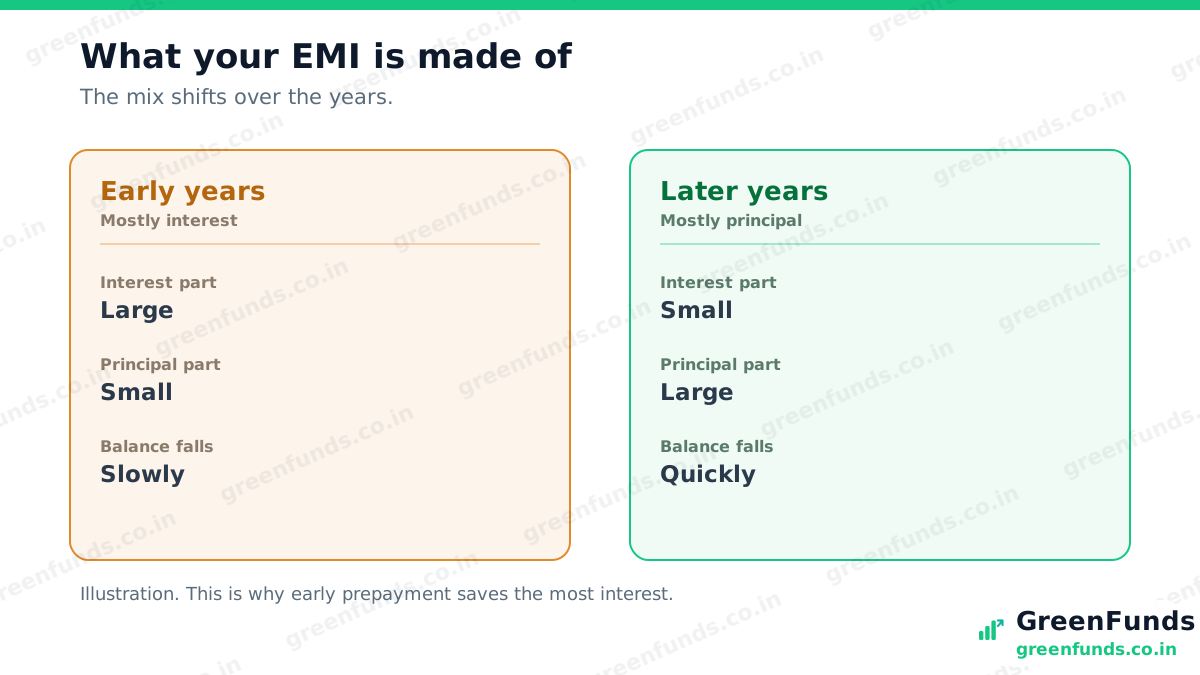
Why early EMIs feel like they go nowhere. Interest is charged on the balance you still owe, and that balance is largest at the start. So early on, a big chunk of each EMI is interest and only a sliver reduces the principal. Your outstanding loan barely moves in the first years. As the balance shrinks, more of each EMI starts repaying principal.
Did you know? In the early years of a long home loan, the large majority of each EMI is interest, not principal, so your loan balance falls very slowly at first. This is exactly why prepaying early in the tenure saves far more interest than prepaying near the end.
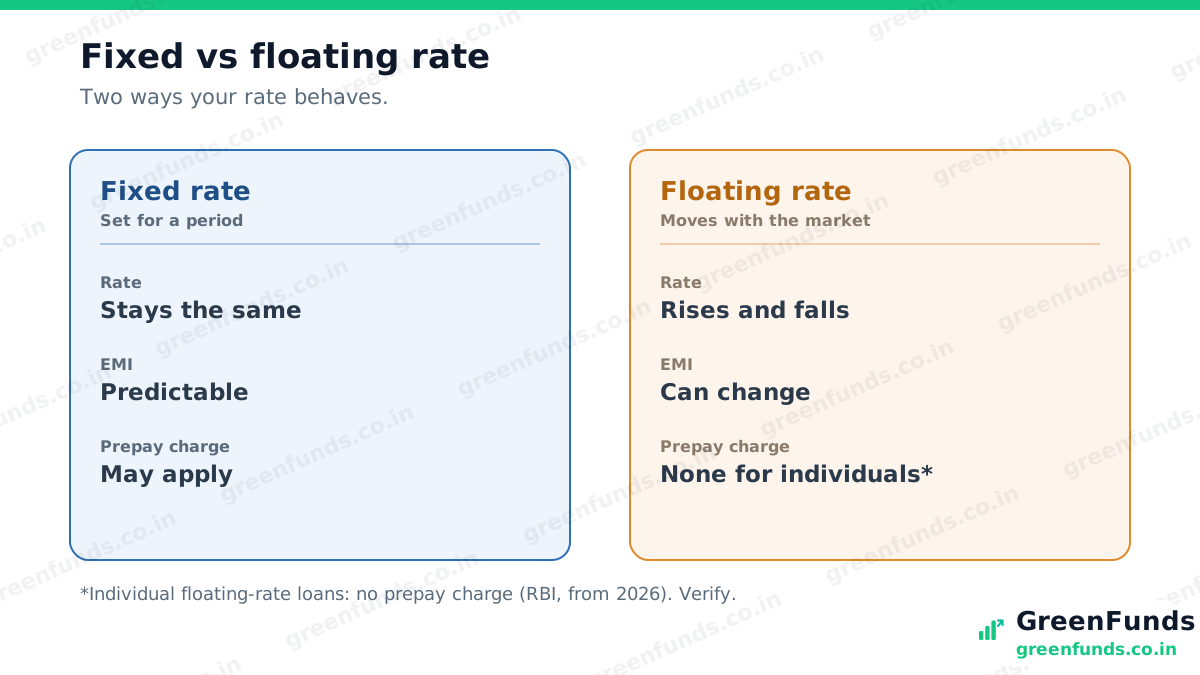
Fixed or floating. Your rate comes in two flavours, and the choice shapes how your EMI behaves.
Tenure is a trade-off. A longer tenure lowers the monthly EMI but stretches interest over more years, raising the total you pay. A shorter tenure means a bigger EMI but much less total interest. The sweet spot is the shortest tenure whose EMI you can comfortably afford.
The takeaway. A home loan is an EMI split between principal and interest, with early EMIs mostly interest. Choose fixed for predictability or floating for a market-linked rate, keep the tenure as short as you can afford, and remember that early prepayment saves the most.
More to read: should you prepay a loan?, good debt versus bad debt, and personal loan versus credit card.
Questions people ask
What is an EMI in a home loan?
EMI stands for Equated Monthly Instalment, the fixed amount you pay the lender every month. Each EMI has two parts: a bit that repays the amount you borrowed (the principal) and a bit that is interest on what you still owe. The EMI stays the same each month, but the split between principal and interest changes over time.
Why is most of my early EMI going to interest?
Because interest is charged on the outstanding balance, which is largest at the start. So in the early years, a big share of each EMI is interest and only a small share reduces the principal. As the balance falls, more of each EMI goes to principal. This is also why prepaying early saves the most interest.
What is the difference between a fixed and a floating interest rate?
A fixed rate stays the same for a set period, so your EMI is predictable. A floating rate moves up and down with market rates, so your EMI or tenure can change over time. Floating rates are common for home loans and are often lower to start; fixed rates give certainty. Which suits you depends on your comfort with change.
Does a longer tenure make a home loan cheaper?
A longer tenure lowers your monthly EMI, which feels cheaper, but you pay interest for more years, so the total interest is higher. A shorter tenure means a bigger EMI but far less total interest. Pick the shortest tenure whose EMI you can comfortably afford, to keep total interest down.
Source: General home loan structure in India. Interest rates, tenure and charges vary by lender and your profile; floating-rate individual loans have no prepayment charge under RBI rules from 2026. Verify current terms.
Flag a possible issue
Was this helpful?
Thanks for the signal.
Comments
Share your experience or a question. Be kind, stay on topic. This is reader discussion, not financial advice.
No comments yet. Be the first to share.