Buy now, pay later: it's a loan, and it can hit your credit score
Pay later is borrowing, and a missed instalment shows up on your credit report

Buy now, pay later lets you take something today and pay for it in a few parts over the coming weeks or months. It feels like a payment option at checkout. It’s actually a loan: a bank or NBFC pays the shop, and you owe the lender. That one fact explains both its appeal and its risk.
How it works. At checkout you pick pay later, and the purchase is split into instalments, or into one bill due later. Many plans charge no interest if you pay on time. Miss a payment, and late fees kick in.
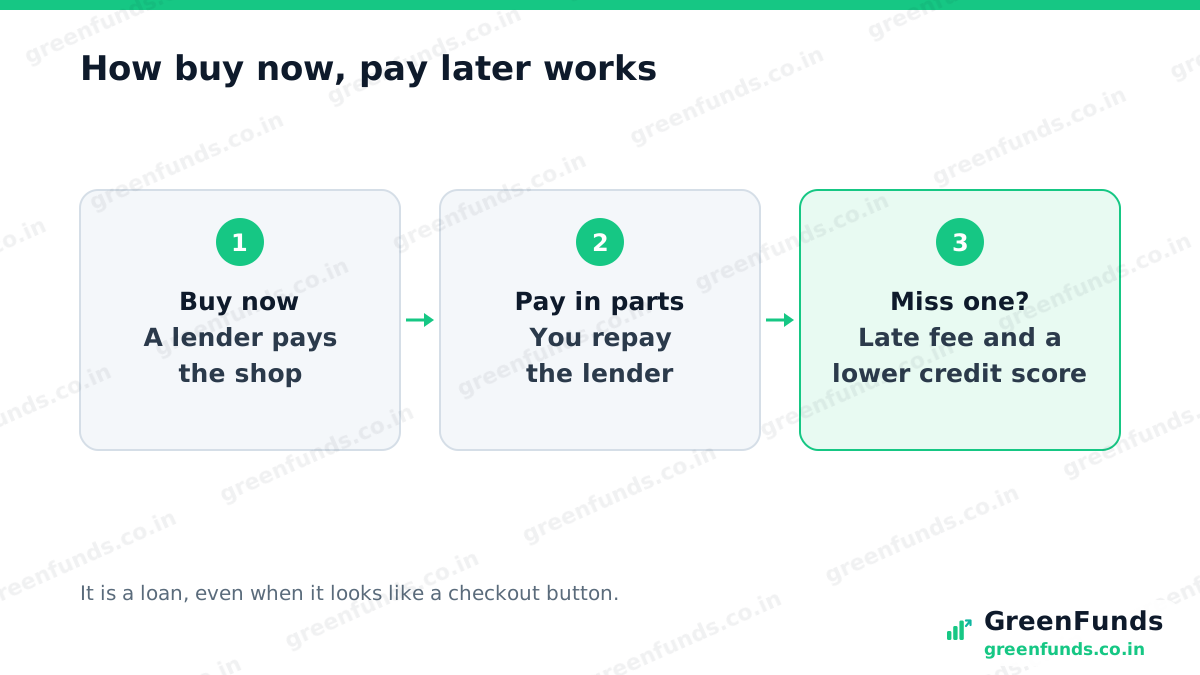
Why it shows on your credit report. Because BNPL is borrowing, it counts. RBI’s 2025 digital lending rules require lenders to report loans made through digital apps to credit bureaus. Pay on time and it builds your history. Pay late and it can drag down your credit score, which matters the day you want a home or car loan.
An illustration. Say you buy a 6,000 rupee phone accessory and split it into three payments of 2,000 rupees (illustrative numbers). Pay all three on time and it may cost nothing extra. Miss the second, and you can pay a late fee and take a credit-score hit, all for a 2,000 rupee instalment.
Did you know? Under RBI’s digital lending rules, an app offering credit must name the regulated bank or NBFC that actually lends you the money. And since October 2024, retail term loans must come with a Key Fact Statement showing the APR, the full yearly cost with all fees, per the RBI. If an app hides who the lender is, treat it as a warning sign.
The quiet trap: small amounts add up. Each pay-later purchase feels tiny, so it’s easy to run several at once. Together they can add up to a monthly bill bigger than you planned. The same thinking applies to no-cost EMI: spreading a cost out doesn’t make it smaller.
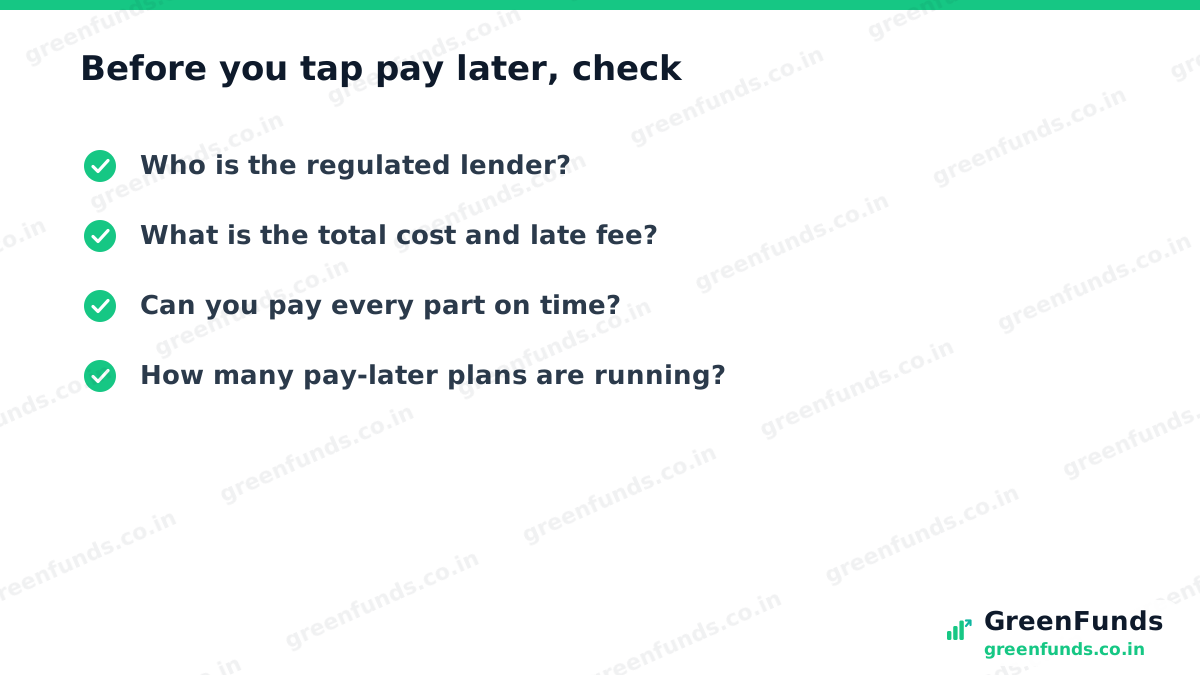
The takeaway. Buy now, pay later is a short-term loan, not a discount. Used for something you could pay for anyway, and paid on time, it’s harmless. Used to stretch a budget, it can quietly turn into debt and a lower credit score. Check the lender, the total cost and the late fee before you tap.
More to read: is no-cost EMI really free, illegal loan apps, and loan against FD.
Questions people ask
Is buy now, pay later a loan?
Yes. When you pay later, a bank or NBFC is lending you the money, even if the app shows it as a checkout option. That is why the app must name the regulated lender behind it, and why the borrowing can appear on your credit report.
Does BNPL affect my credit score?
It can. RBI's digital lending rules require lenders to report loans made through digital apps to credit bureaus. Paying on time builds history, but a missed or late instalment can pull your score down and make future loans harder or costlier.
Is BNPL interest-free?
Many plans charge no interest if you pay every instalment on time. But late fees and other charges can apply, and some plans carry interest or fees from the start. Check the full cost, including the APR where a Key Fact Statement applies, before you agree.
How do I know a pay-later app is genuine?
A genuine app names the RBI-regulated bank or NBFC that actually lends you the money. If no regulated lender is named, do not use it. See our guide to illegal loan apps for the warning signs.
Source: RBI (Digital Lending) Directions, 2025 (lending through digital apps reported to credit bureaus; app must name the regulated lender); RBI Key Facts Statement circular, 15 April 2024. Check the current RBI rules and your lender's terms.
Found this useful? You can buy us a coffee. It keeps GreenFunds free.Flag a possible issue
Was this helpful?
Thanks for the signal.
Comments
Share your experience or a question. Be kind, stay on topic. This is reader discussion, not financial advice.
No comments yet. Be the first to share.