Illegal loan apps: how to spot one and check a lender is RBI-regulated
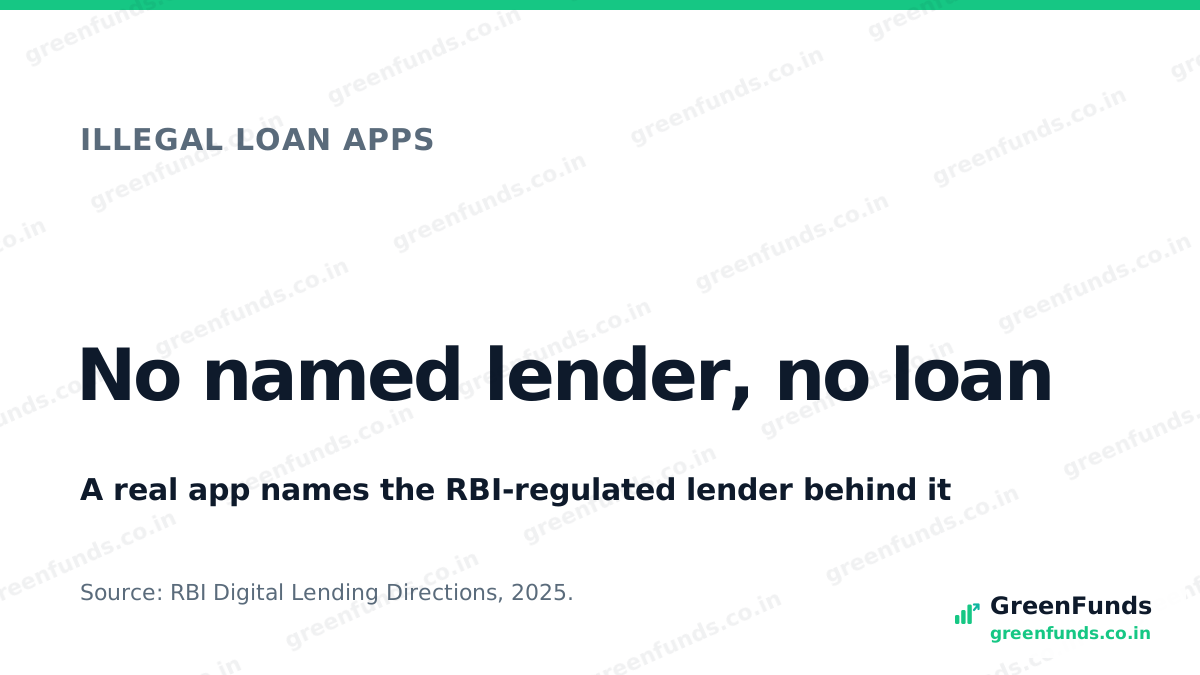
A real loan app always names an RBI-regulated lender
An illegal loan app lends you money without being linked to any bank or finance company the Reserve Bank of India regulates. It looks like an ordinary instant-loan app. The difference shows up later: hidden charges, demands far above what you borrowed, and threats to shame you in front of everyone in your phone.
How the trap works. The app promises a small loan in minutes, with “no documents, no credit check”. To install it, it asks for access to your contacts, photos and messages. You borrow, say, Rs 5,000, but receive only Rs 3,500 after “processing fees”, with a week to repay Rs 6,000. Miss it, or even pay it, and new charges appear. (An illustration of a common pattern.)
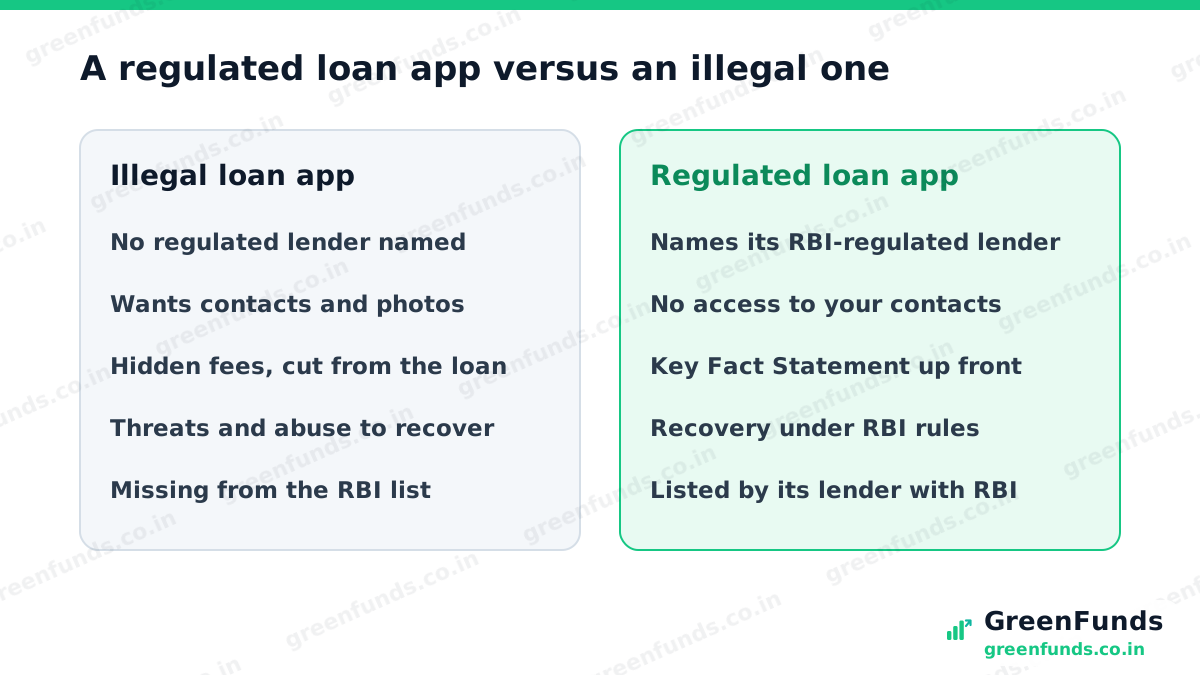
Then the harassment. When you cannot pay the growing amount, recovery agents start calling at all hours. They message your contacts, sometimes with morphed photos, calling you a fraud. The goal is panic, so you pay whatever they ask. This is not how a regulated lender is allowed to recover a loan.
Did you know? Under RBI’s Digital Lending Directions, 2025, a lending app of a regulated lender is not supposed to access your contact list, call logs or files, apart from limited one-time access for KYC with your consent. In May 2025, RBI also announced a public directory of digital lending apps reported by regulated lenders, on its website under Citizen’s Corner. RBI notes the list is based on what lenders submit, without its own checks, so use it as a first filter. Source: RBI, rbi.org.in. Check the current rules there.
How to check a lender before you borrow. A genuine app always names the bank or NBFC (a non-bank finance company) that actually lends the money. Look that lender up on the RBI website, and look for the app in RBI’s directory of digital lending apps. Before you sign, you should get a Key Fact Statement showing the full yearly cost of the loan, all fees included. No named lender, no clear cost, no loan. If you need credit, a personal loan from a bank or a credit card is a far safer starting point.
If an app is harassing you. You are not alone, and you do not have to give in to threats.
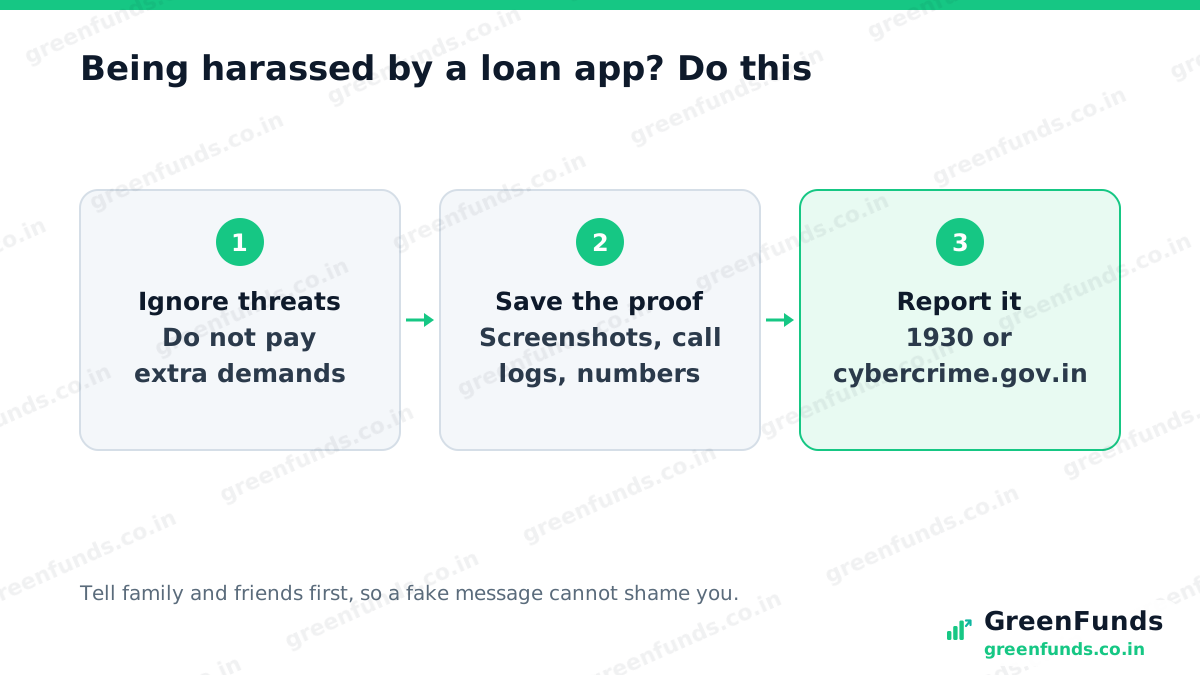
Tell close family and friends what is happening before the app messages them, so a fake message loses its power. Report on the 1930 helpline or at cybercrime.gov.in. You can also complain about an unregulated lender on RBI’s Sachet portal, sachet.rbi.org.in. If the lender is regulated, complain to it first, then to the RBI Ombudsman. Remove the app’s permissions, then uninstall it.
The takeaway. Instant money with no checks is the bait, and your contact list is the weapon. Borrow only from an app that names its RBI-regulated lender, shows you the full cost up front, and does not want your contacts.
More on staying safe: check your credit report, personal loan versus credit card, and how to report a UPI fraud.
Questions people ask
How do I check if a loan app is legal?
A genuine loan app must name the bank or NBFC that actually lends you the money. Check that lender on the RBI website, and check the app against the RBI's public directory of digital lending apps, which lists apps reported by RBI-regulated lenders. RBI notes the directory is built from what lenders submit, so it is a first check, not an endorsement. If no regulated lender is named, do not borrow.
Can a loan app access my contacts and photos?
Under RBI's digital lending rules, apps of regulated lenders are not supposed to access your contact list, call logs, or files and media. Limited one-time access to the camera, microphone or location is allowed only for onboarding or KYC, with your consent. An app that demands your contacts and gallery is a major warning sign. Check the current RBI directions for details.
What should I do if a loan app is harassing me?
Do not pay extra demands made through threats. Save screenshots, call recordings and the numbers used. Report the harassment on 1930 or at cybercrime.gov.in, and you can file a complaint about an unregulated lender on RBI's Sachet portal, sachet.rbi.org.in. If the lender is regulated, complain to the lender first and then to the RBI Ombudsman.
Is a loan that says no documents, no credit check, instant approval safe?
Be very careful. Genuine lenders check your identity and credit history, and must show you the full cost of the loan before you sign. An offer that skips every check and gives money in minutes is how many illegal apps lure people in.
Source: Reserve Bank of India (Digital Lending) Directions, 2025 and RBI press release of 8 May 2025 on the public directory of digital lending apps; RBI caution on unauthorised digital lending platforms (December 2020); RBI Sachet portal (sachet.rbi.org.in). Check the current RBI rules.
Found this useful? You can buy us a coffee. It keeps GreenFunds free.Flag a possible issue
Was this helpful?
Thanks for the signal.
Comments
Share your experience or a question. Be kind, stay on topic. This is reader discussion, not financial advice.
No comments yet. Be the first to share.