Loan against FD: borrow without breaking your fixed deposit
Your FD stays put and keeps earning while it backs a cheap loan
A loan against FD lets you borrow money using your fixed deposit as security. You don’t break the deposit. It stays in place and keeps earning interest, while the bank lends you a part of its value. Because your own money backs the loan, it’s one of the cheapest ways to borrow.
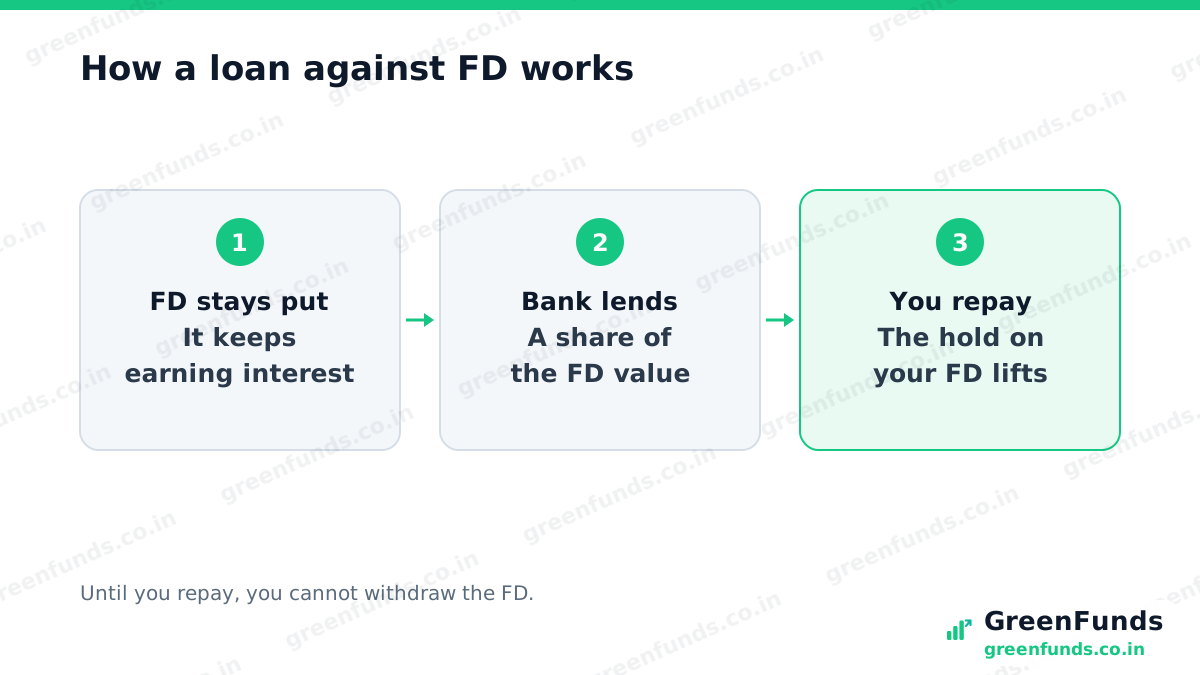
How it works. The bank puts a lien on your FD, which means you can’t withdraw it until the loan is repaid. In return, it lends you most of the deposit’s value, as a one-time loan or as an overdraft you draw on as needed. Repay it, and the lien is lifted.
How much, and at what cost. Each bank sets its own terms. As one example, SBI lends up to 90% of the deposit value at 1% above the rate the deposit earns, per its website. Because the FD is the collateral, there’s little risk for the bank, so the rate is usually far below a personal loan or credit card. Some deposits, like tax-saver FDs, usually can’t be pledged.
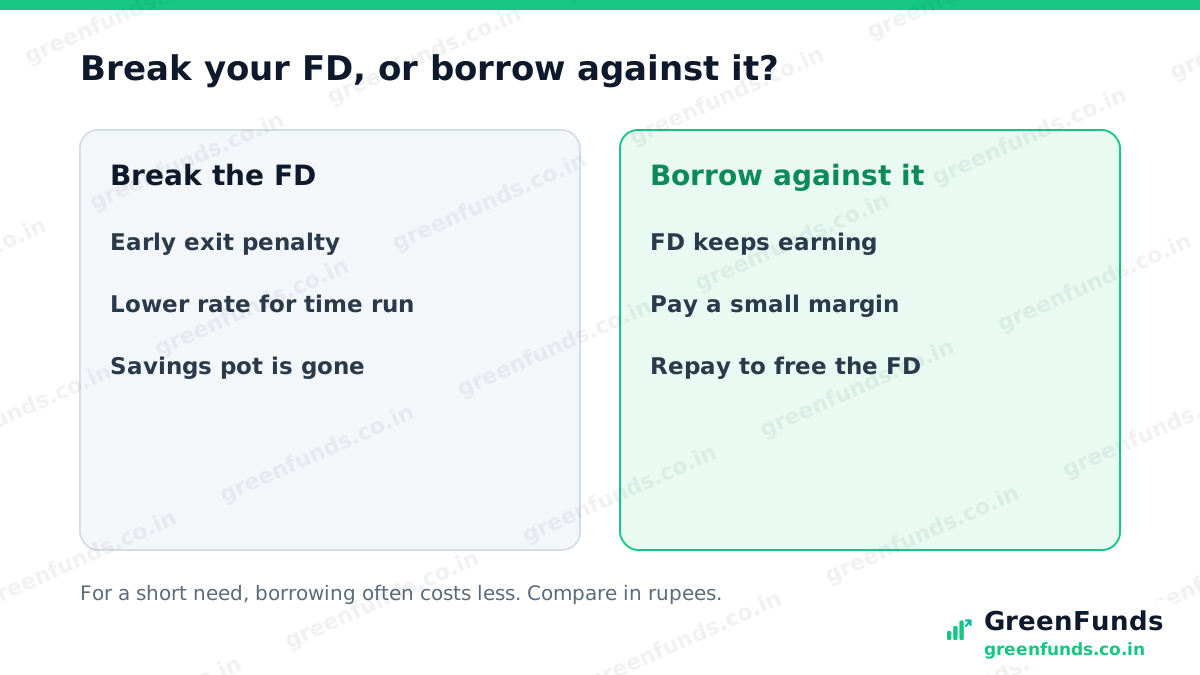
An illustration. Say your FD earns 7% and you need 1.5 lakh rupees for six months (illustrative numbers). Borrowing at 8% costs about 6,000 rupees in interest, while your FD keeps earning its full rate. Breaking the FD instead often means a penalty and a lower rate for the time it ran. Compare both in rupees before you choose.
Did you know? Since October 2024, every new retail term loan from a bank or NBFC must come with a Key Fact Statement showing the full yearly cost and every charge, per the RBI. A charge that isn’t in it can’t be added later without your consent. That includes any processing fee on a loan against FD.
When it fits, and when it doesn’t. A loan against FD suits a short, known gap: a fee due before a salary or bonus lands, or a bill you can clear within months. It suits a long need less, because you pay interest the whole time, and if you can’t repay, the bank simply recovers the money from your FD. It’s still a loan, so treat the repayment date as real.
The takeaway. If you need money for a short time and have an FD, borrowing against it is usually cheaper than a personal loan and can beat breaking the deposit. Check your bank’s limit and rate, read the Key Fact Statement, and repay on schedule.
More to read: fixed deposits explained, FD vs debt fund, and personal loan vs credit card.
Questions people ask
How much can I borrow against my FD?
It depends on the bank. As one example, SBI lets you borrow up to 90% of the deposit value, per its website. Some deposits, like tax-saver FDs, usually cannot be used. Check your own bank's limit.
What is the interest rate on a loan against FD?
Usually a small margin above the rate your FD earns. SBI, for example, charges 1% above the deposit's rate. That is typically far lower than a personal loan or credit card, because your FD fully secures the loan.
What happens to my FD while the loan is running?
It stays in place and keeps earning interest, but the bank holds a lien on it, so you cannot withdraw it until the loan is repaid. If you do not repay, the bank can recover the money from the FD.
Should I break my FD or take a loan against it?
For a short, small need, a loan against FD can cost less than breaking it, since breaking early often carries a penalty and a lower rate for the time it ran. For a long or large need, breaking it may be simpler. Compare the two in rupees for your own case.
Source: SBI, overdraft and loan against time deposits (sbi.co.in: up to 90% of the deposit, at 1% above the deposit rate), as one bank's example; RBI Key Facts Statement circular, 15 April 2024. Terms vary by bank; check your bank's current terms.
Found this useful? You can buy us a coffee. It keeps GreenFunds free.Flag a possible issue
Was this helpful?
Thanks for the signal.
Comments
Share your experience or a question. Be kind, stay on topic. This is reader discussion, not financial advice.
No comments yet. Be the first to share.