Planning for your child's education: size the goal, then match the money
Put a future price on the goal, then pick where to save by how far away it is
Figures checked 2026-11-03
Your child’s education is a goal with a date on it. You may not know the exact course, but you know roughly when the fees start. That makes it one of the easiest big goals to plan, as long as you put a real number on it first.
Step 1: put a future price on it. Start with what the course would cost today, then grow it for the years until your child starts. Education costs usually rise faster than everyday prices, so use a rate you’re comfortable with, and treat the result as a target, not a quote.
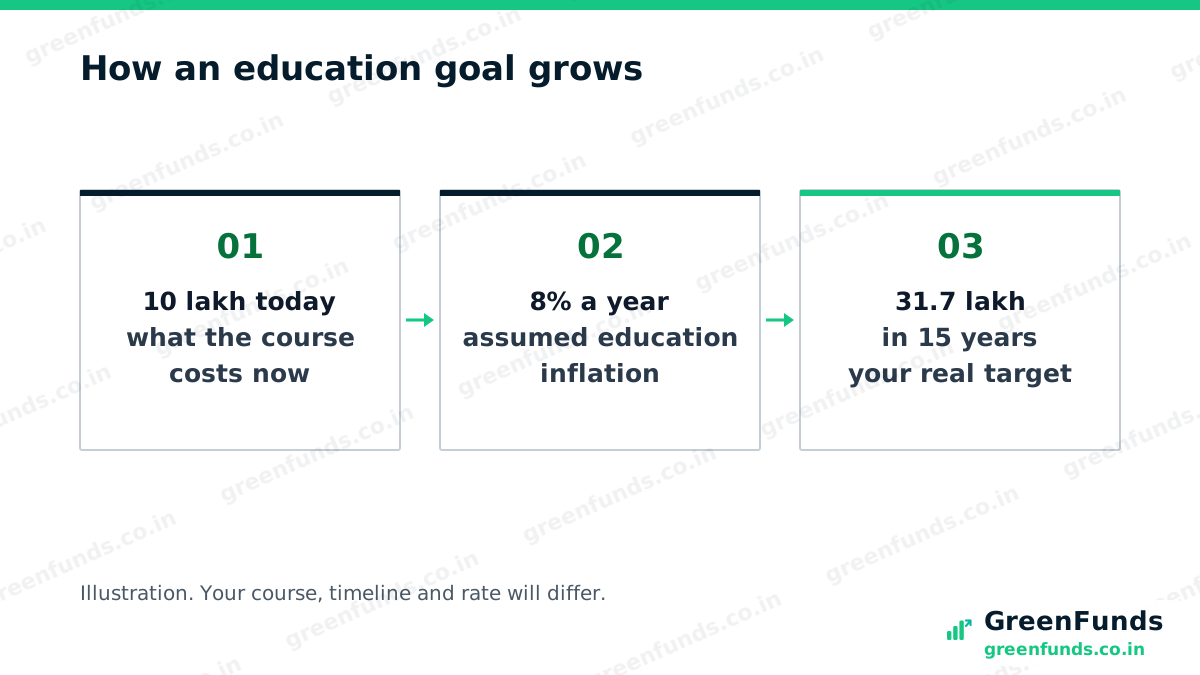
An illustration: a course that costs 10 lakh rupees today, growing at an assumed 8% a year, would cost about 31.7 lakh rupees in 15 years. That’s the effect of inflation compounding over a long stretch, and it’s why planning with today’s price leaves most families short.
Step 2: turn it into a monthly number. Divide the goal across the months you have, allowing for what the money earns. In the same illustration, saving about 7,650 rupees a month at an assumed 10% a year return reaches 31.7 lakh in 15 years. At an assumed 7%, it takes about 10,000 rupees a month. The earlier you start, the more of the work the returns do. Our lesson on setting money goals walks through this for any goal.
Did you know? A Sukanya Samriddhi account for a girl allows up to 50% of the balance to be withdrawn once she turns 18 or passes Class 10, specifically so it can fund education. The account has to be opened before she turns 10, per India Post’s scheme rules.
Step 3: match the money to the timeline. This is where most plans go wrong. Money for a goal 10 or more years away can take market ups and downs in return for growth. Money needed in the next two or three years can’t, because a fall right before admission can’t wait to recover. A common approach is to start in growth assets and move the money steadily into safer ones as the date gets closer.
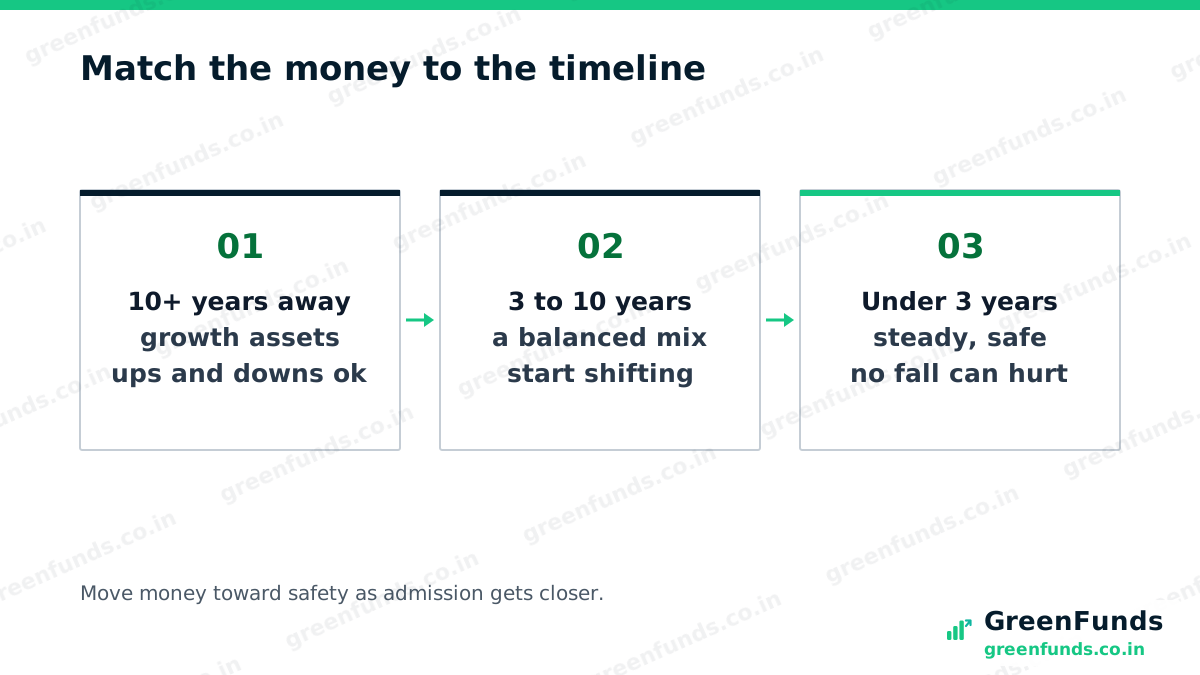
That shifting mix is asset allocation applied to one goal. Write down the year you’ll start moving money to safety, so the decision isn’t made in a panic.
Step 4: plan the gap. If the savings won’t cover everything, an education loan can fill the rest. Interest usually runs from the start, so every rupee you save ahead is a rupee your child doesn’t borrow.
The takeaway. Price the goal in future rupees, turn it into a monthly saving, and match each part of the money to how soon it’s needed. Revisit the numbers every year or two, since courses, costs and your income will all change.
More to read: planning for a baby, teaching kids about money, and asset allocation.
Questions people ask
How much should I save for my child's education?
Start with what the course costs today, then grow it by an assumed education inflation rate for the years until your child starts. That future figure is the goal. Divide it into a monthly saving using an assumed return. In our illustration, a course costing 10 lakh rupees today becomes about 31.7 lakh in 15 years at 8% a year, which needs about 7,650 rupees a month at an assumed 10% return.
Where should I keep money for a child's education?
It depends on how far away the goal is. Money needed in 10 or more years can take more ups and downs in exchange for growth, while money needed in the next few years should sit somewhere steady, so a market fall just before admission doesn't leave you short. Many families shift the money gradually from growth to safety as the date gets closer.
Is Sukanya Samriddhi Yojana good for education?
It's one government option for a girl child. The account must be opened before she turns 10, takes 250 rupees to 1.5 lakh rupees a year, and matures after 21 years. Up to 50% of the balance can be withdrawn once she turns 18 or passes Class 10, which is meant for education. India Post lists its rate at 8.2% a year (rates page updated 30 October 2026), and the government reviews it every quarter.
Should I take an education loan instead of saving?
Many families use both: savings for part of the cost and a loan for the rest. A loan is repaid after the course, with interest running from the start, so the more you save ahead, the less your child borrows. Our guide to education loans explains how they work.
Flag a possible issue
Sources
- India Post, Post Office Savings Schemes brochure (Sukanya Samriddhi Account) For a girl under 10; 250 rupees to 1,50,000 rupees a year; matures 21 years from opening; up to 50% withdrawal after she turns 18 or passes Class 10; one account per girl.
- India Post, savings schemes rates (last updated 30 October 2026) Sukanya Samriddhi Account: 8.2% a year, compounded yearly.
- Worked illustration 10 lakh rupees today grown at an assumed 8% a year for 15 years is about 31.72 lakh. Monthly saving at the end of each month: about 7,654 rupees at an assumed 10% a year, about 10,008 rupees at 7%. Computed with the standard future-value formulas; assumptions, not forecasts.