Asset allocation: how to split your money across investments
The mix of equity, debt and gold matters more than any single pick
Asset allocation is just a plain idea with a technical name: how you split your money across different kinds of investments. The main kinds are equity (the stock market), debt (steady, fixed-income things like bonds and deposits), and sometimes gold or cash. How you divide money between them shapes your result more than any single fund you pick.
Why the mix matters most. People spend a lot of time hunting for the best fund. But whether your money grows steadily or swings wildly depends far more on how much sits in equity versus debt. A mix that is mostly equity can grow faster over time, but it also falls harder in bad years. A mix that leans on debt is calmer, but grows more slowly. The split is the big decision.
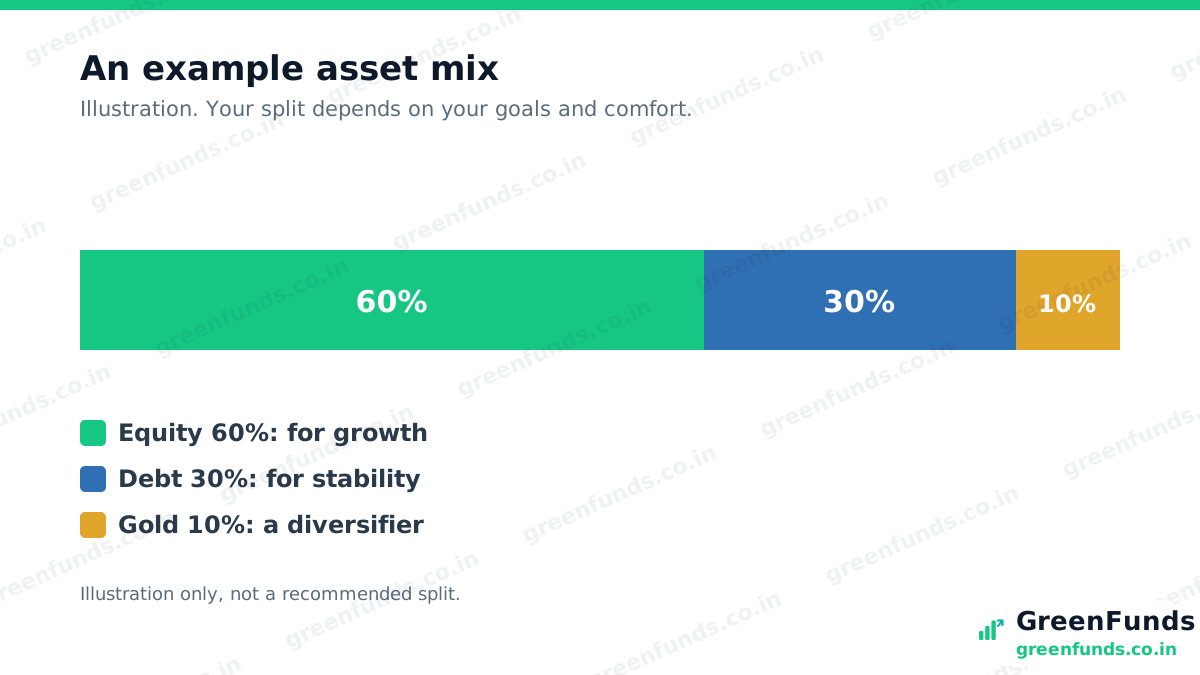
The split is personal. Your right mix depends on two things: your goal’s time horizon, and how much ups and downs you can stomach. Money you need in two years should not sit in the stock market; money for a goal twenty years away can take more risk for more growth. There is no single correct split, which is why this is a framework, not a recommendation.
Did you know? Studies of long-term portfolios have repeatedly found that the mix between equity and debt explains most of the difference in results over time, far more than which individual fund or stock you chose. The big lever is the allocation, not the pick.
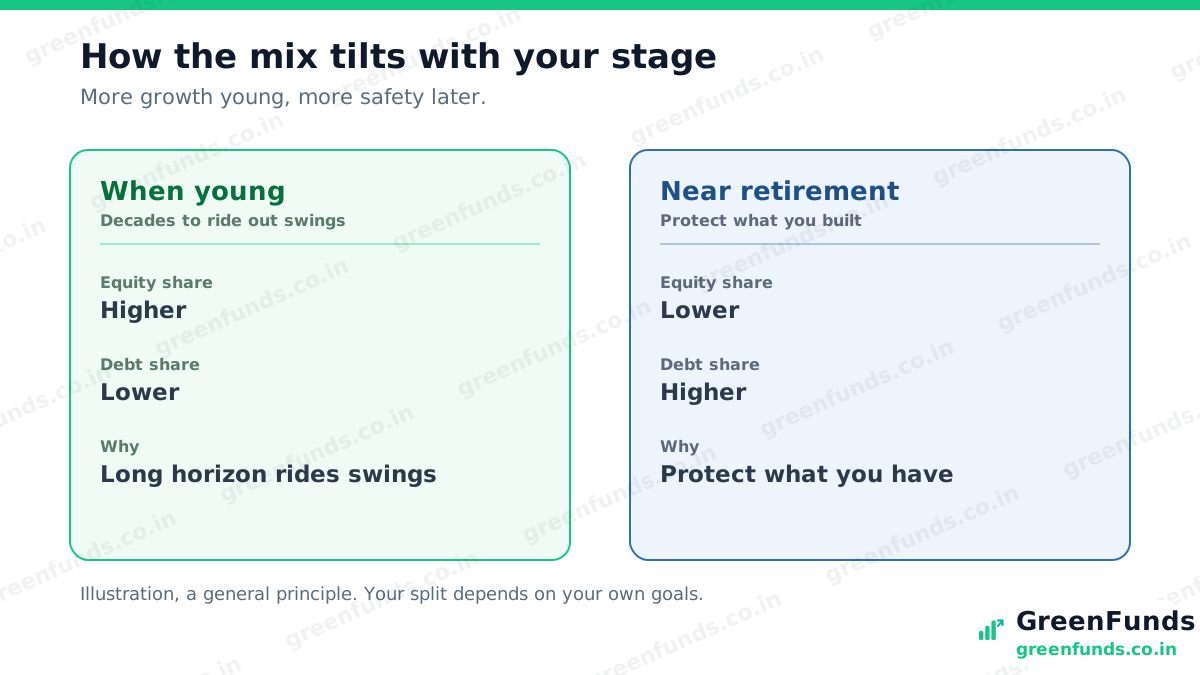
How it shifts over time. A common approach is to hold more equity when you are young, because decades of time let you ride out market falls, and to move gradually toward safer debt as a goal or retirement approaches, to protect what you have built.
Keeping the mix in place: rebalancing. Once you choose a split, markets will drift it. A good year for equity can leave you holding more of it than you intended, and more risk than you wanted. Rebalancing means trimming what has grown too big and topping up what has shrunk, to return to your target. It is how you keep your risk where you chose it. See rebalancing for how.
The takeaway. Decide your mix of equity, debt and a little gold based on your goals and comfort, not on chasing the hottest fund. The allocation is the decision that matters most, and revisiting it keeps your plan on track.
More to read: understanding risk and return, rebalancing your portfolio, and how compounding rewards a long horizon.
Questions people ask
What is asset allocation?
Asset allocation is the way you divide your money across different types of investments, mainly equity (the stock market), debt (fixed-income like bonds and deposits), and sometimes gold or cash. The split decides how much your money can grow and how much it can swing, which is why it matters more than picking any one fund.
Why is asset allocation important?
Because the mix drives most of your result. A portfolio that is mostly equity can grow faster but falls harder in bad years; one that is mostly debt is steadier but grows slower. Getting the balance right for your goal and your comfort matters more than finding the single best fund.
How should my asset allocation change with age?
A common idea is to hold more equity when you are young, because you have decades to ride out the ups and downs, and shift gradually toward safer debt as a goal or retirement nears, to protect what you have built. This is a general principle, not a rule for everyone, so match it to your own goals.
What is rebalancing?
Rebalancing is bringing your mix back to your target after markets move it. If equity rises and becomes a bigger share than you planned, you trim it back toward your target, and vice versa. It keeps your risk in line with what you chose, rather than drifting with the market.
Sources
- General investing principle; figures in examples are illustrative. Allocation choices depend on individual goals and risk comfort; this is education, not advice.