Gold as an investment: physical, digital and fund routes
A store of value with no income, best as a small diversifier
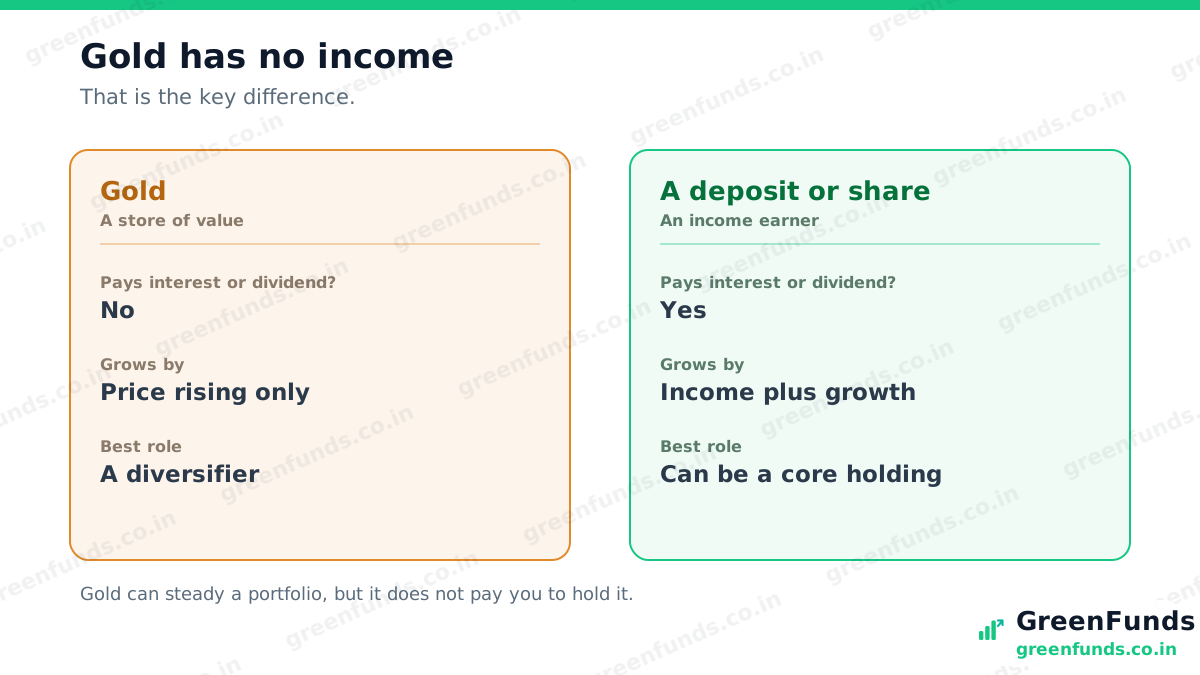
Gold is simply a thing that holds its value over long periods. People in India have trusted it for generations, as jewellery, as a gift, and as a fallback in hard times. As an investment, it has one quality worth understanding before you buy: it earns no income. It only grows if its price rises.
Why that matters. A fixed deposit pays interest. A share can pay a dividend and the company grows. Gold does neither. It just sits, and its price moves up and down with demand. That is why gold is usually treated as a diversifier, a small part of a portfolio that can hold steady when other things fall, rather than the engine that grows your money.
The ways to own gold now. There are a few routes, and they differ mainly in cost and convenience.
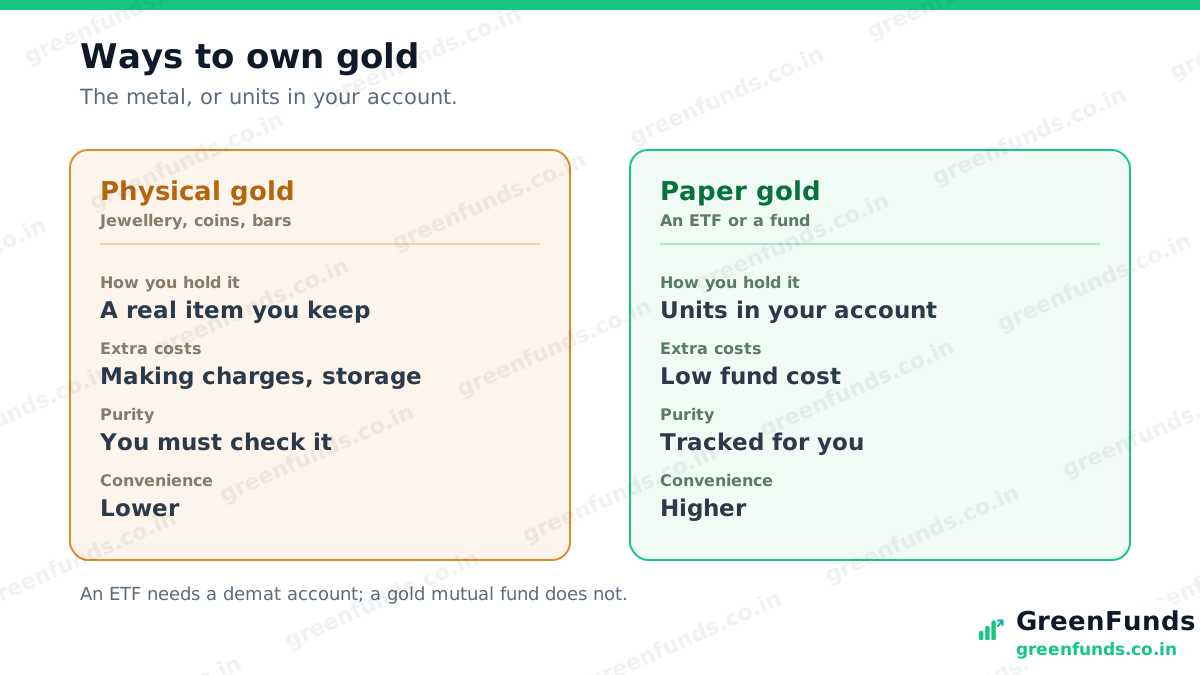
- Physical gold (jewellery, coins, bars): you own the metal, but you pay making charges, worry about storage and purity, and lose a bit when you sell.
- Digital gold: bought online in tiny amounts, convenient, but the space is lightly regulated, so check the provider carefully.
- Gold ETF or gold mutual fund: low-cost units that track the gold price. An exchange-traded fund (gold ETF) needs a demat account; a gold mutual fund does not. No making charges, no storage, purity handled for you.
Did you know? Sovereign Gold Bonds, once the most cost-effective way to hold gold because they paid interest on top of the price and had no making charges, have not been issued since early 2024 and the scheme has been stopped for new buyers. Older bonds still trade on the exchange and mature on their original terms, but you can no longer buy a fresh one from the government.
What gold does, and does not, do. It can steady a portfolio when markets fall, and it carries cultural and emotional value. But over long periods it has not grown wealth the way productive assets like equity have, precisely because it pays no income.
How much to hold. This is not advice, and there is no magic number. Because gold earns nothing while it waits, many people keep it as a small slice of their overall money, for stability and diversification, rather than the main holding. Decide the amount as part of your whole plan, alongside your asset allocation.
The takeaway. Gold is a store of value, not an income earner. Own it through the route that fits you, mind the costs, and treat it as a steadying diversifier rather than the core of your investing.
More to read: asset allocation, how to split your money, understanding risk and return, and the full retirement planning guide.
Questions people ask
What is the best way to invest in gold in India?
There is no single best way; it depends on what you want. For small, low-cost exposure without storage worries, a gold exchange-traded fund (gold ETF) or a gold mutual fund is convenient. Physical gold suits those who want the metal itself but carries making charges, storage and purity concerns. Digital gold is easy for tiny amounts but check the provider. Sovereign Gold Bonds were a popular route but are no longer being issued.
Are Sovereign Gold Bonds still available?
No new Sovereign Gold Bonds have been issued since early 2024, and the scheme has been stopped for fresh subscriptions. Bonds already issued continue to earn interest, mature on their original terms, and trade on the stock exchange, but you cannot buy a new tranche from the government. For fresh gold exposure, people now use gold ETFs, gold funds, physical gold or digital gold.
Does gold earn any interest or income?
No. Unlike a fixed deposit or a share, gold pays no interest and no dividend. It only grows if its price rises. That is the main reason it is usually treated as a diversifier, a small part of a portfolio for stability, rather than the core that drives growth.
How much gold should I hold in my portfolio?
There is no fixed rule, and this is not advice. Because gold earns no income and its price can stay flat for long stretches, many people keep it as a small slice of their overall money rather than the main holding. The right amount depends on your goals and comfort, so decide it as part of your overall plan.
How is gold taxed in India?
Gains on gold are taxable as capital gains, and the holding periods and rates were changed recently. The exact treatment differs between physical gold, gold funds and other routes. Because these rules change, check the current position on incometax.gov.in or with a tax professional before you sell.
Sources
- Sovereign Gold Bond scheme status (no new issues since 2024) Reported widely; confirm with RBI or Ministry of Finance notifications.
- Gold capital gains tax rules Changed in recent Budgets; verify the current holding periods and rates on incometax.gov.in.