Risk and return: why higher returns always carry more risk
Return is the reward, risk is the price you pay for it
Every investment is a trade. You give up certainty in exchange for a chance at growth. Return is the reward you hope to earn. Risk is the price you pay for that chance: the ups and downs along the way, and the possibility of losing money. The two are tied together, and understanding that tie is the base of every sensible decision.
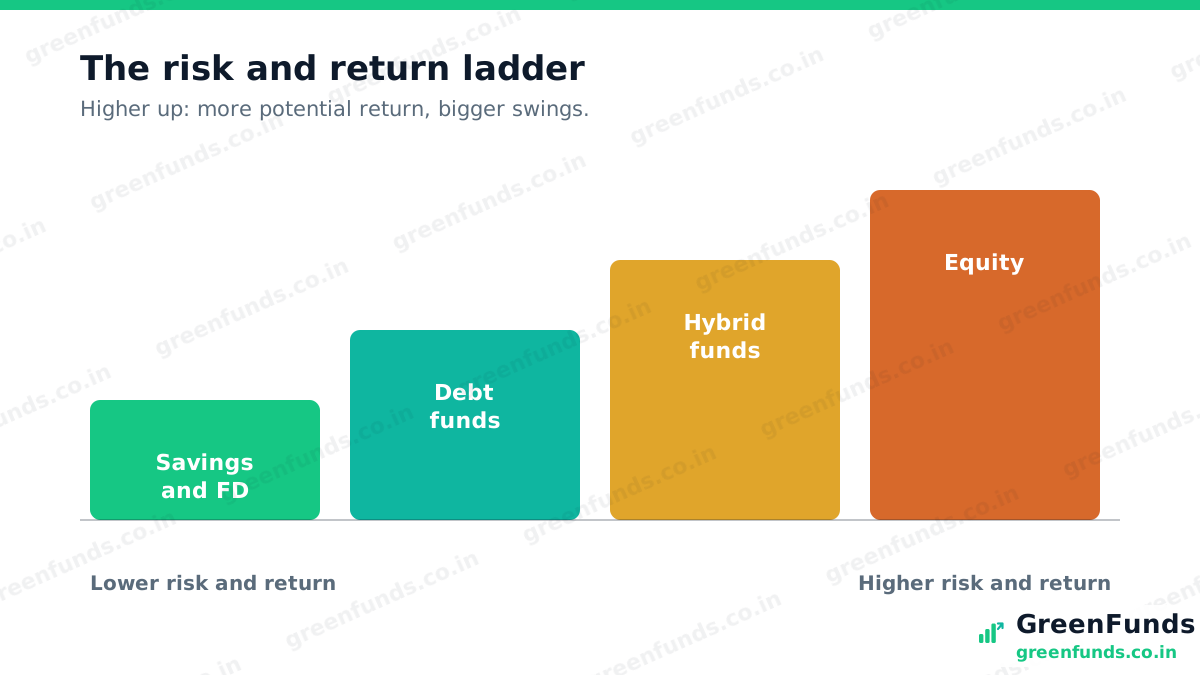
The rule that never breaks. To earn more, you have to accept more risk. A fixed deposit is safe, so it pays little. Equity can grow much faster over time, but it can also fall sharply in a bad year. There is no option that is both perfectly safe and high returning. If something is sold to you as both, that is the clearest warning sign of a scam.
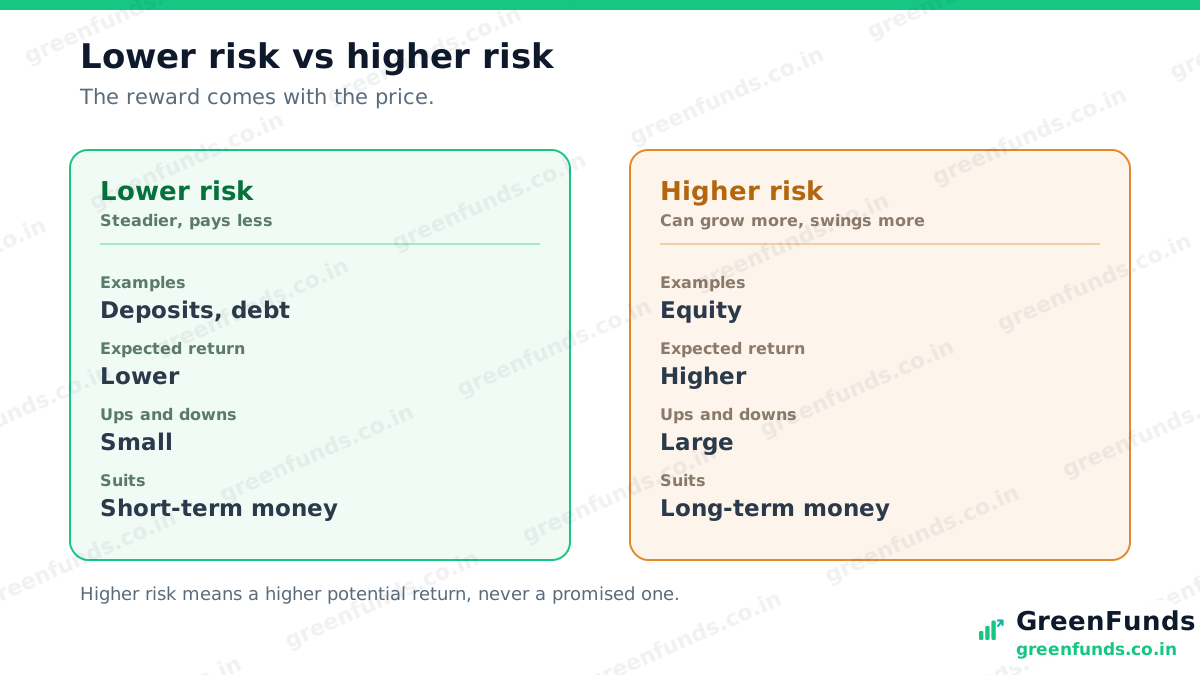
Risk cuts both ways. This is the part people forget in a good year. The very feature that lets an investment rise quickly also lets it drop quickly. Higher risk means a higher potential return, never a promised one. Over long periods, riskier assets have tended to grow more, but you have to be able to sit through the falls to get there.
Did you know? Even a fixed deposit carries one quiet risk: inflation. If prices rise faster than the interest you earn, your money buys less each year, even as the balance grows. That is why money meant for far-off goals usually needs some growth assets, despite their swings.
Match the risk to the time. The single most useful habit is to line up risk with your time horizon. Money you need in a year or two belongs in safe places, because a fall would leave no time to recover. Money for a goal a decade or more away can take more risk, because time smooths out the bumps.
Comfort counts too. The best plan on paper is useless if it makes you panic. A mix that has you selling in fear during a dip is the wrong mix for you, even if it would have grown more. Knowing how much swing you can sit through calmly is part of choosing well.
The takeaway. You cannot escape the risk and return trade-off, only manage it. Keep near-term money safe, let long-term money take sensible risk, and never believe a promise of high returns with no risk.
More to read: asset allocation, choosing your mix, the only risk number funds must publish, and how compounding rewards patience.
Questions people ask
What is the relationship between risk and return?
They move together. To earn a higher return, you generally have to accept more risk, meaning bigger ups and downs and a greater chance of loss along the way. Safe options like a fixed deposit pay less precisely because they carry little risk. There is no high return without higher risk; if something promises both, be very careful.
Does higher risk guarantee higher returns?
No. Higher risk means a higher potential return, not a promised one. Risk cuts both ways: the same thing that lets an investment grow faster also lets it fall harder. Over long periods, riskier assets like equity have tended to grow more, but in any given year they can lose value.
How do I know how much risk I can take?
Two things guide it: your time horizon and your comfort. Money you need soon should take little risk, because there is no time to recover from a fall. Money for a goal many years away can take more. Your comfort matters too; a mix that makes you panic and sell in a dip is the wrong mix, however good on paper.
Is a fixed deposit risk-free?
It is very low risk for your money, but not entirely free of all risk. A deposit can still lose to inflation: if prices rise faster than the interest, your money buys less over time. That is why, for long-term goals, some growth assets are usually needed, despite their ups and downs.
Sources
- General investing principle; examples are illustrative, not advice.