Rebalancing: keeping your investment mix on track
Trim what grew too big, top up what shrank, back to your target
You pick a mix of investments, say mostly equity with some debt, based on your goals and comfort. Then the market goes to work and quietly changes it. A strong year for equity makes it a bigger share than you planned, which means more risk than you signed up for. Rebalancing is the simple fix: bring the mix back to your target.
What drift does to you. Say you chose 60% equity and 40% debt. After a good run, equity might grow to 70% of your money. That feels nice, but it means a future market fall would now hurt you more than the plan intended. Your risk crept up without you deciding it. Rebalancing resets it.
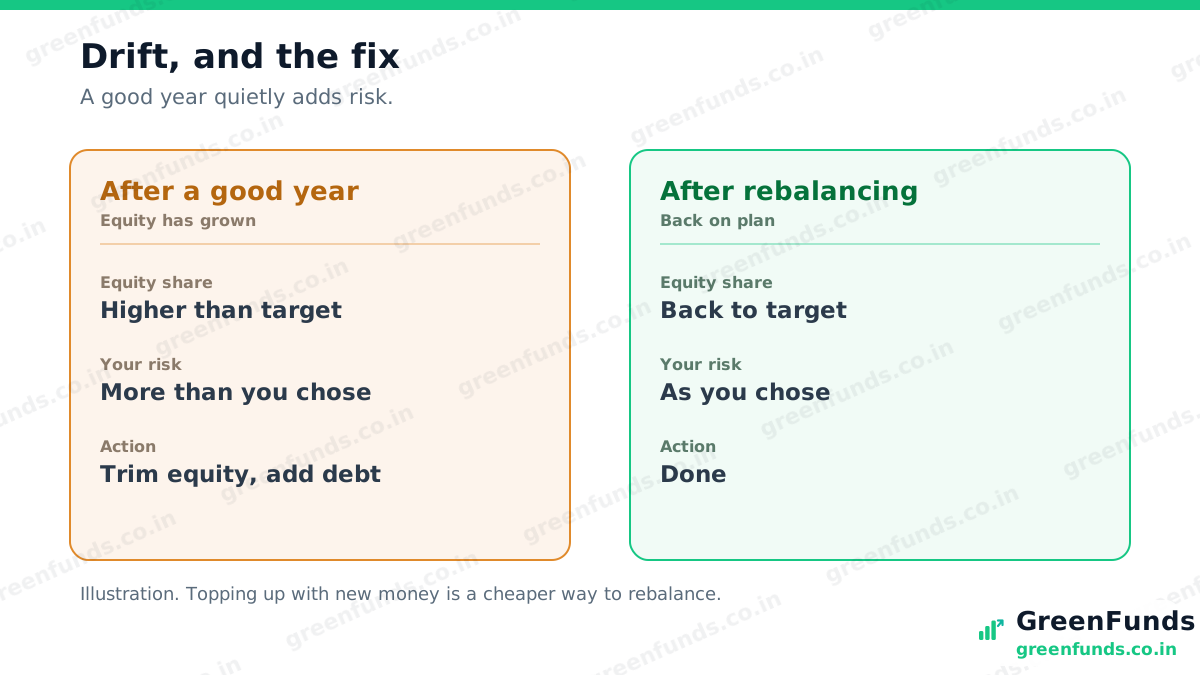
How to do it. Rebalancing is just trimming what has grown beyond target and topping up what has fallen below it, until the mix matches your plan again. There is a gentler, cheaper way too: instead of selling, point your new monthly investments at whatever is below target, and let fresh money pull the mix back over time.
Did you know? Rebalancing quietly enforces a sensible habit most people struggle with by hand: it makes you trim what has risen a lot and add to what has lagged, the opposite of the usual urge to pile into whatever is hot. The discipline is built into the method.
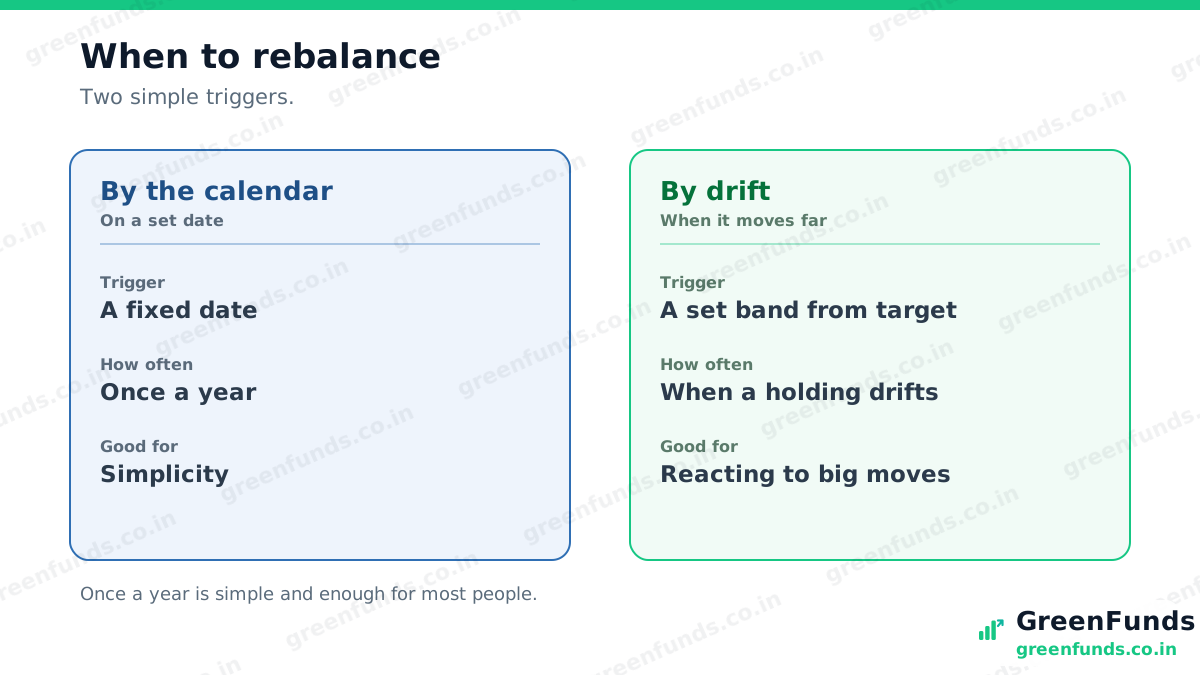
When to do it. You do not need to watch it daily. Two common triggers work well.
Mind the costs. Selling to rebalance can trigger tax on gains and, for some products, exit costs. That is why topping up with new money is often the cheaper route, and why once a year is plenty for most people. Check the tax position before you sell anything, since the rules on gains change.
The takeaway. Rebalancing is not about chasing returns; it is about keeping your risk where you chose it. Set a target mix, check it about once a year, and nudge it back, ideally with new money rather than sales.
More to read: asset allocation, setting your mix, understanding risk and return, and how mutual fund gains are taxed.
Questions people ask
What is portfolio rebalancing?
Rebalancing is bringing your investment mix back to your chosen target after markets have moved it. For example, if you aimed for 60% equity and a strong year pushed it to 70%, you trim equity back toward 60% and top up the rest. It keeps your risk in line with what you planned, instead of drifting with the market.
Why is rebalancing important?
Because drift quietly raises your risk. When equity rises, it becomes a bigger share of your money, so a later fall hurts more than you planned for. Rebalancing resets the mix to the risk level you actually chose. As a side effect, it also nudges you to trim what is high and add what is low.
How often should I rebalance?
Two common approaches: on a schedule, such as once a year, or when a holding drifts beyond a set band, such as five percentage points from target. Once a year is simple and enough for most people. Rebalancing too often adds cost and effort for little gain.
Does rebalancing cost anything?
It can. Selling to trim a holding may trigger tax on gains and, for some products, exit costs. A low-cost way to rebalance is to direct new investments into whatever is below target, instead of selling, so you nudge the mix back without a sale. Check the tax position before selling.
Sources
- General investing principle; figures in examples are illustrative, not advice.