Bank accounts explained: savings, salary, basic and current
Pick the account that matches how you use money
Figures checked 2026-10-31
A bank account is a safe place to keep your money and send it where it needs to go. That is the whole job. The tricky part is that banks offer several kinds, and the wrong one can quietly cost you fees every month.
The four kinds you will meet. Most Indians only ever need one or two of these.
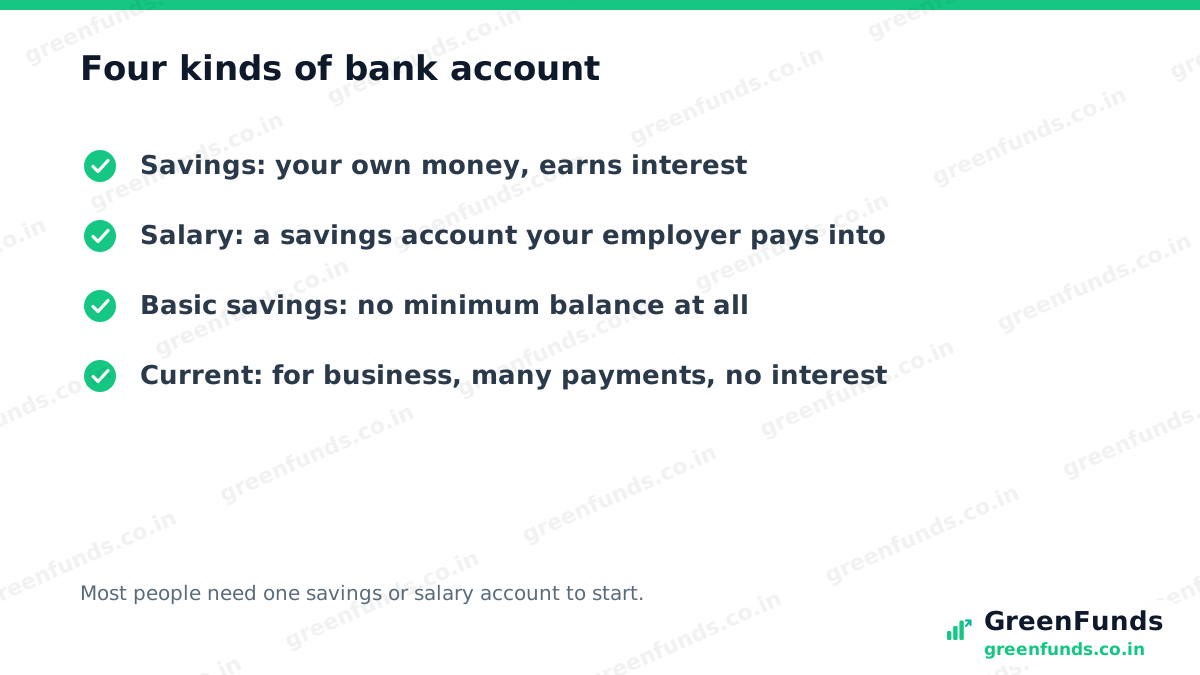
Savings account. This is the default. You park your own money, earn a little interest, and pay through UPI, cards or transfers. A savings account usually asks you to keep a minimum balance, and falling below it can trigger a charge. Interest here is low, so it suits money you need soon, not money you want to grow.
Salary account. It is a savings account your employer opens or links for your pay. The perk: most banks waive the minimum balance while salary keeps coming in. The catch comes later.
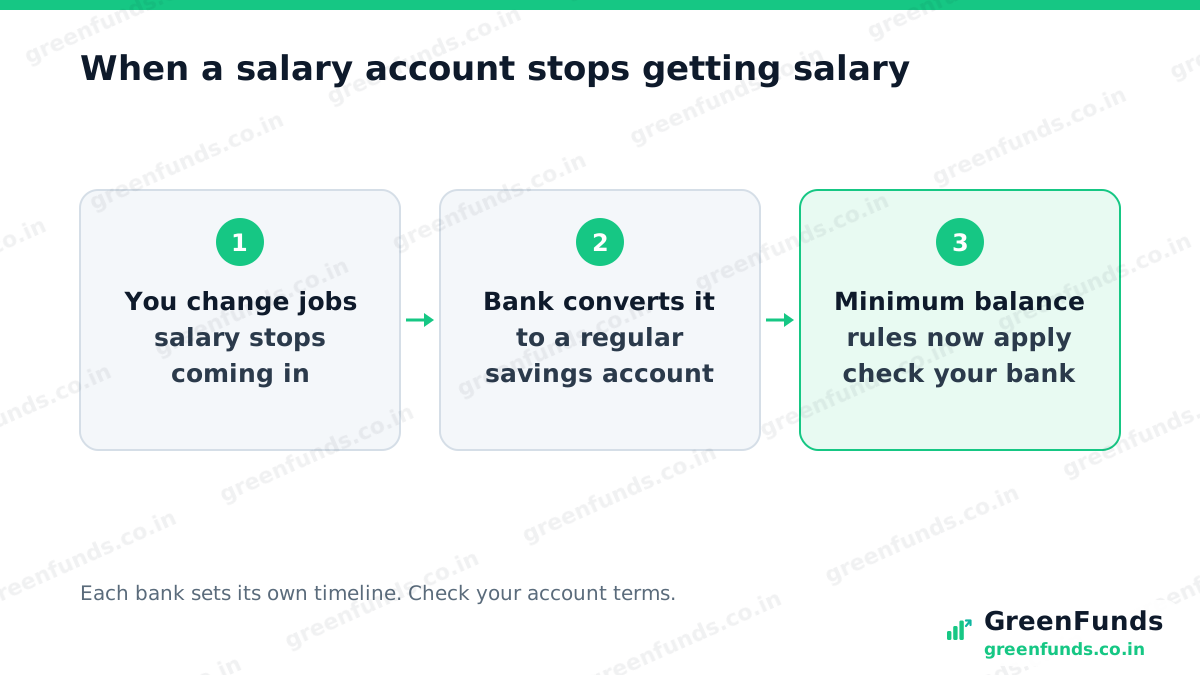
Change jobs, and the old salary account often turns into a regular savings account with regular charges. Plenty of people find this out only when a deduction shows up. If you switch jobs, decide whether to keep that account funded or close it.
Basic savings account. The official name is Basic Savings Bank Deposit Account, or BSBDA. It is the true zero balance account. RBI rules say a bank cannot ask you to keep any minimum balance in it, and must give you free basics: a debit card with no annual fee, at least 25 cheque leaves a year, internet and mobile banking, and at least four free withdrawals a month. UPI, NEFT, IMPS and card payments in shops do not count toward those four, though ATM withdrawals do. You can hold only one of these across all banks.
Did you know? Under RBI’s updated rules, in force from 1 April 2026, your bank must convert your existing savings account into a basic savings account within seven days of a written request. So if minimum balance charges keep biting, you can switch without opening a new account anywhere. Check the current rules before you act; they change.
Current account. This is a current account, built for shops and businesses making many payments a day. It usually pays no interest and asks for a much higher balance. If you are salaried, you almost certainly do not need one.
Is the money safe? Deposits in a bank are insured up to 5 lakh rupees per person per bank, counting both what you put in and the interest on it, through the Deposit Insurance and Credit Guarantee Corporation (DICGC). Check the current limit before relying on it.
A quick example. Say you are 23 and just started work. An illustration: a salary account for your pay, plus your emergency fund parked in fixed deposits or a second savings account. That is usually all the banking you need.
The takeaway. One savings or salary account covers most needs. If minimum balances keep biting, a basic savings account removes them entirely. Before opening anything, read the bank’s schedule of charges, which we unpack in bank charges and minimum balance.
More to read: how to actually start, your first salary slip, decoded, safe habits on UPI, NEFT, RTGS, IMPS or UPI: which transfer to use, how cheques clear, and why they bounce, and what happens to your money if a bank fails.
Questions people ask
What is the difference between a savings account and a current account?
A savings account is for keeping your own money safe and earning a little interest on it. A current account is built for businesses that make many payments a day. It usually pays no interest and asks for a higher balance, so most individuals only need a savings account.
What is a zero balance account?
It usually means a Basic Savings Bank Deposit Account (BSBDA). Under RBI rules, it needs no minimum balance and comes with free basics like a debit card, a cheque book and at least four free withdrawals a month. A salary account is often zero balance too, but only while your salary keeps coming in.
What happens to my salary account when I change jobs?
Once salary stops being credited, most banks convert the account into a regular savings account after a while. From then on, the normal minimum balance and charges apply. Each bank sets its own timeline, so check your account terms or move the account to your new employer's bank.
Can I have more than one savings account?
Yes, you can hold savings accounts in several banks. The exception is the basic savings account: you can have only one across all banks. Keep in mind that every extra regular account may carry its own minimum balance and fees.
Sources
- RBI, Commercial Banks (Responsible Business Conduct) Amendment Directions, 2025 (BSBD accounts), 4 December 2025 Applies from 1 April 2026 or earlier adoption. Check the current RBI directions.
- DICGC, A Guide to Deposit Insurance Cover of up to Rs 5 lakh per depositor per bank, principal and interest together. Check the current limit.