How a cheque clears today, and why cheques bounce
Cheques now clear within the day, and a bounce can be a crime
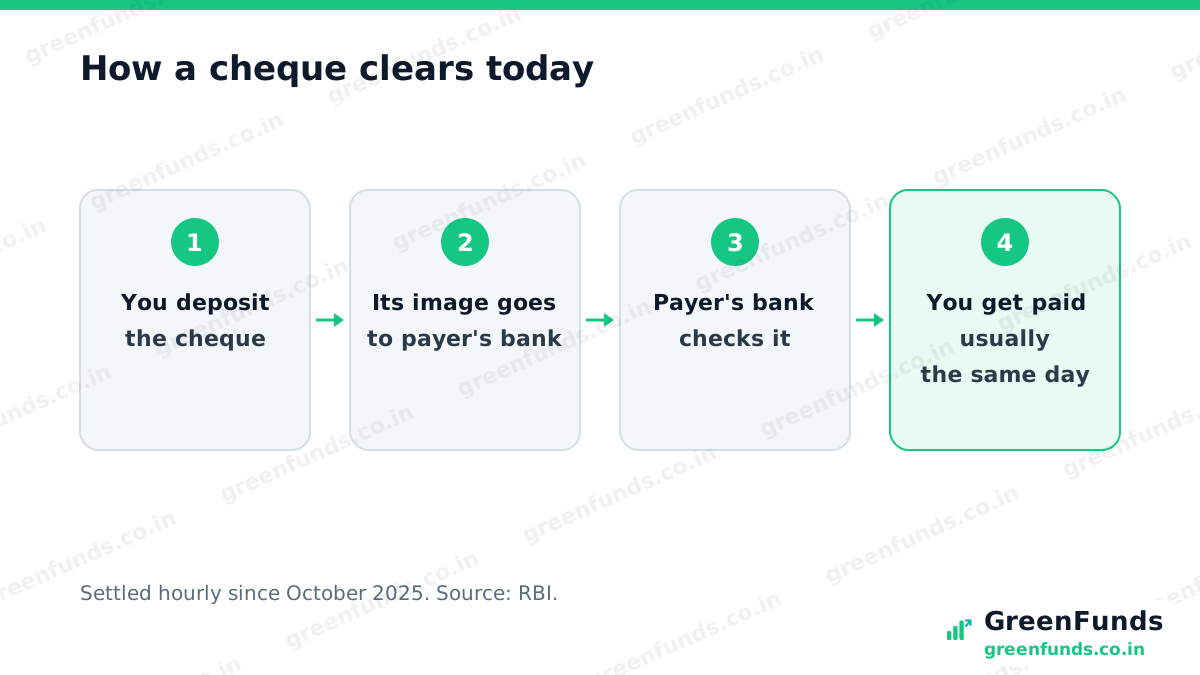
A cheque is a written order from you to your bank: pay this person this much from my account. It still matters for rent, deposits and many business payments. What has changed is how it travels. Your cheque no longer moves as paper. It moves as a photo, and most clear within the same working day.
How it clears. Under the cheque truncation system, your bank scans the cheque and sends the image to the payer’s bank. Since October 4, 2025, the RBI’s continuous clearing settles cheques every hour, and your bank must credit you within an hour of settlement. A faster second phase, planned for January 2026, was put on hold by the RBI in December 2025. Check with your bank for the current timing.
Positive pay, the safety check. For a big cheque, tell your bank about it before it is presented. Through the app, net banking or SMS, you share the date, payee name and amount. The bank matches these against the cheque before paying. The RBI asked banks to offer positive pay for cheques of ₹50,000 and above, and lets banks make it compulsory from ₹5 lakh. Many do, so an unconfirmed large cheque can be sent back.
Did you know? A cheque is valid for only three months from its date, a limit the RBI cut from six months in 2012. And the RBI’s positive pay rules say only cheques that follow the positive pay instructions are accepted under its dispute resolution mechanism, so confirming a big cheque protects you too.
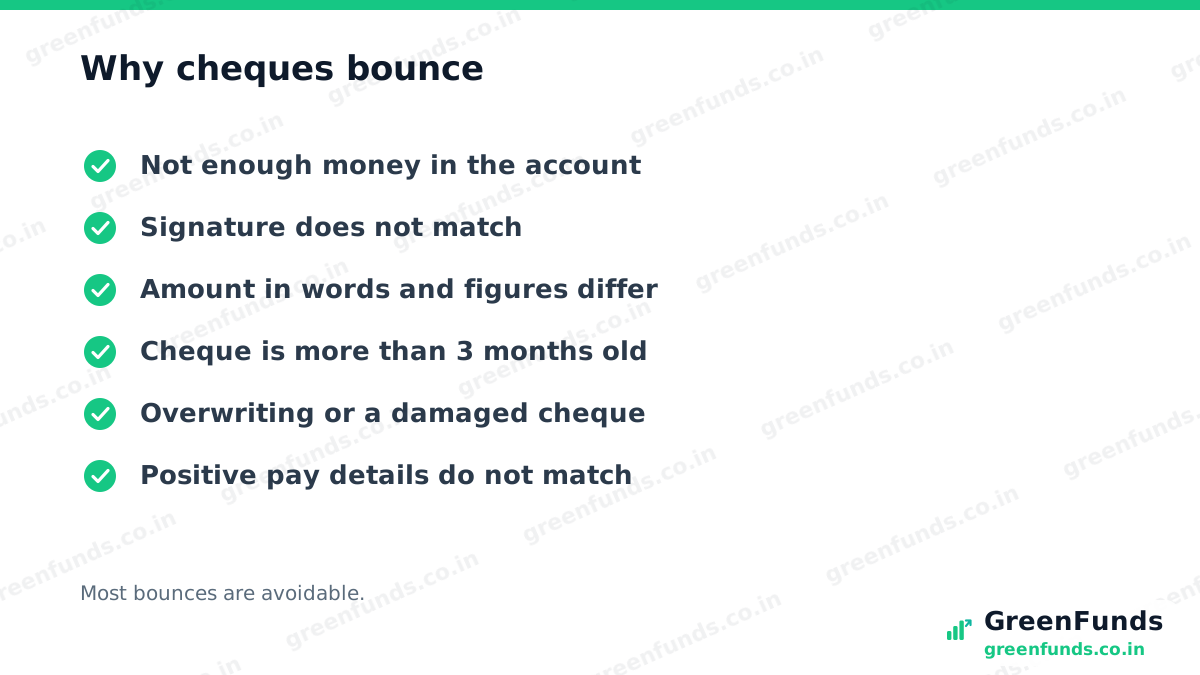
Why cheques bounce. A cheque bounce means the bank refused to pay it. Most bounces come down to a few avoidable mistakes.
What it costs. Banks charge a fee when a cheque you wrote bounces, and often a smaller one when a cheque you deposited comes back. The amounts differ by bank, so check your bank’s fee page. Say a ₹25,000 rent cheque bounces (an illustration): you pay your bank’s charge, your landlord may pay theirs, and your trust takes a hit too.
When a bounce becomes a case. Under Section 138 of the Negotiable Instruments Act, a cheque given to repay a debt that bounces for lack of funds can be a criminal offence. The person paid must send a written demand within 30 days of learning of the bounce. If the writer doesn’t pay within 15 days of receiving it, a complaint can follow. The law allows up to two years in jail, a fine of up to twice the cheque amount, or both. This is how the law works in general; a real dispute needs a lawyer.
The takeaway. Cheques now clear within the day. Keep enough balance, write the amount the same in words and figures, and confirm big cheques through positive pay. For speed and certainty, a bank transfer is often simpler: here is which bank transfer to use.
More to read: is your money safe if a bank fails and how to report bank fraud.
Questions people ask
How long does a cheque take to clear in India?
Usually the same working day. Since October 4, 2025, the RBI's continuous clearing system settles cheques every hour during the day, and your bank must credit you within an hour of settlement. A second, faster phase planned for January 2026 was put on hold by the RBI in December 2025, so check the current status with your bank.
What is positive pay for cheques?
Positive pay is a safety check. Before a large cheque is presented, the person who wrote it shares its key details, such as the date, payee name and amount, with their bank through the app, net banking or SMS. The bank matches these against the cheque. The RBI asked banks to offer it for cheques of 50,000 rupees and above from January 2021.
Is cheque bounce a criminal offence?
It can be. Under Section 138 of the Negotiable Instruments Act, a cheque that bounces for lack of funds, given to pay a debt, is an offence if the writer does not pay within 15 days of a written demand. The law allows up to two years in jail, a fine of up to twice the cheque amount, or both. This is general education about the law, so speak to a lawyer for a real case.
How long is a cheque valid?
Three months from the date written on it. The RBI cut the validity of cheques, drafts and pay orders from six months to three months from April 1, 2012. A bank will not pay a cheque that is older than that.
Source: RBI circulars on continuous cheque clearing (August 2025, phase 2 deferred December 2025) and positive pay (September 2020); Negotiable Instruments Act, 1881. Rules and timings change, check the current RBI position.
Found this useful? You can buy us a coffee. It keeps GreenFunds free.Flag a possible issue
Was this helpful?
Thanks for the signal.
Comments
Share your experience or a question. Be kind, stay on topic. This is reader discussion, not financial advice.
No comments yet. Be the first to share.