Sinking funds: saving a little at a time for big expenses
Break a big, known expense into small monthly savings
Some big expenses are not surprises at all. The yearly insurance premium, the festival spending, the school fees, the car service: you know they are coming, and roughly what they will cost. A sinking fund is the simple habit that stops them from hurting. You save a little each month ahead of time, so the money is ready when the bill lands.
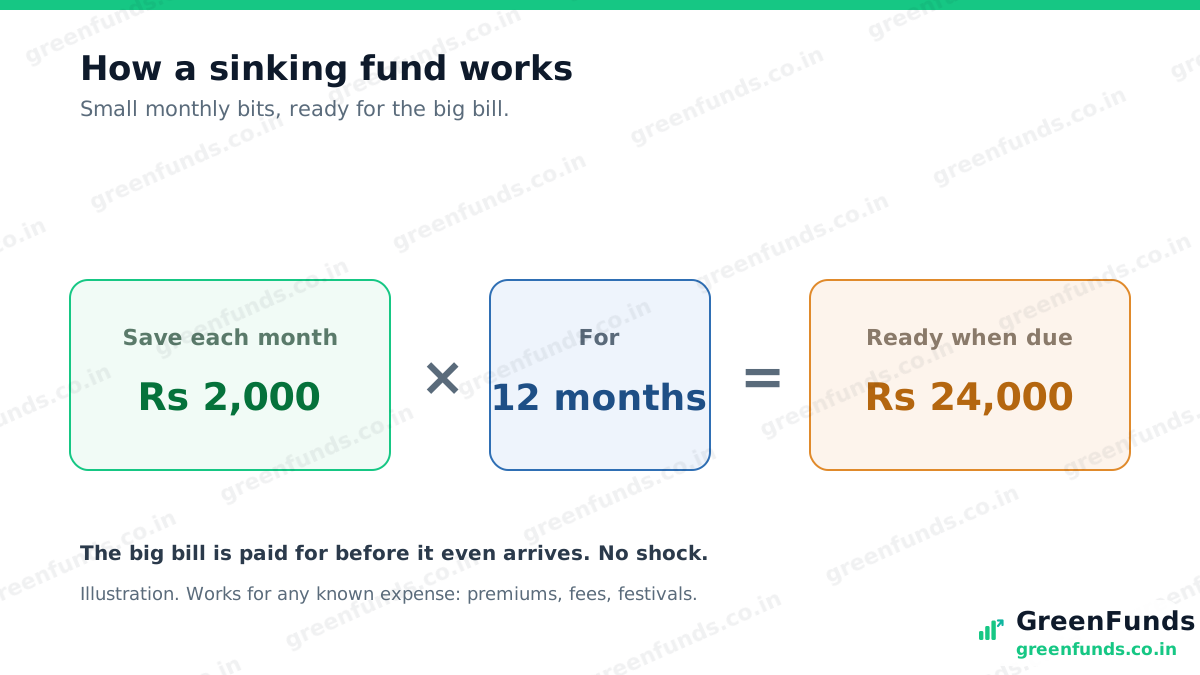
The idea. Instead of being hit by a large amount all at once, you break it into small monthly pieces. If a premium of 24,000 rupees is due in a year, you set aside 2,000 rupees a month. When the bill arrives, it is already paid for. The shock becomes a non-event.
Why it is different from an emergency fund. This trips people up, so it is worth being clear. An emergency fund is for the unpredictable: a job loss, a sudden medical bill. A sinking fund is for the predictable: a known expense on a known date. They do different jobs, and keeping them apart matters.
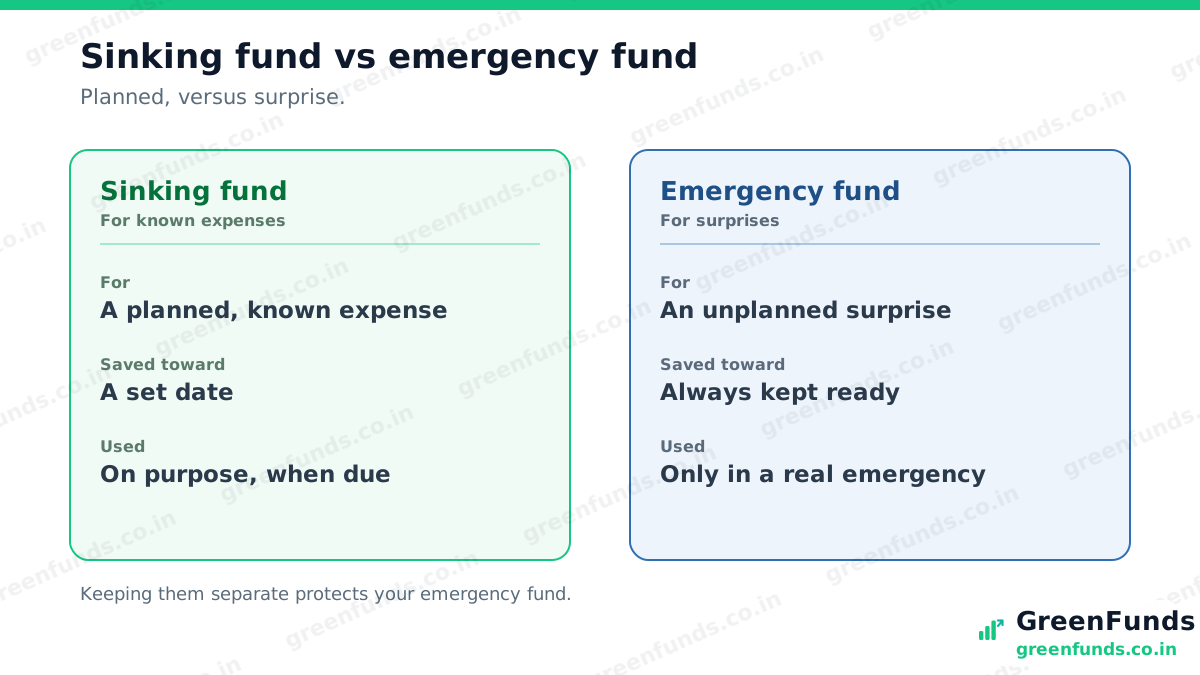
Did you know? The quiet benefit of a sinking fund is that it protects your emergency fund. Without one, a big but expected bill forces you to dip into the money meant for true surprises, leaving you exposed. A sinking fund keeps each pot doing its own job.
How to set one up. List the big expenses coming in the next year or two, and what each will cost. Divide each by the months until it is due, and save that amount every month, ideally in a separate account so it is not spent by mistake. You can run several small sinking funds at once, one per goal.
Where to keep it. Because you will need the exact amount on a known date, keep a sinking fund somewhere safe and easy to reach, separate from your daily spending. It should not ride the market, since a fall just before the due date would leave you short.
The takeaway. A sinking fund turns a big, known expense into small, painless monthly savings, and keeps your emergency fund free for real surprises. List what is coming, divide by the months, and save it aside. Your budget stops lurching from one big bill to the next.
More to read: the emergency fund, your buffer, the 50-30-20 budget, and setting money goals by time horizon.
Questions people ask
What is a sinking fund?
A sinking fund is money you set aside gradually, a little each month, for a specific big expense you know is coming, such as an annual insurance premium, school fees, a festival, or a planned trip. Instead of being hit by the full amount at once, you save small amounts ahead of time so the money is ready when the bill arrives.
How is a sinking fund different from an emergency fund?
An emergency fund is for surprises you cannot predict, like a job loss or a sudden medical bill. A sinking fund is for expenses you can predict, like a yearly premium or a wedding you are planning for. Keeping them separate means a known big bill does not force you to raid the emergency fund meant for true surprises.
How do I start a sinking fund?
List the big expenses you know are coming in the next year or two and roughly what each will cost. Divide each total by the number of months until it is due to get a monthly amount, then save that much every month, ideally in a separate account so it is not spent by accident. When the expense arrives, the money is waiting.
Where should I keep a sinking fund?
Somewhere safe and easy to reach, separate from your spending account, since you will need the exact amount on a known date. A separate savings account or a short-term, low-risk option works well. Because the money is for a near, fixed date, it should not be exposed to market ups and downs.