How much do you need to retire? A simple way to estimate
The target is driven by your spending, not your salary
The question sounds impossible to answer: how much is enough to stop working? But the mystery clears once you know the trick. The retirement number is not built from your salary. It is built from your spending, because what your savings have to cover is your expenses, year after year, once the salary stops.
Start from what you spend. Work out roughly what you expect to spend in a year once retired, in today’s money. That yearly figure is the foundation of everything. Someone who spends 6 lakh rupees a year needs a very different pot from someone who spends 15 lakh, no matter what either earned while working.
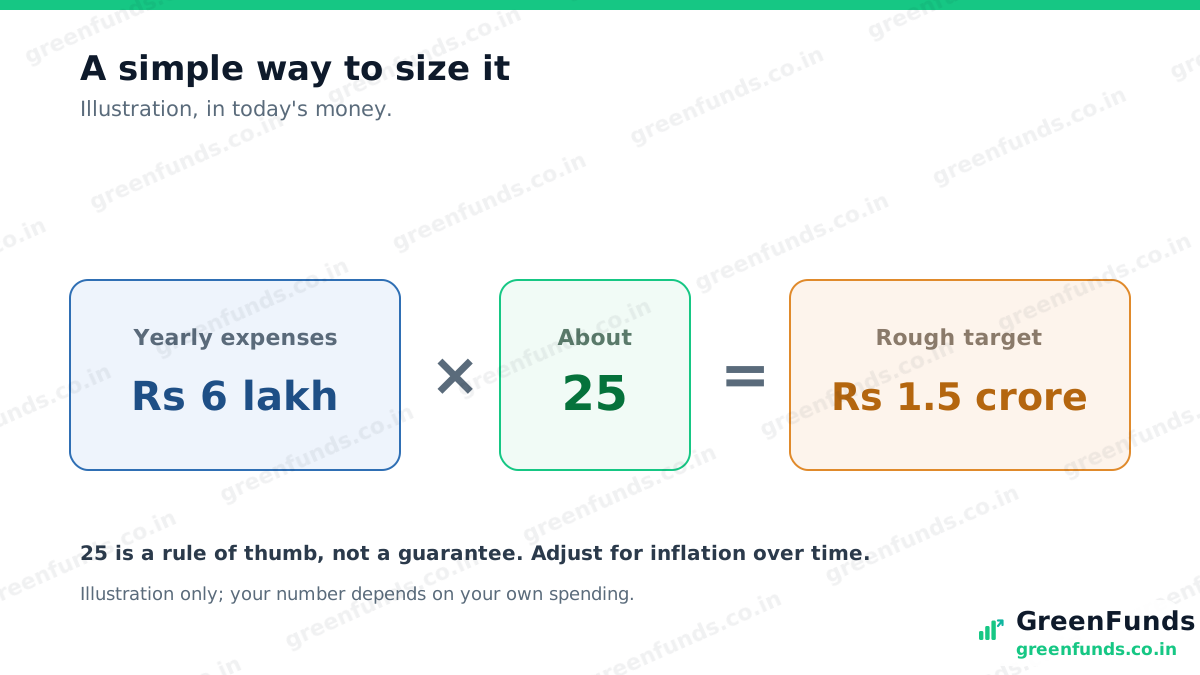
The rule of thumb. A widely used shortcut is to aim for a pot of about 25 to 30 times your yearly expenses. The idea is that such a pot, invested sensibly, can support those expenses through a long retirement while you draw down only a small slice each year. For 6 lakh rupees of yearly spending, that is roughly 1.5 to 1.8 crore rupees, in today’s terms.
Did you know? The retirement number is driven by your spending, not your income. That is why someone on a modest salary who lives simply can need a smaller pot than a high earner with an expensive lifestyle. Controlling your future expenses is as powerful as earning more.
Inflation changes everything. The catch is that prices rise. A lifestyle that costs 6 lakh rupees today could cost far more in 25 years. So the target has to be thought of in inflation-adjusted terms, and your money needs to grow to keep pace, which is why a long retirement plan usually keeps some equity for growth. See why inflation matters.
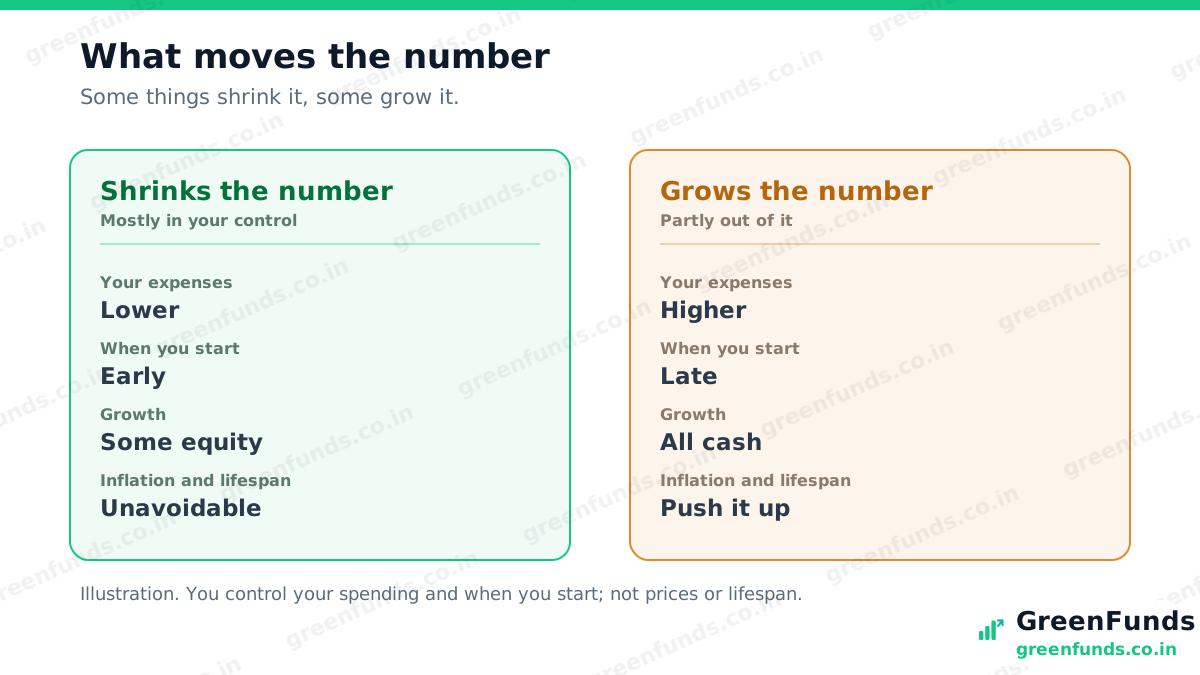
The levers you control. Two things shrink the number: spending less in retirement, and starting early so compounding does the heavy lifting. Two things grow it: a more expensive lifestyle, and simply living longer, which is a good problem but a real cost. You cannot control inflation or your lifespan, but you can control your savings rate and when you start.
The takeaway. Estimate your yearly retirement spending, multiply by about 25 to 30, and adjust for inflation to get a usable target. It is a starting point, not a final answer, so revisit it over time. The sooner you start, the smaller the monthly effort to get there.
More to read: the full retirement planning guide, how compounding works, and asset allocation for a long goal.
Questions people ask
How much money do I need to retire?
A common rule of thumb is a pot of about 25 to 30 times your yearly expenses, adjusted for inflation. So if you expect to spend 6 lakh rupees a year in today's money, a rough target is around 1.5 to 1.8 crore rupees in today's terms. Treat it as a starting estimate to aim at, not a precise promise, and revisit it as life changes.
Is the retirement number based on income or expenses?
On expenses, not income. What matters is how much you will spend each year in retirement, because that is what your savings must cover. Two people on the same salary can need very different amounts if one spends far more than the other. Start from your expected yearly spending, then size the pot around it.
Why does inflation matter for my retirement number?
Because prices keep rising, the same lifestyle costs more each year. A number that looks big today may buy much less in 25 years. So the target must be set in inflation-adjusted terms, and your money needs some growth to keep pace, which is why a long retirement plan usually holds some equity.
What is the 25 times rule?
It is a shorthand that says a pot of about 25 times your yearly expenses can, if invested sensibly, support those expenses through a long retirement, drawing down a small part each year. It is a rough guide drawn from long-term studies, not a guarantee, and the right multiple for you depends on your age, health and how you invest.
Sources
- Rule-of-thumb retirement multiple (about 25 to 30 times yearly expenses) A general planning guideline, not a guarantee; figures in examples are illustrative. This is education, not advice.