REITs explained: owning rent-earning property in small amounts
A way to own a slice of commercial real estate, listed and liquid
Owning rent-earning property usually means a huge amount of money, a lot of paperwork, and the hassle of being a landlord. A REIT offers a different route: it lets you own a small slice of large, professionally run commercial property, and buy or sell that slice on the stock exchange like a share.
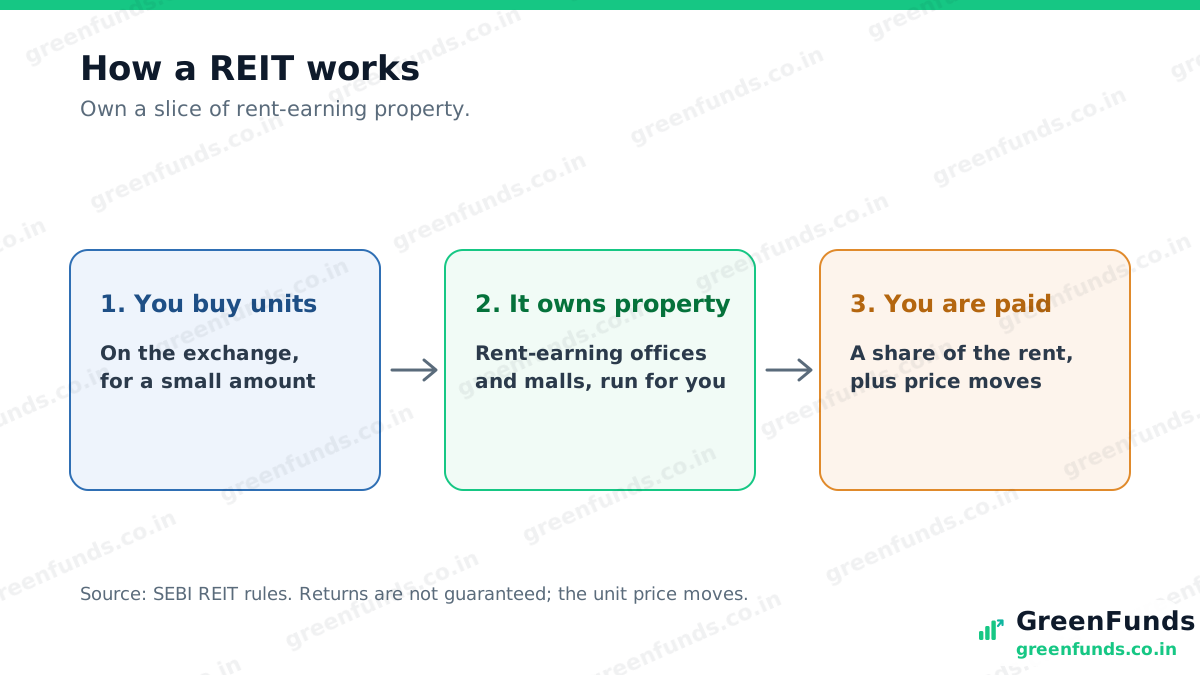
What a REIT is. REIT stands for Real Estate Investment Trust. It is a company that owns income-producing commercial real estate, such as office parks and malls, pools money from many investors, and lists units on the exchange. Buy a few units and you own a tiny share of all those properties, and a share of the rent they earn.
How it pays you. A REIT earns money in two ways, and passes it on. The properties collect rent, and most of that income is paid out to unit-holders as regular distributions. On top of that, the unit price can rise or fall on the exchange. So your return is a mix of income from rent and possible growth in the price.
Did you know? Market rules require a REIT to pay out most of its income, at least 90% of its net distributable cash flows, to unit-holders. That is why REITs are known for regular distributions: they are built to hand the rent through to you, rather than keep it.
The risks to weigh. A REIT is regulated by the market regulator SEBI and is far easier to buy and sell than a building, but it is not a guaranteed income. The unit price moves with the property market and with interest rates, and rent can dip if buildings sit empty. It is a market-linked investment with real ups and downs, so it fits as one part of a diversified plan, not a safe deposit.
Where it fits. For someone who wants some exposure to commercial property and a stream of income, without the cost and effort of buying real estate, a REIT can be a convenient, liquid option. How much to hold is part of your overall asset allocation, and depends on your goals and comfort with risk.
The takeaway. A REIT turns large, illiquid commercial property into small, tradeable units that pay you a share of the rent. It offers income and convenience, but carries market risk, so treat it as one diversifier among others.
More to read: asset allocation, where a REIT fits, understanding risk and return, and what the stock market is.
Questions people ask
What is a REIT?
A REIT, or Real Estate Investment Trust, is a company that owns income-earning commercial property such as office parks and malls, and lets ordinary investors own a slice of it by buying units on the stock exchange. You get a share of the rent the properties earn, plus any rise in the unit price, without having to buy a whole building yourself.
How do REITs make money for investors?
Two ways. First, the properties earn rent, and the REIT passes most of that income to unit-holders as regular distributions. Second, the unit price can rise or fall on the exchange, like a share. So you earn a mix of income from rent and potential growth, though both can vary.
Are REITs a safe investment?
They are regulated by the market regulator SEBI and are more liquid than owning property directly, but they are not risk-free. The unit price moves with the property market and with interest rates, and rental income can fall if occupancy drops. Treat a REIT as a market-linked investment with its own ups and downs, not as a guaranteed income.
How is a REIT different from buying property?
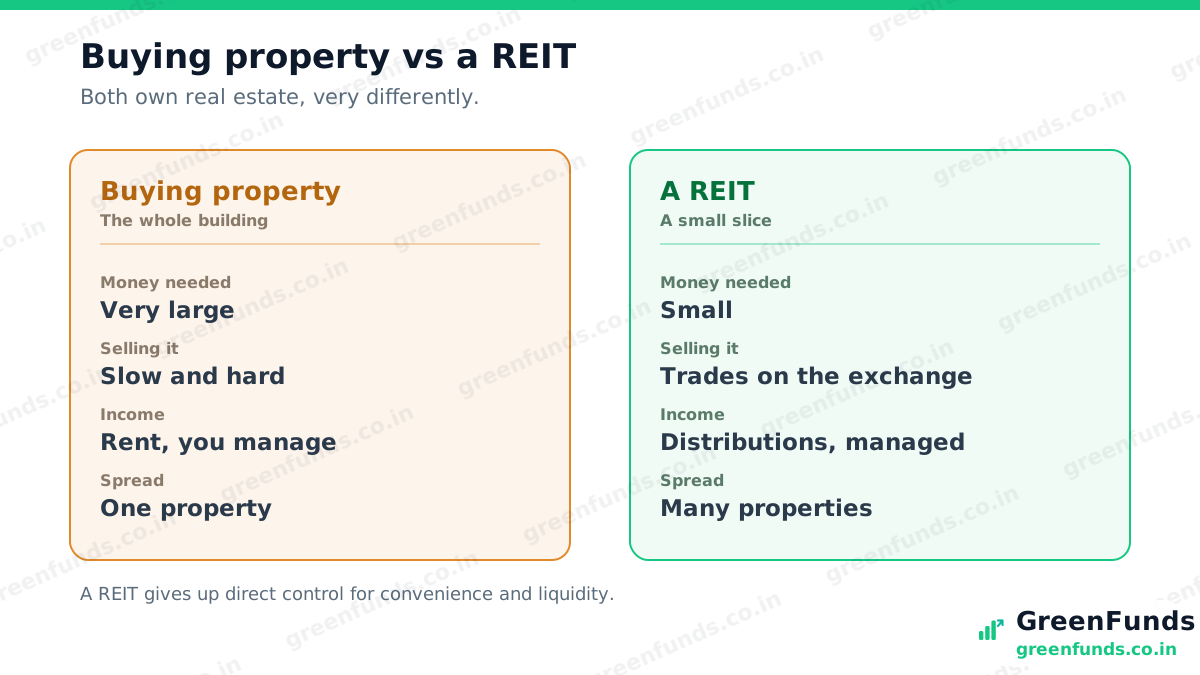
Buying property needs a very large sum, is hard to sell quickly, and means managing it yourself. A REIT needs only a small amount, trades on the exchange so it is easy to buy and sell, spreads your money across many properties, and is managed for you. You give up direct control and ownership of a specific building in exchange for convenience and liquidity.
Sources
- SEBI REIT regulations, including the income distribution requirement REITs must distribute a large share of their income (at least 90% of net distributable cash flows); confirm current rules with SEBI.