Nomination: making sure your money reaches your family
A few minutes now saves your family months of paperwork later
When someone dies, their money does not move on its own. Someone has to claim it, and prove they are entitled to it. A nominee is the simple tool that makes this easy: it is the person you tell your bank, fund or insurer to pay if you are no longer around. Adding one takes a few minutes and costs nothing.
What a nominee does. For almost every place your money sits, a bank account, a fixed deposit, a mutual fund, a demat account, an insurance policy, a provident fund, you can name a nominee. If you die, the institution can hand the money to that named person quickly, instead of your family having to run a legal process to establish their claim.
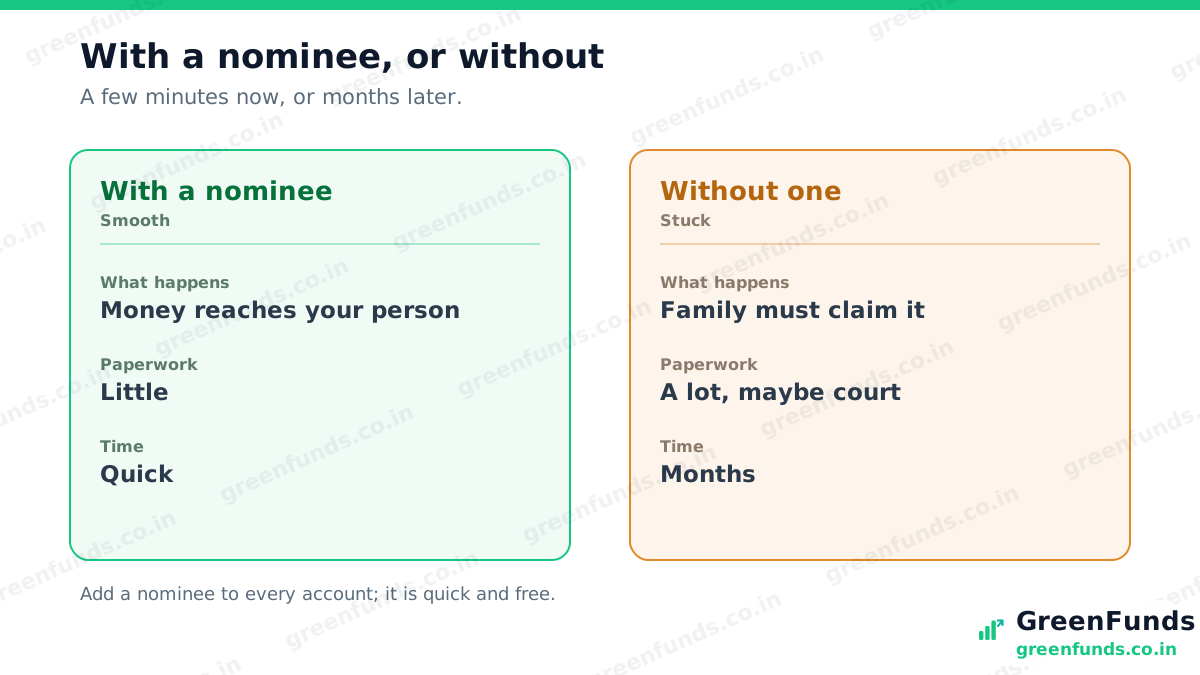
Why skipping it hurts. Without a nominee, your family may have to produce legal papers, sometimes a succession certificate from a court, just to access your own savings. That takes time and money, at the hardest possible moment. A nominee avoids most of that friction. It is one of the highest-value few-minute tasks in personal finance.
The one thing people get wrong. A nominee is not automatically the final owner of the money. This surprises people. In law, a nominee is a receiver or caretaker who collects the money, but who ultimately owns it is decided by your will, or by succession law if you leave no will. Often the nominee and the rightful heir are the same person, but not always.
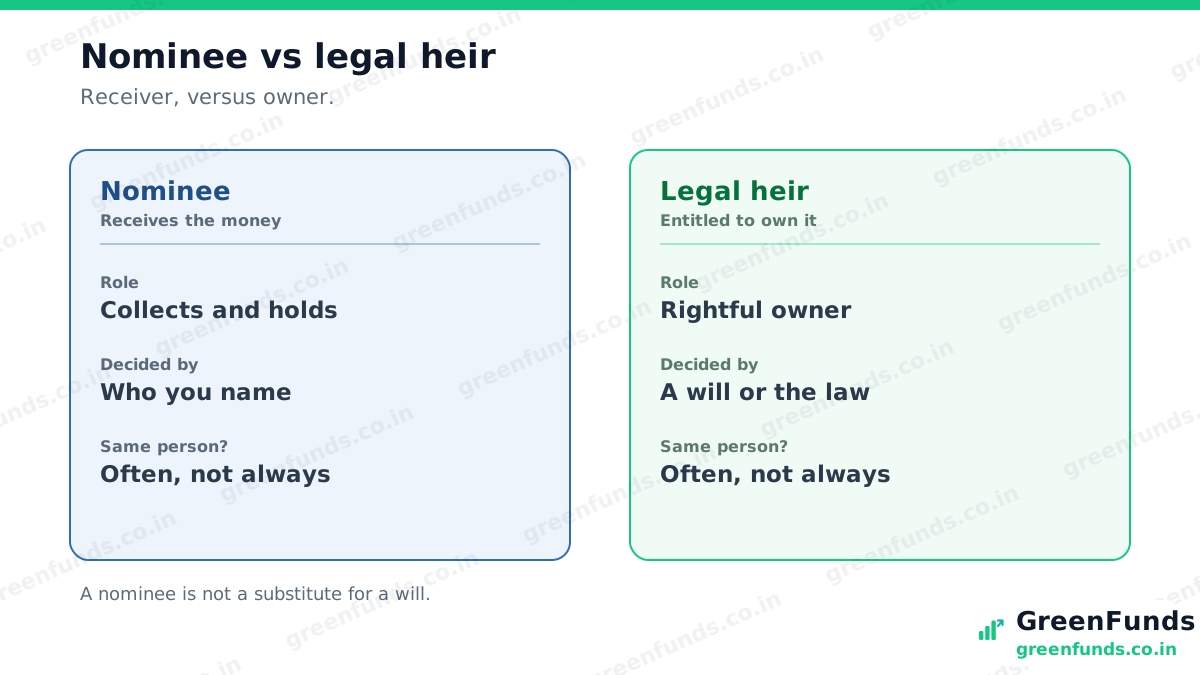
Did you know? Because a nominee only receives the money and does not automatically own it, a nominee is not a replacement for a will. If you want to be sure your money goes to the right people, name nominees for quick access and write a will to settle ownership. The two work together.
A simple checklist. Add or update a nominee on every account: bank, deposits, mutual funds, demat, insurance and provident fund. You can usually do it online in a few minutes. Many products let you name more than one nominee with a share each. And revisit your nominations after big life events, such as marriage or a child, so they stay current.
The takeaway. Nomination is a quick, free step that spares your family a painful process later. Name a nominee everywhere, keep it updated, and remember that a nominee receives the money while a will decides who finally owns it.
More to read: term insurance, the cover your family may need, setting money goals, and the retirement planning guide.
Questions people ask
What is a nominee?
A nominee is the person you name to receive the money in an account if you die, such as a bank account, fixed deposit, mutual fund, demat account, insurance policy or provident fund. Naming a nominee lets the institution hand over the money quickly to a known person, instead of your family having to prove their claim through a long legal process.
Is a nominee the same as a legal heir?
No, and this is the most common confusion. A nominee is a receiver or caretaker of the money, not automatically its final owner. Who ultimately owns it is decided by your will, or by succession law if there is no will. In many cases the nominee and the heir are the same person, but not always, so a nominee alone is not a substitute for a will.
Why is nomination important?
Without a nominee, your family may have to produce legal documents like a succession certificate to claim your money, which takes time, money and stress at the worst possible moment. A nominee lets the bank or fund release the money to a known person quickly. It is a few minutes of effort now that saves months of difficulty later.
Can I have more than one nominee?
For many products, yes. Mutual funds and some other accounts let you name more than one nominee and set the share each should get. Insurance and bank accounts also allow nominees. Check each account, because the rules differ, and keep the nominations updated after big life events like marriage or a child.
Sources
- General rules for nomination across banks, mutual funds and insurance Specifics differ by institution and product; confirm with each provider. Succession is governed by law and any will.