Health insurance portability: how to port your policy and keep credits
You can move your health policy to another insurer at renewal without losing the waiting periods already served
Unhappy with your health insurer’s service, network or premium? You don’t have to start from zero to leave. Portability lets you move to another insurer and keep the time you’ve already served on waiting periods.
What carries over
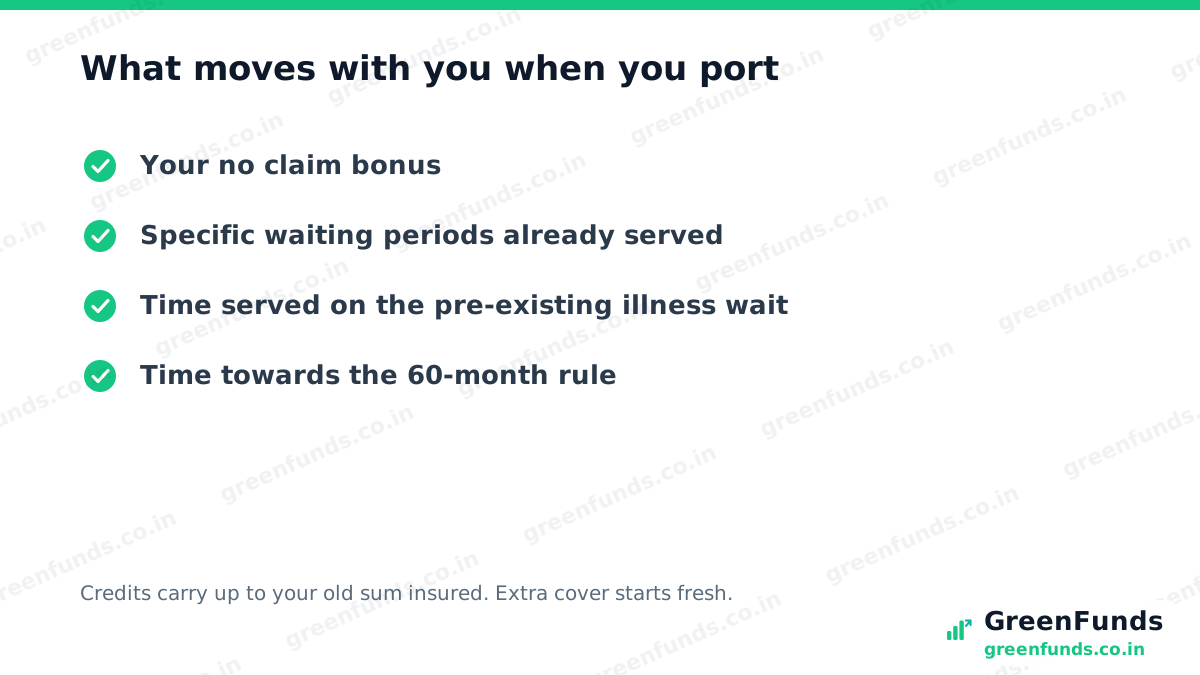
IRDAI, the insurance regulator, lets you transfer these credits when you port, to the extent of your previous sum insured:
- the no claim bonus
- specific waiting periods already served, for listed treatments
- the waiting period for a pre-existing disease
- time towards the 60-month moratorium period, after which a claim can’t be contested for non-disclosure, except for fraud
The new policy must show your continuous cover since the very first policy. Portability works for individual, family floater and group indemnity policies. A floater ports as a whole, with all the family members on it.
When and how to apply
Porting happens at renewal. IRDAI’s process, step by step:
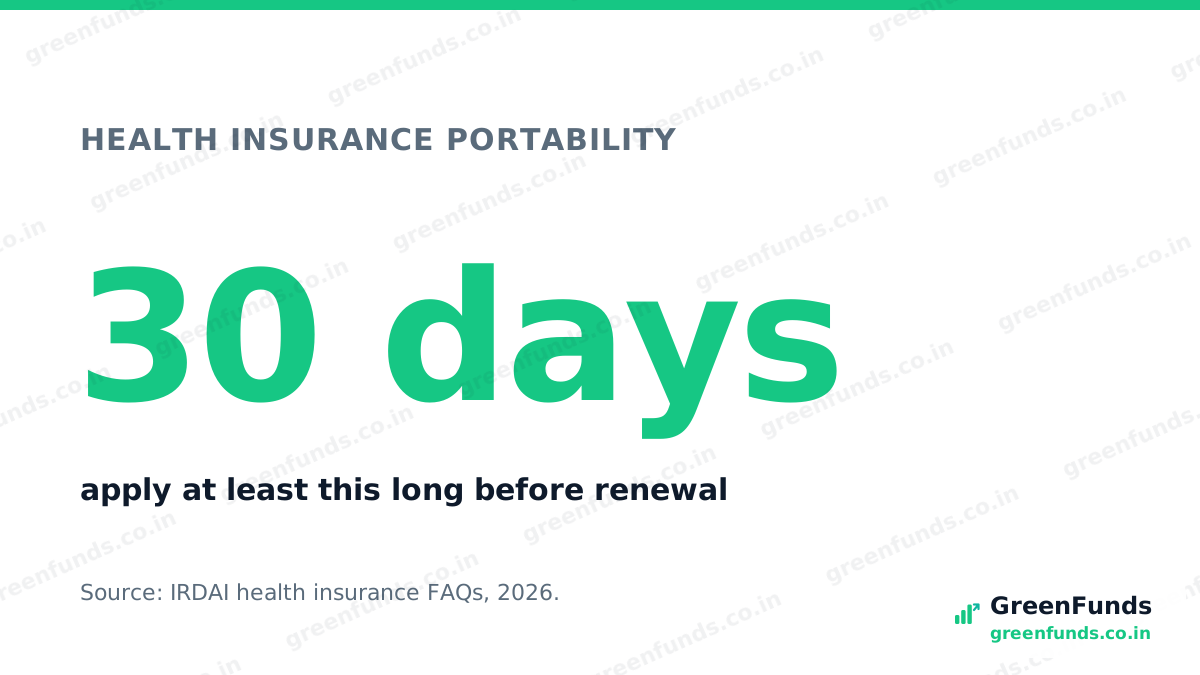
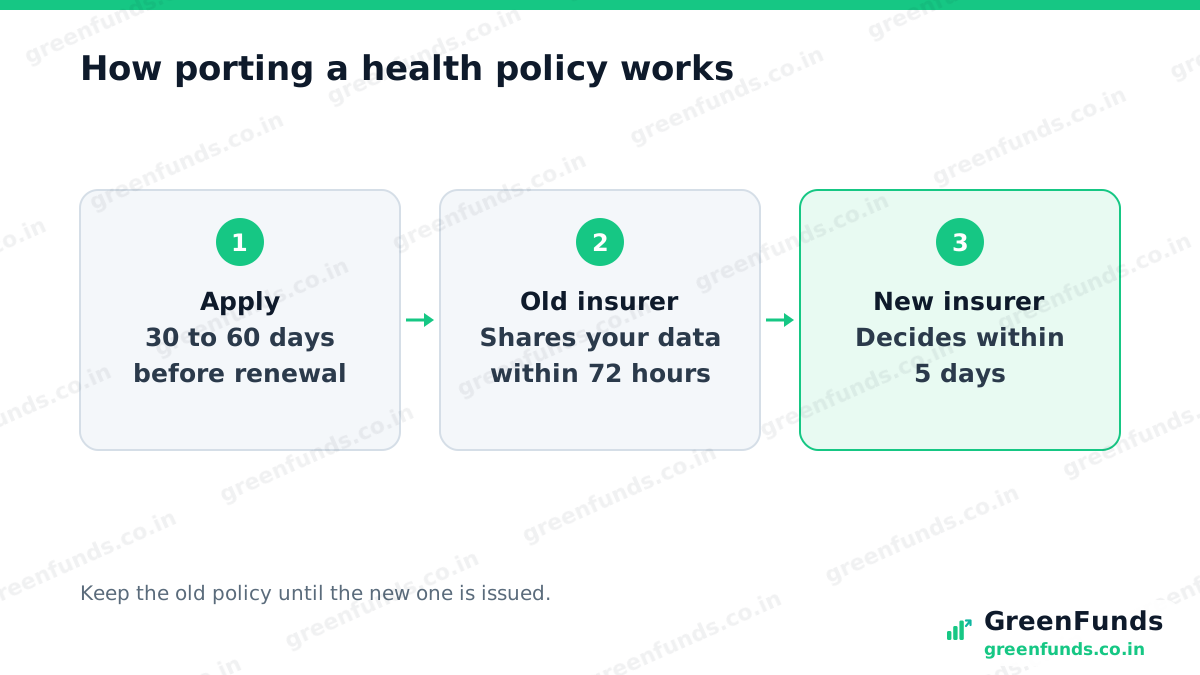
- Apply in the window. Approach the new insurer at least 30 days before renewal, but not earlier than 60 days before it. Insurers may consider a request within 15 days of renewal, but must then ensure there is no break.
- Fill two forms. The new insurer gives you a portability form along with its proposal form.
- Data moves in 72 hours. The new insurer requests your policy and claim history through the Insurance Information Bureau portal. Your old insurer must share it within 72 hours.
- Decision in 5 days. The new insurer must decide and tell you within 5 days of getting that data.
What porting doesn’t guarantee
The new insurer can say no. The 2024 regulations allow portability subject to the new insurer’s underwriting policy. It can ask for tests, charge a higher premium or decline. So keep your old policy alive until the new one is issued. If you let it lapse, you lose every credit.
Extra cover starts fresh. Credits carry only up to your old sum insured. If you raise the cover while porting, the extra amount is new cover. For the 60-month rule, IRDAI says the clock on an increased sum insured starts from the date of the increase.
An illustration. Say Ravi has a 5 lakh rupee policy and has served two years of a three-year pre-existing disease wait. He ports and takes 10 lakh with the new insurer. On the first 5 lakh, only one year of waiting is left. The extra 5 lakh is new cover, so the new insurer can apply its waiting periods to that part afresh.
Migration: switching plans with the same insurer
Moving to a different product with your current insurer is called migration. The same credits carry over, to the extent of the earlier sum insured. If an insurer withdraws your product, it must offer you a one-time renewal within 90 days of the withdrawal, or migration to another suitable product.
Did you know? You can’t be refused renewal just because you made a claim. IRDAI’s rules also bar fresh medical checks at renewal unless you raise the sum insured. So porting is a choice, never a forced exit.
The takeaway. Start 60 days before renewal, never let the old policy lapse, and remember that only your existing cover carries its credits. If you’re porting a policy for older family members, read health insurance for parents. Splitting a shared policy? See family floater vs individual cover. And if an insurer later cuts a claim, here is what to do when a health claim is rejected.
More to read: the health insurance guide, how much health cover, and health insurance basics.
Questions people ask
What is health insurance portability?
It is your right to move a health insurance policy from one insurer to another and carry over the credits you have built. Under IRDAI's rules, the credits move to the extent of the sum insured: no claim bonus, specific waiting periods, the pre-existing disease waiting period and the 60-month moratorium period. It applies to individual, family floater and group indemnity policies.
When should I apply to port my health insurance?
At least 30 days before your renewal date, but not earlier than 60 days before it, per IRDAI. Insurers may still consider a request made within 15 days of renewal, but they must then make sure there is no break in cover. Do not let the old policy lapse while the new insurer decides.
How long does porting take?
Your existing insurer must share your policy and claim details through the Insurance Information Bureau portal within 72 hours of the request. The new insurer must then decide and tell you within 5 days of receiving that information.
Can the new insurer reject my portability request?
Yes. IRDAI's 2024 regulations allow portability subject to the new insurer's board-approved underwriting policy, so it can assess your health, ask for tests, load the premium or decline. If it declines, renew your existing policy so your credits stay safe.
What is the difference between portability and migration?
Portability moves your policy to a different insurer. Migration moves it to another product with the same insurer. In both, credits such as waiting periods served carry over to the extent of the previous sum insured.
Source: IRDAI Health Department FAQs, irdai.gov.in/health-dept (page updated 26 October 2026), FAQ 35 to 40 (migration, portability process, credits, moratorium, timelines); IRDAI Master Circular on Health Insurance Business, IRDAI/HLT/CIR/PRO/84/5/2024, 29 May 2024, Chapter I, paras 11 to 13; IRDAI (Insurance Products) Regulations, 2024, Schedule III, clauses 1.4, 1.5, 8 and 10, in force 1 April 2024.
Found this useful? You can buy us a coffee. It keeps GreenFunds free.Flag a possible issue
Was this helpful?
Thanks for the signal.
Comments
Share your experience or a question. Be kind, stay on topic. This is reader discussion, not financial advice.
No comments yet. Be the first to share.