Health insurance for parents: waiting periods, co-pay and tax
Cover for parents is now open at any age, with a pre-existing disease wait of at most 36 months
Hospital bills climb with age, so cover for your parents often matters more than your own. The good news: IRDAI, the insurance regulator, rewrote its health rules in 2024, and several changes help older buyers directly.
What changed in 2024
From 1 April 2024, the Insurance Products Regulations replaced the old 2016 health rules. The parts that matter for parents:
- Age. The old rules asked insurers to allow entry up to at least age 65. The new ones ask them to offer products for all age groups, and to design products for senior citizens. Insurers still assess each proposal, so a medical test or a higher premium is possible.
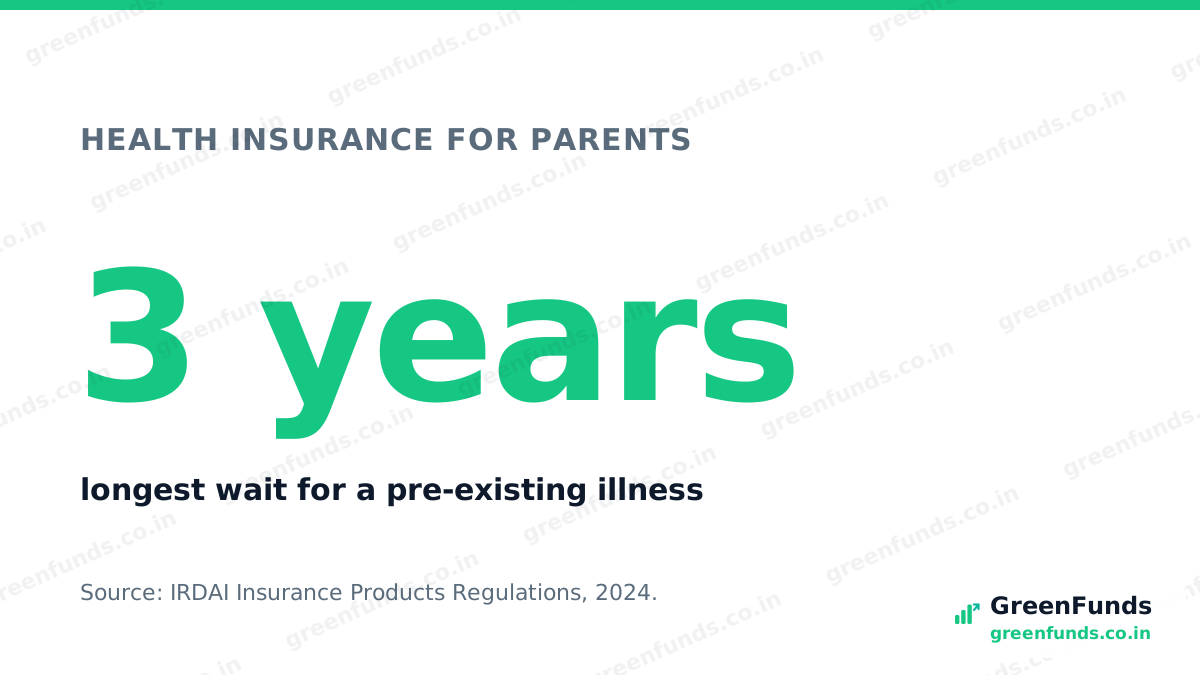
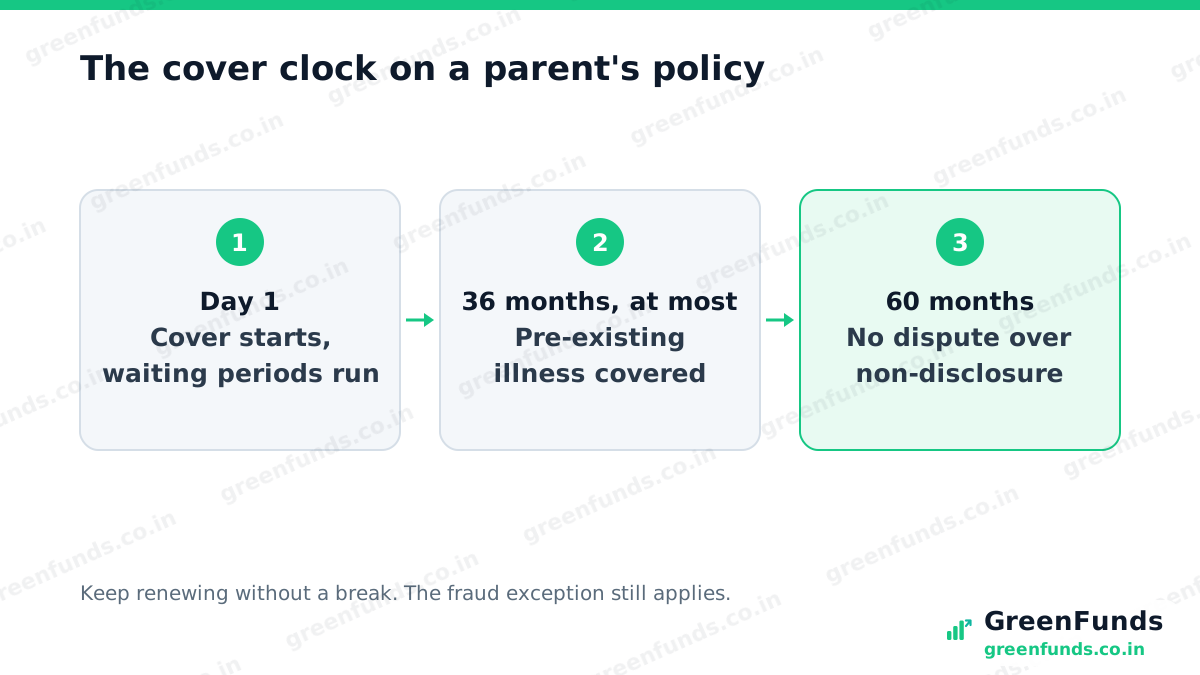
- Pre-existing disease wait. A condition diagnosed or treated in the 36 months before cover starts can be made to wait at most 36 months of continuous cover.
- Specific disease wait. Listed treatments, such as cataract or hernia, can have their own waiting period, also capped at 36 months.
- The 60-month rule. After 60 months of continuous cover, no claim can be contested for non-disclosure, except for proven fraud. IRDAI calls this the moratorium period.
- A senior citizens’ channel. Every insurer must run a separate channel for senior citizens’ health claims and grievances, listed on its website.
Read these terms before you buy
Policies for older buyers often carry cost-sharing terms. IRDAI’s buyer guidance asks you to check three in particular.
- Co-pay. A set share of every admissible claim that you pay. With a 20% co-pay on a 3 lakh rupee claim, you pay 60,000 rupees and the insurer pays 2.4 lakh (an illustration).
- Room rent limit. A cap on the daily room charge. Take an 8,000 rupee room on a 5,000 rupee limit for four days, and 12,000 rupees of room rent is yours (an illustration). Some policies also cut linked charges in proportion, so read the wording.
- Sub-limits. Caps on particular treatments, whatever your sum insured.
Separate cover or add them to your floater?
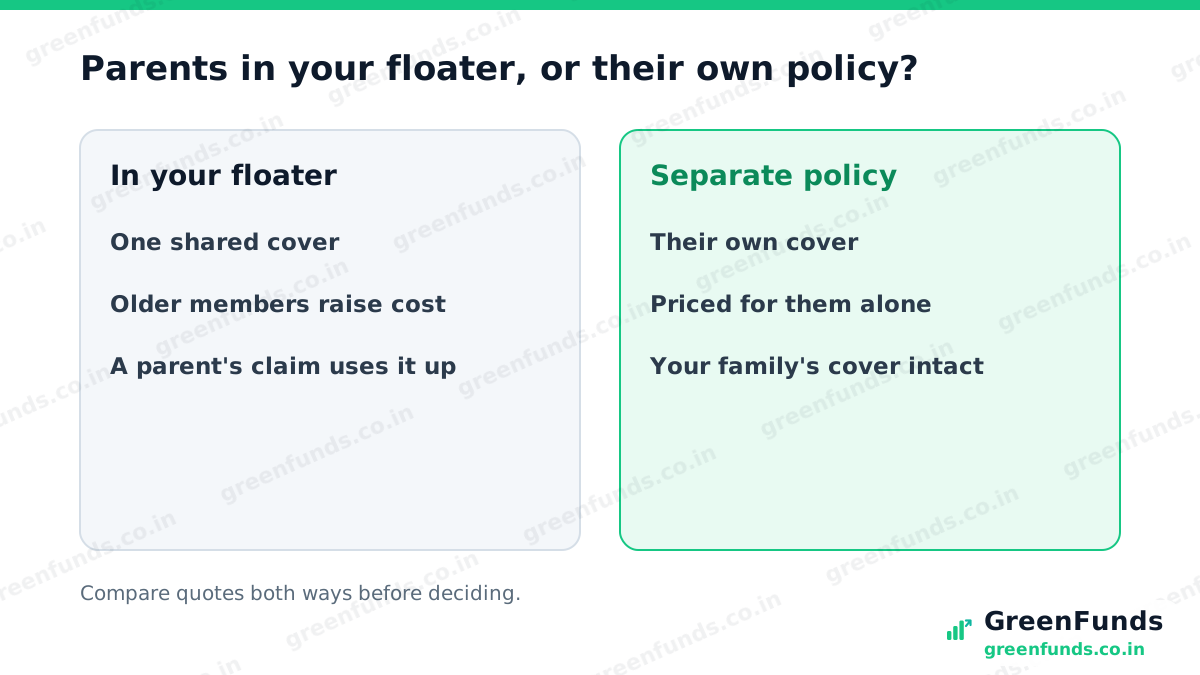
You can add parents to a family floater, but there are trade-offs. IRDAI lists age as a key pricing factor, so older members can push up the cost of the whole policy. One large claim for a parent can also use up cover your children share. Our guide to family floater vs individual cover works through a rupee example.
The tax benefit
On the old tax regime, premiums for your parents can be deducted up to 25,000 rupees a year, or 50,000 rupees if either parent is 60 or older. This bucket sits apart from the one for yourself, your spouse and children. The deduction, long known as section 80D, is now section 126 of the Income-tax Act, 2025. The new regime, in section 202, does not allow it.
An illustration. Say you pay 45,000 rupees a year for your senior parents’ policy. All of it is within the 50,000 rupee limit. At the 30% old-regime slab, that saves 13,500 rupees before cess. More detail is in the health insurance tax benefit.
Did you know? If your parents already have a policy, you don’t need to restart their waiting periods to get better terms. Porting to another insurer carries over the time already served, to the extent of the existing sum insured.
The takeaway. Buy early, disclose every condition, and keep the cover unbroken so the 36-month and 60-month clocks keep running. Read the co-pay and room rent terms before price. And if a claim is ever cut, know what to do when a health claim is rejected.
More to read: the health insurance guide, how much health cover you need, and super top-up health insurance.
Questions people ask
Is there an age limit for buying health insurance for parents?
IRDAI's Insurance Products Regulations, 2024 require insurers to offer health insurance products for all age groups, and they replaced the 2016 rules, which only asked for entry up to at least age 65. Each insurer still decides on a proposal under its own underwriting policy and may ask for medical tests, so acceptance and premium depend on your parent's health.
What is the waiting period for pre-existing diseases for parents?
At most 36 months of continuous cover, under IRDAI's 2024 rules. Insurers may offer shorter waits. Specific diseases or treatments, such as cataract or hernia, can also have their own waiting period, again of up to 36 months.
Should I add my parents to my family floater or buy them a separate policy?
A separate policy is often simpler. Age is a key factor in pricing, so older members can raise the cost of a shared floater, and one big claim by a parent can use up the cover your children also rely on. A separate policy also keeps your parents' tax deduction in its own bucket. Compare quotes both ways before deciding.
How much tax can I save on my parents' health insurance?
On the old tax regime, premiums for your parents can be deducted up to 25,000 rupees a year, or 50,000 rupees if either parent is 60 or older. This is separate from the limit for yourself, your spouse and children. The deduction sits in section 126 of the Income-tax Act, 2025, long known as section 80D, and the new regime does not allow it.
Can the insurer reject my parent's claim for an illness not disclosed earlier?
Within the first 60 months it can, if the non-disclosure is established. After 60 months of continuous cover, including time under ported or migrated policies, IRDAI's rules say no policy or claim can be contested for non-disclosure or misrepresentation, except for established fraud.
Source: IRDAI (Insurance Products) Regulations, 2024, Schedule III, notified 20 March 2024, in force 1 April 2024 (which repealed the IRDAI (Health Insurance) Regulations, 2016); IRDAI Master Circular on Health Insurance Business, IRDAI/HLT/CIR/PRO/84/5/2024, 29 May 2024; IRDAI Health Department FAQs, irdai.gov.in/health-dept (page updated 26 October 2026); Income-tax Act, 2025, sections 126 and 202, as published by the Income Tax Department.
Found this useful? You can buy us a coffee. It keeps GreenFunds free.Flag a possible issue
Was this helpful?
Thanks for the signal.
Comments
Share your experience or a question. Be kind, stay on topic. This is reader discussion, not financial advice.
No comments yet. Be the first to share.