Travel insurance basics: what it covers and when you need it
A short policy that pays for medical emergencies and trip problems while you travel
Figures checked 2026-11-01
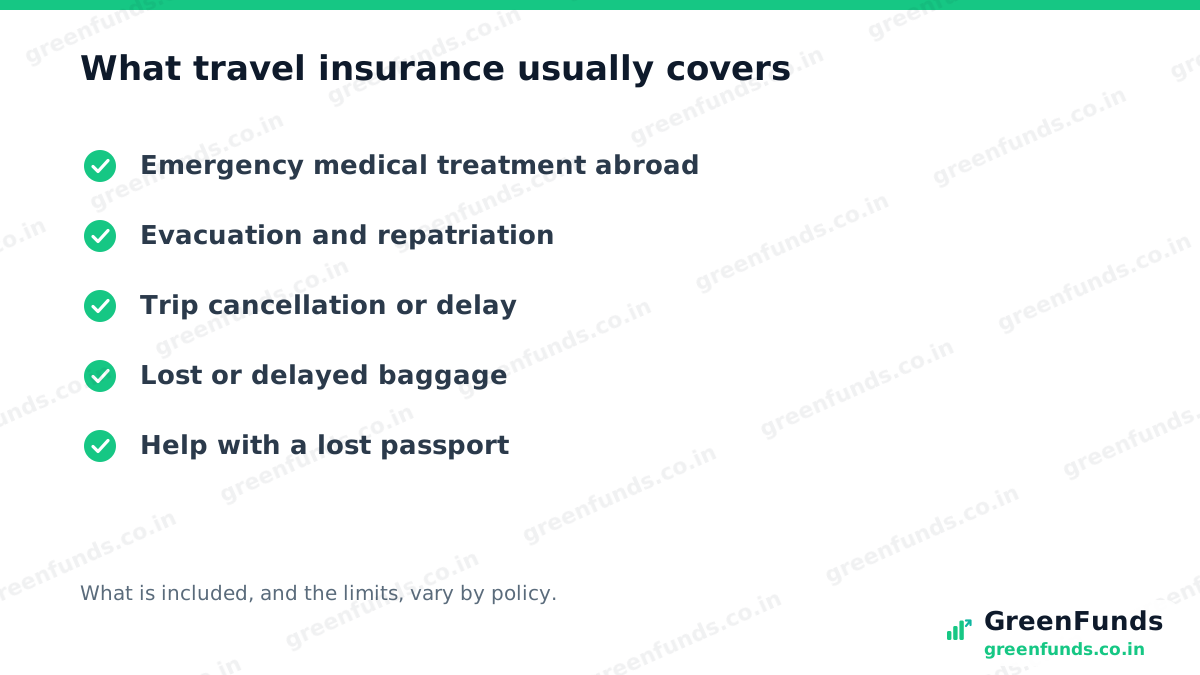
Travel insurance is a short policy that protects you while you’re away, for one trip or a year of trips. Its biggest job is paying for a medical emergency abroad, where a hospital bill can run into lakhs and your Indian health policy usually won’t help. It can also pay when a trip goes wrong: a cancelled flight, lost baggage, a lost passport.
Why medical cover matters most. Most Indian health insurance policies pay for treatment in India. Abroad, even a short hospital stay can cost more than a year’s premium many times over. Emergency medical and evacuation cover is the part of a travel policy you should never skip.
When a visa needs it. Some countries make travel medical insurance a condition of the visa. For the Schengen area in Europe, the German Embassy’s guidance says the policy must cover at least 30,000 euros, be valid in every Schengen country, include emergency hospital treatment and repatriation, and last for your whole trip. Buy it before you apply, since the embassy will ask for proof.
What to check before you buy. Read the Customer Information Sheet that comes with the policy. Look at four things: the medical sum insured, the deductible on each claim, what’s excluded, and how to claim from abroad. Pre-existing illnesses are often excluded or capped, so declare your health honestly. A hidden condition can be a reason to reject a claim later.
Did you know? Schengen visa rules want cover for your whole stay, not just the flight dates you hope for. If your trip runs longer, extend the policy before it ends, since a gap in cover can leave you paying the full bill yourself.
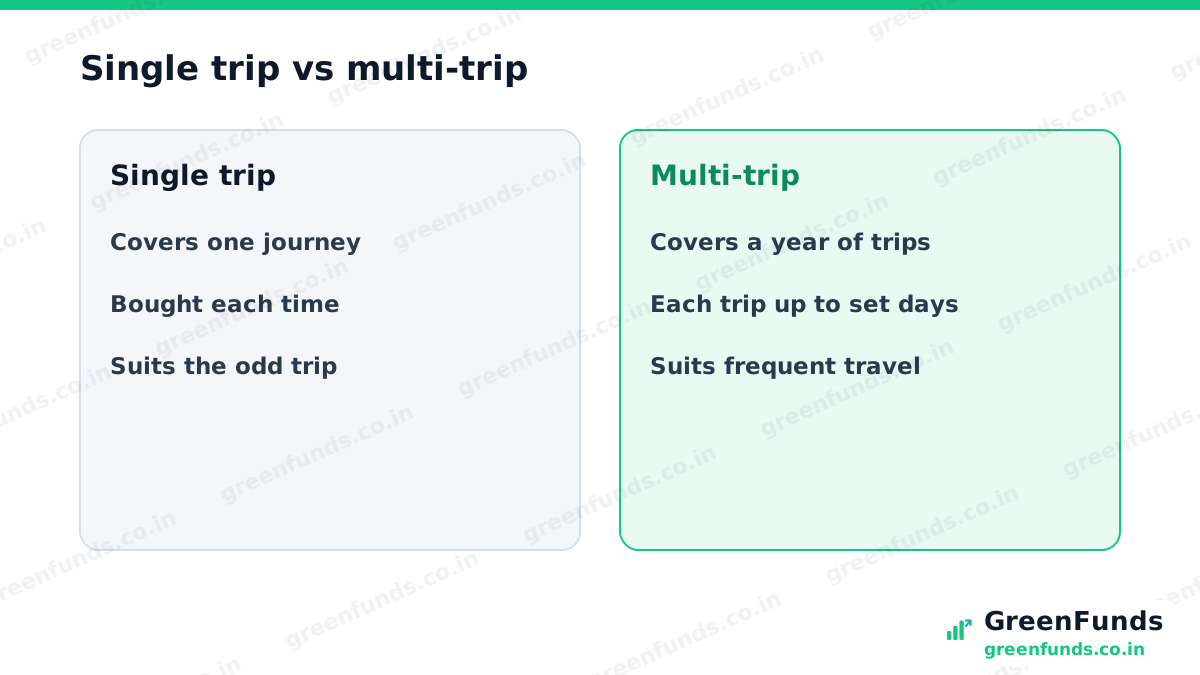
Single trip or multi-trip. A single-trip policy covers one journey. A multi-trip, or annual, policy covers several trips in a year, each up to a set number of days. If you travel abroad often, compare the yearly cost against buying one policy per trip.
Claiming from abroad. Save the insurer’s emergency number before you leave. In a medical emergency, call them first if you can, since many policies arrange cashless treatment through partner hospitals. Keep every bill, report and receipt for anything you pay yourself.
The takeaway. Travel insurance is cheap next to a foreign hospital bill. Make sure the medical cover is high enough, check whether your visa needs a minimum, and read the exclusions before you fly.
More to read: how insurance works, health insurance basics, and credit card charges abroad.
Questions people ask
Is travel insurance mandatory for a Schengen visa?
Yes, for most applicants. The German Embassy's guidance says Schengen visa travel medical insurance must have a minimum cover of 30,000 euros, be valid in all Schengen states, include emergency hospital treatment and repatriation, and cover the whole trip.
Does my Indian health insurance cover me abroad?
Usually not, or only in a limited way. Most Indian health policies pay for treatment in India. Check your policy wording for any overseas or emergency-abroad benefit before you travel, and don't assume it's there.
What does travel insurance usually cover?
The core is emergency medical treatment and evacuation abroad. Many policies also pay for trip cancellation or delay, lost or delayed baggage, a lost passport, and personal liability. What's included and the limits for each vary by policy, so read the schedule of benefits.
Does travel insurance cover pre-existing illnesses?
Often not, or only in an emergency up to a set limit. Pre-existing conditions are a common exclusion. Declare your health honestly when buying, since a hidden condition can be a reason to reject a claim.
Sources
- German Embassy Kuala Lumpur (Federal Foreign Office), Schengen visa travel medical insurance Minimum cover of 30,000 euros; valid in all Schengen states; must include emergency hospital treatment and repatriation; must cover the full trip.
- IRDAI, Master Circular on Protection of Policyholders' Interests, 2024 Customer Information Sheet with every retail policy, listing scope of cover, exclusions, deductibles and the claims procedure; claims under retail general policies to be decided within 7 days of the survey report.