How insurance works: pooling, premiums and claims
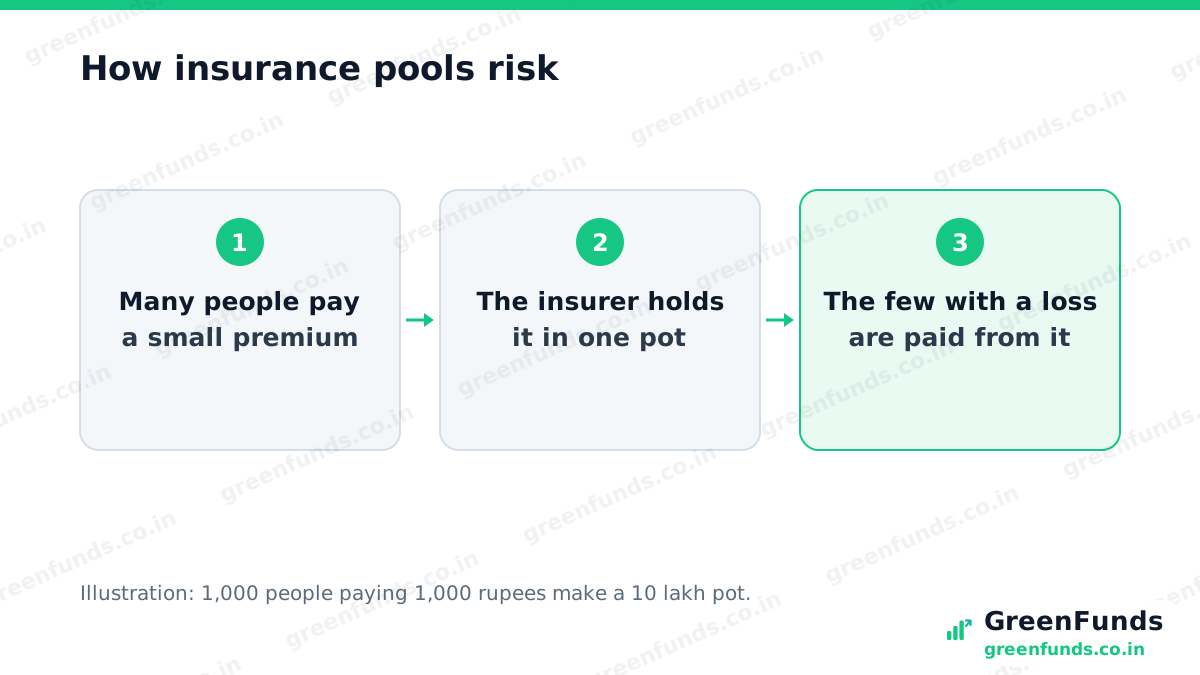
Many people pay a small premium so the few who suffer a big loss get paid
Figures checked 2026-11-01
Insurance is a shared pot of money. Lots of people each pay in a small, fixed amount, and the few who suffer a big loss are paid out of it. You give up a small, certain cost to protect yourself from a large, uncertain one.
Pooling, the core idea. Say 1,000 people each pay 1,000 rupees a year into a pot (an illustration). That’s 10 lakh rupees. In a typical year only one or two of them suffer the loss they’re covered for, so the pot can pay them in full. No single person could easily absorb a 5 lakh rupee shock, but together they can.
The words you’ll meet. The premium is what you pay for the cover. The policyholder is the person who owns the policy. The sum insured is the most the insurer will pay. A claim is your request for payment after a loss.
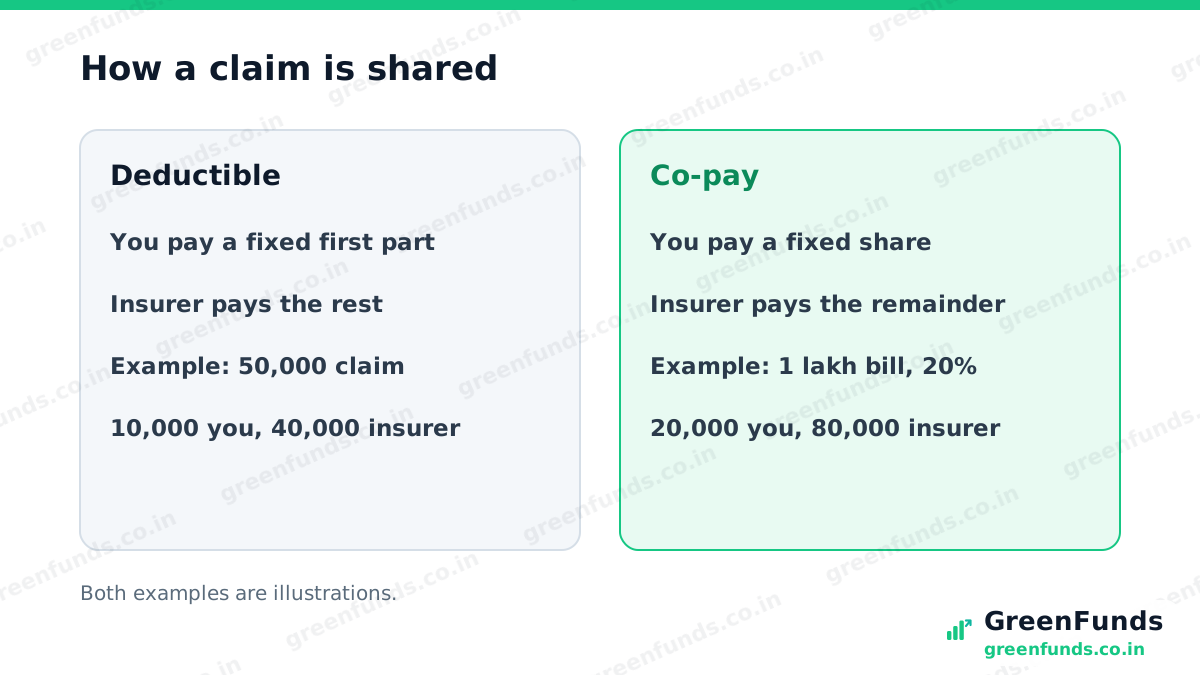
Sharing the cost of a claim. Many policies make you carry a small part of each loss, which keeps the premium down. A deductible is a fixed amount you pay first: with a 10,000 rupee deductible, a 50,000 rupee claim gets you 40,000. A co-pay is a fixed share you always pay: with 20% co-pay on a 1 lakh rupee hospital bill, you pay 20,000 and the insurer pays 80,000. Both figures are illustrations.
What to insure first. Insure the losses you couldn’t pay for yourself, not the small ones. For most families that order is: term insurance if anyone depends on your income, health insurance for hospital bills, and any cover the law requires, like third-party cover on a vehicle, explained in motor insurance. A broken phone screen you can pay for from savings is rarely worth a premium. When you compare insurers, the claim settlement ratio, the share of claims an insurer paid, is one useful signal, but read it alongside the policy terms.
Did you know? IRDAI’s 2024 Master Circular on policyholder protection says no claim may be rejected or closed just because documents are pending or the claim was intimated late. It also gives you a 30-day free look period on life and health policies to cancel if the terms don’t suit you.
What protects you after you buy. Every policy now comes with a Customer Information Sheet, a short summary of what’s covered and what isn’t. Read it before the free look period ends. If a claim goes wrong and the insurer won’t fix it, the insurance ombudsman is a free next step.
The takeaway. Insurance turns a big, unpredictable loss into a small, predictable cost. Insure what would really hurt, understand how much of each claim you’ll carry yourself, and read the summary sheet before the free look window closes.
More to read: term insurance, health insurance basics, home insurance basics, travel insurance basics, how a family claims life insurance, and what you get if you surrender a life policy.
Questions people ask
How does insurance actually work?
Many people each pay a small premium into a shared pot run by the insurer. Most of them never suffer the loss they insured against, so the pot can pay in full the few who do. You swap a small, certain cost for protection against a large, uncertain one.
What is the difference between a deductible and a co-pay?
A deductible is a fixed amount you pay first on a claim before the insurer pays the rest. A co-pay is a fixed share of every claim, such as 20%, that you always pay yourself. Both lower your premium because you carry part of the risk.
How long does a life insurer have to settle a death claim?
Under IRDAI's Master Circular on Protection of Policyholders' Interests, 2024, a death claim must be settled within 15 days of intimation, or within 45 days if it needs investigation. If the insurer is late, it must pay interest at the bank rate plus 2%.
What should I insure first?
The losses you could not pay for yourself: your family's income if you die early, a big hospital bill, and any cover the law requires, like third-party motor insurance. Small losses you can pay from savings are usually not worth insuring.
Sources
- IRDAI, Master Circular on Protection of Policyholders' Interests, 2024 Life claims: death claims settled within 15 days of intimation, or 45 days where investigation is warranted; interest at bank rate plus 2% if late. No claim to be rejected for want of documents or for delayed intimation. 30-day free look period for life and health policies.
- IRDAI, Master Circular on Life Insurance Products, 12 June 2024 Customer Information Sheet with every policy; free look period of 30 days from receipt of the policy document.