Surrendering a life insurance policy: what you get back
Quitting a savings policy early returns less than you paid, and the cover ends
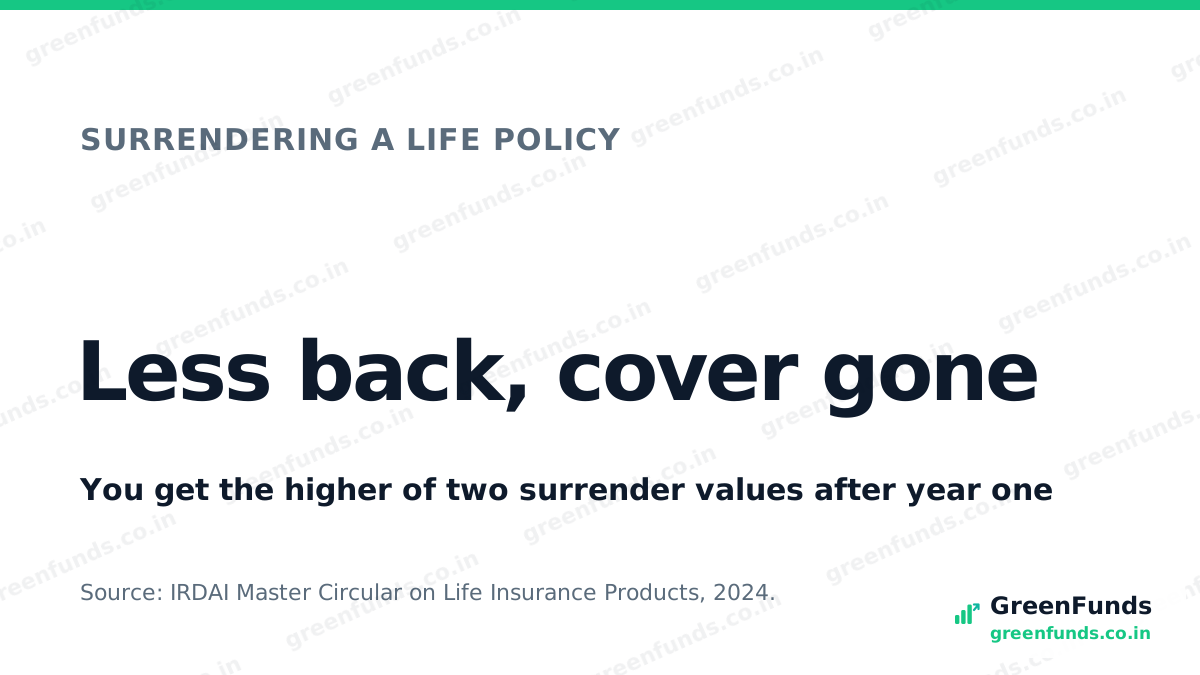
Surrendering a life insurance policy means ending it early in exchange for a cash payout, called the surrender value. It’s an option on savings-type policies, like endowment plans and money-back plans. The catch is twofold: you usually get back less than you paid in, and your life cover stops the day you surrender.
What the rules say now. IRDAI rewrote the surrender rules in its June 2024 Master Circular on Life Insurance Products. Savings and pension policies must pay a surrender value once the first policy year is complete and a full year’s premium has been paid. For single premium policies, and those with a premium paying term under 5 years, it’s payable as soon as the first full premium is in. You get the higher of two numbers: the Guaranteed Surrender Value and the Special Surrender Value. Pure risk products, like a pure term insurance plan, don’t build a surrender value at all.
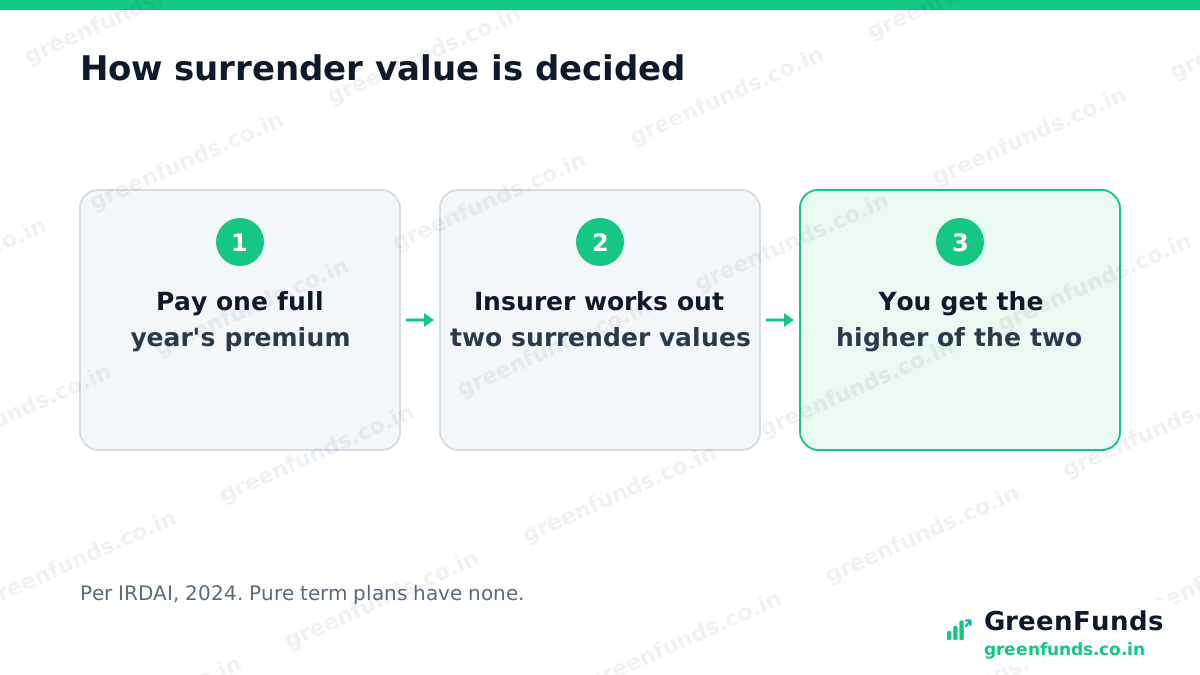
Why it’s still less than you paid. The special value is based on the reduced, “paid-up” benefits your premiums have bought so far, discounted back to today at an interest rate tied to the 10-year government bond yield. Early on, much of your premium has gone into costs and life cover, so the payout is small. If you’ve paid 1 lakh rupees over two years (an illustration), the surrender value can be well below that. Your benefit illustration shows the exact figure for each policy year, and the insurer must state it there.
Did you know? IRDAI’s 2024 circular says insurers must ensure “reasonableness and value for money” for both those who surrender and those who stay. It also made a policy loan facility mandatory on every non-linked savings product that offers a surrender value, so you can borrow against a policy instead of ending it.
Options to check before you surrender.
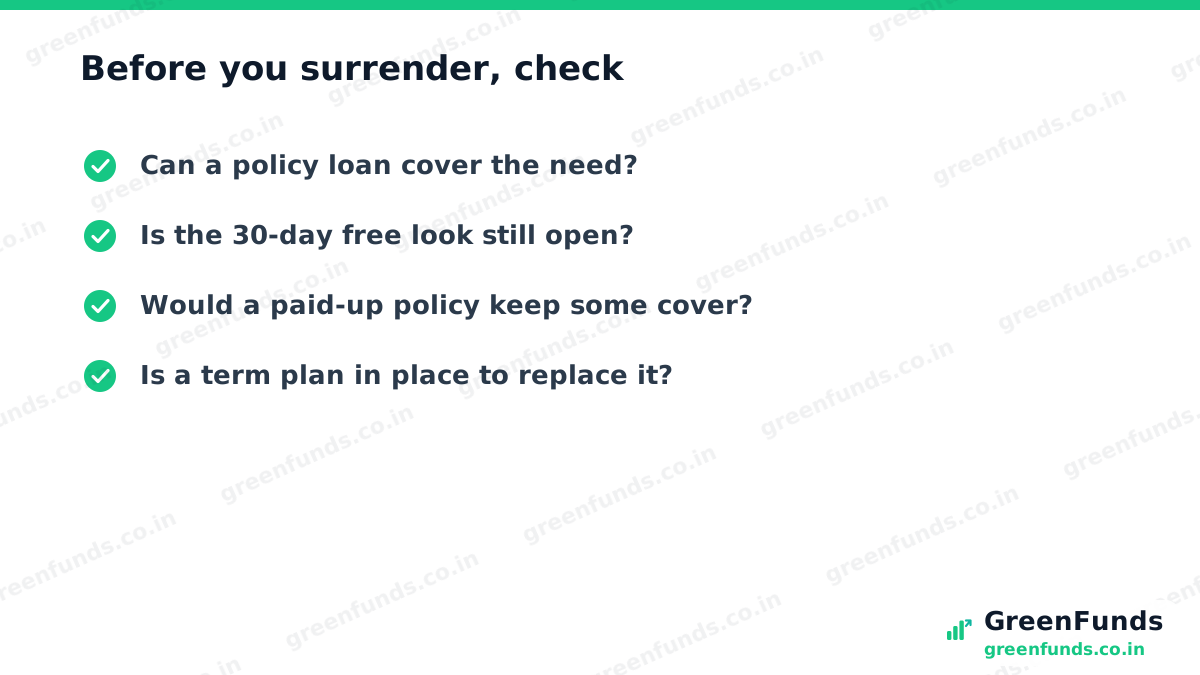
A policy loan can meet a short-term need while the policy carries on. If you bought it within the last 30 days, the free look period lets you cancel for a refund instead. And if the policy was mainly a way to get life cover, make sure a term plan is in place before you let it go, so your family isn’t left uncovered.
Linked plans are different. For a ULIP, you get the fund value minus a surrender charge, with a 5-year lock-in, per IRDAI’s 2024 rules.
How it’s paid. Once you ask, the insurer must pay within 7 days, under IRDAI’s service timelines.
The takeaway. Surrender is a last resort, not a free exit. You’ll get the higher of the two surrender values, but usually less than you paid, and the cover ends. Look at a policy loan or the free look window first, and keep your family covered before you cancel.
More to read: why to avoid mixing insurance and investment, term vs endowment: the real cost, and how a family claims life insurance.
Questions people ask
What is the surrender value of a life insurance policy?
It's the amount the insurer pays if you end a savings-type life policy before maturity. Under IRDAI's 2024 rules, you get the higher of the Guaranteed Surrender Value and the Special Surrender Value, once the conditions are met.
Can I surrender a policy in the first year?
IRDAI's 2024 Master Circular says the surrender value becomes payable after the first policy year is complete, provided one full year's premium has been paid. For single premium policies and those with a premium paying term under 5 years, it is payable as soon as the first full premium is received.
Does a term insurance plan have a surrender value?
Usually not. IRDAI's rules say savings and pension products acquire a surrender value, but pure risk products, like a pure term plan, do not. A term plan simply ends if you stop paying.
How quickly is the surrender amount paid?
Within 7 days of your request, under the turnaround times in IRDAI's 2024 Master Circular on Protection of Policyholders' Interests.
Source: IRDAI, Master Circular on Life Insurance Products, 12 June 2024, para 26 (surrender value, special surrender value) and para 27 (policy loans); IRDAI, Master Circular on Protection of Policyholders' Interests, 2024 (surrender rules, 7-day payout).
Found this useful? You can buy us a coffee. It keeps GreenFunds free.Flag a possible issue
Was this helpful?
Thanks for the signal.
Comments
Share your experience or a question. Be kind, stay on topic. This is reader discussion, not financial advice.
No comments yet. Be the first to share.