Term vs endowment insurance: the real cost of mixing the two
One pays your family, the other mixes cover with low-return savings
Life insurance does one simple job: if you die, it pays your family a sum of money so they are not left struggling. The confusion starts when a policy also promises to give you money back if you live. That is the difference between the two most common types in India: term insurance, which is pure cover, and an endowment policy, which mixes cover with savings.
Why endowment feels better, and why that is the trap. Term insurance pays only if you die during the term. If you outlive it, you get nothing back, and that “waste” is what puts people off. An endowment policy fixes that feeling by returning a maturity amount if you survive. But that comfort has a price: for the same premium, an endowment policy buys far less life cover, and the savings part tends to grow slowly.
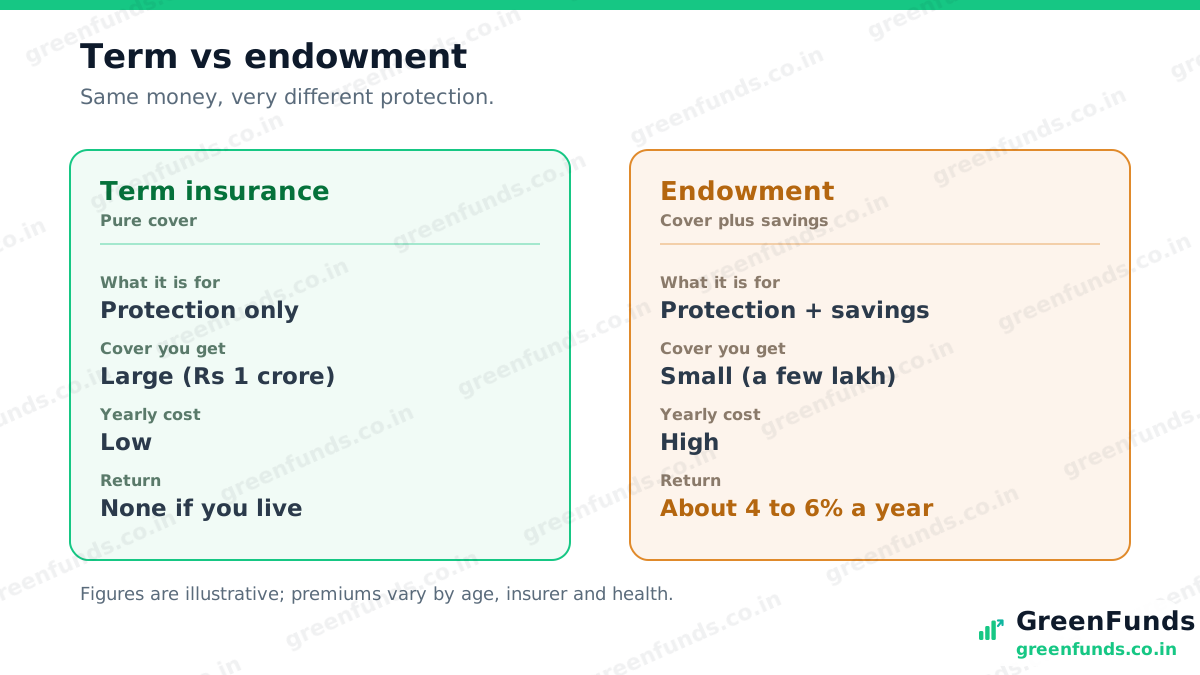
The real cost, with a rupee example. Take a healthy 30-year-old (an illustration). A term plan for a one crore rupee cover might cost somewhere around ten thousand rupees a year. An endowment policy with a similar premium would often cover only a few lakh rupees, a fraction of the protection, because most of the premium goes into the slow-growing savings pot, not the cover. So you pay a similar amount and your family is protected far less.
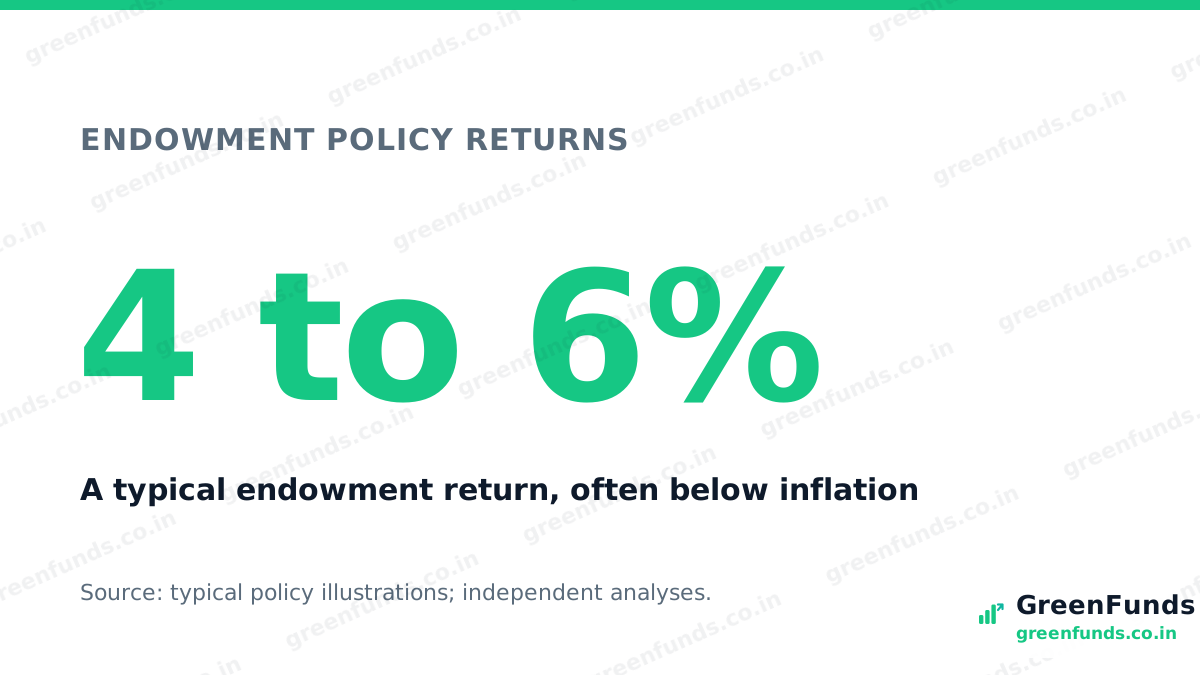
Did you know? Independent analyses and insurers’ own policy illustrations put the return on traditional endowment plans at roughly 4 to 6% a year. That is often below long-term inflation, which means the “savings” may barely hold their value. Always ask for the illustration and work out the yearly return yourself before signing.
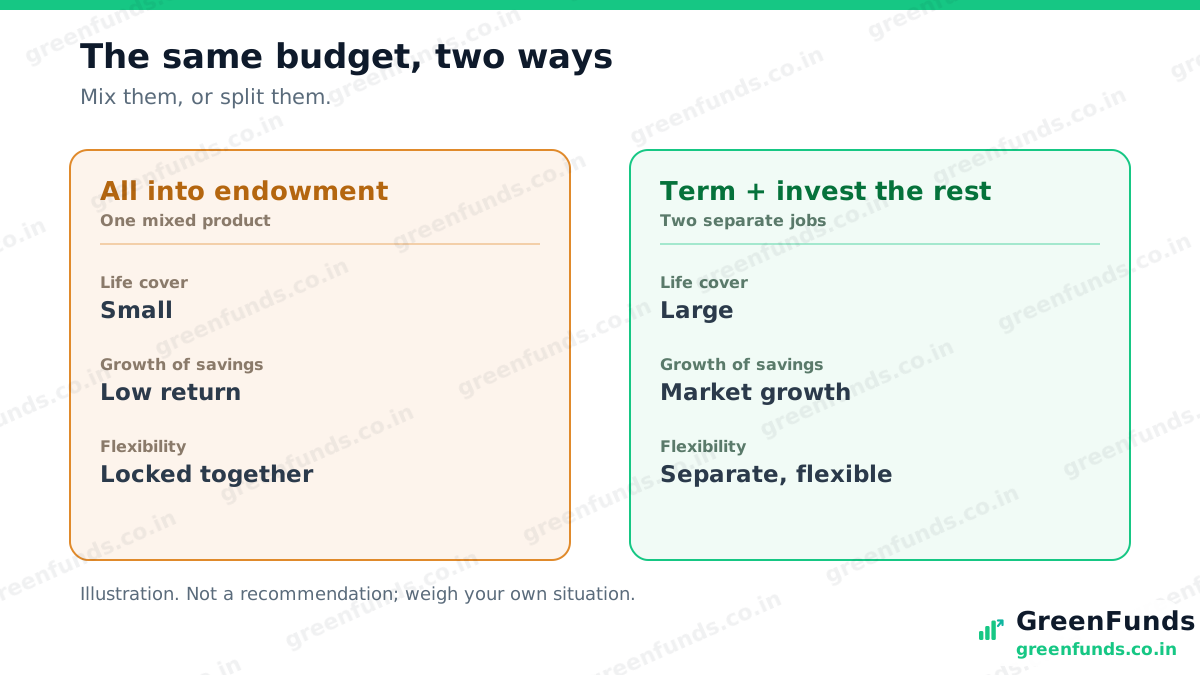
The idea underneath: separate the two jobs. Protection and growing money are two different jobs, and one product rarely does both well. A common approach is to buy a cheap term plan for a large cover, then invest the money you save on premiums separately, where it can grow. You keep full protection and get a better shot at real growth, instead of settling for a little of each.
If you already hold an endowment policy. Do not cancel in a hurry. Surrendering early can lock in a loss, because of how these policies are built in the first years. Weigh the surrender value and the premiums still due against what a term plan plus separate investing would give you, and read the policy terms. It is a careful comparison, not a snap decision.
The takeaway. An endowment policy is not a scam, but it mixes two jobs and usually does neither well: the cover is small and the return is low. Before you buy one for the “money back”, check how much cover it really gives, and what the savings part actually earns.
More in this cluster: why term insurance is the cover most people need, why to avoid treating insurance as investment, and health insurance basics.
Questions people ask
What is the difference between term and endowment insurance?
Term insurance is pure cover: you pay a premium, and if you die during the term your family gets a large payout. If you live, there is no money back, which is why it is cheap. An endowment policy mixes that cover with a savings plan: you pay a much larger premium, part goes to cover and part is invested, and you get a maturity amount if you survive. The trade-off is that the cover is usually small and the savings part earns a low return.
What return does an endowment policy give?
Independent analyses and typical policy illustrations put the return on traditional endowment plans at roughly 4 to 6% a year. That is often below long-term inflation, so the money may not grow much in real terms. The exact figure depends on the policy, so ask for the illustration and work out the yearly return before buying.
Is it better to buy term insurance and invest the rest?
For many people, splitting the two does more: a cheap term plan for a large cover, and the money you save on premiums invested separately for growth. This is often called buy term and invest the rest. It is not a rule for everyone, but it is why mixing protection and savings in one product is worth questioning.
Should I surrender my endowment policy?
Not automatically. Surrendering early can mean a loss, because of how these policies are structured in the early years. Compare the surrender value and future premiums against what a term plan plus separate investing would give, and check the policy terms. This is a decision to weigh carefully, not a reflex.
Source: Typical policy illustrations and independent analyses put traditional endowment returns at roughly 4 to 6% a year; term premiums and endowment premiums vary by age, insurer and health. Verify quotes and current figures before deciding.
Flag a possible issue
Was this helpful?
Thanks for the signal.
Comments
Share your experience or a question. Be kind, stay on topic. This is reader discussion, not financial advice.
No comments yet. Be the first to share.