NPS explained: the low-cost pension account, in plain words
A voluntary retirement account that builds a pension, with an extra tax break
A pension is simply money that keeps coming in after you stop working. The National Pension System, or NPS, is one government-backed way to build that pot yourself, at a very low cost, while you are still earning. It is run under the pension regulator PFRDA and is open to most working Indians.
How it works. You put in money during your working years, as often as you like. That money is invested in a mix of equity (the stock market) and bonds, and you pick the mix or let it be set by your age. Because the charges are among the lowest of any investment product in India, more of your money stays invested and compounds.
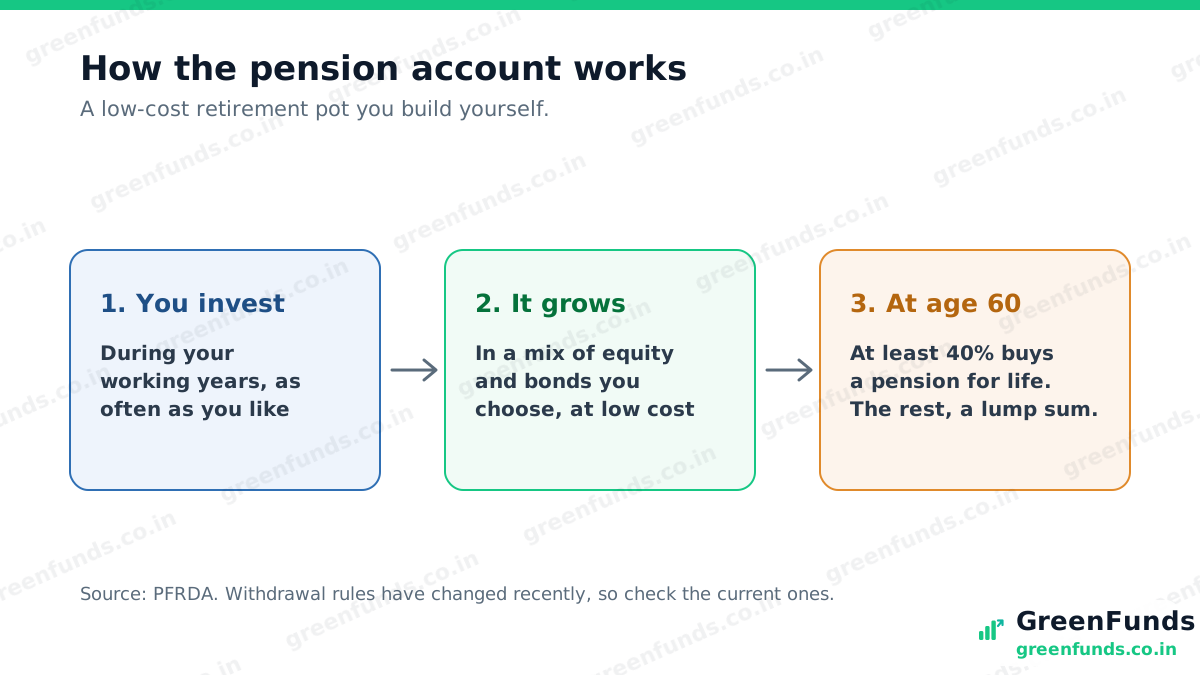
What happens at 60. When you reach 60, you cannot simply take everything out. At least 40% of the built-up amount must buy an annuity, a product that pays you a regular pension for the rest of your life. The remaining part can usually be taken as a lump sum. These withdrawal limits have been changed more than once, so check the current PFRDA rules before planning around them.
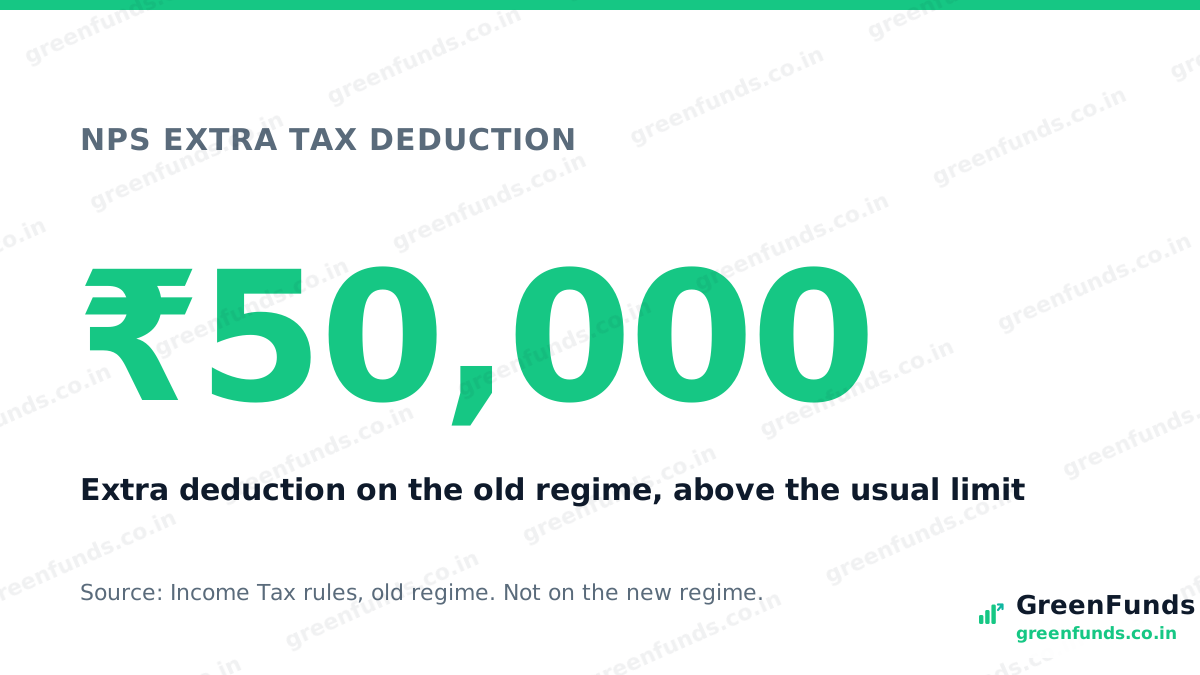
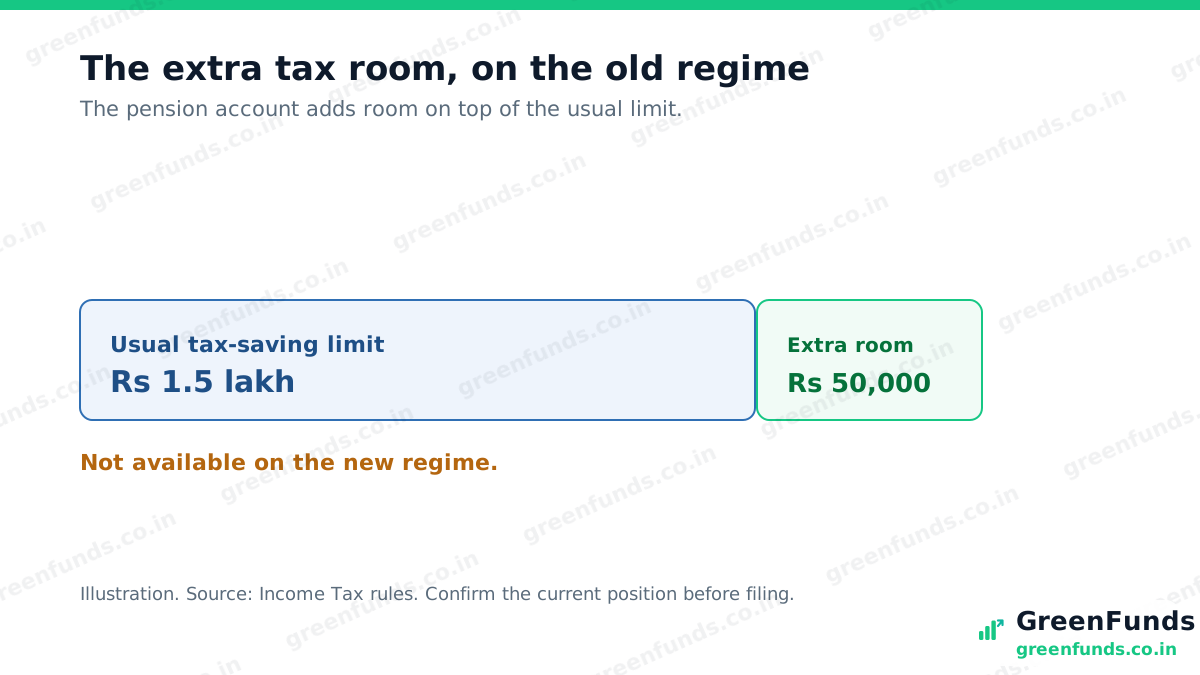
The tax angle, and why people use it. On the old tax regime, NPS gives an extra deduction of up to 50,000 rupees, over and above the usual 1.5 lakh rupee tax-saving limit. That extra room is the main tax reason people add NPS on top of other options.
Did you know? The 50,000 rupee NPS deduction sits on top of the usual 1.5 lakh rupee limit, so on the old regime it can lower your taxable income by that much more. It applies only on the old regime, not the new one, so check which regime you are on before counting on it.
The trade-offs to weigh. NPS is low-cost and tax-friendly, but the money is locked until 60, and a chunk must become a pension rather than cash in hand. The return is market-linked, not guaranteed. That makes it a long-horizon retirement tool, not a flexible savings account. Many people use it alongside other tools rather than on its own.
The takeaway. NPS is a cheap, disciplined way to build a retirement pension, with a useful extra tax break on the old regime. The price of that is a long lock-in and a compulsory pension portion at the end. Know both sides before you open one.
More on retirement: the full retirement planning guide, PPF versus EPF, the two provident funds, and the idea that makes all of this work, compounding.
Questions people ask
What is the National Pension System (NPS)?
It is a voluntary retirement account, regulated by the pension regulator PFRDA. You put in money during your working years, it is invested in a mix of equity and bonds that you choose, and at 60 part of the built-up amount gives you a regular pension while part can be taken as a lump sum. It is known for very low charges.
What is the NPS tax benefit?
On the old tax regime, NPS gives an extra deduction of up to 50,000 rupees under Section 80CCD(1B), over and above the usual 1.5 lakh rupee limit. That extra room is the main tax reason people use NPS. It is not available on the new regime, so confirm your regime and the current rules on incometax.gov.in first.
What happens to NPS money at 60?
At 60, you must use at least 40% of the built-up amount to buy an annuity, which is a product that pays you a regular pension for life. The rest can usually be taken as a lump sum. The exact withdrawal limits have changed recently, so check the current PFRDA rules before you plan around them.
Is NPS return guaranteed?
No. NPS is market-linked. Your money is invested in equity and bonds, so the return depends on how those perform and is not promised. Over long periods the equity part has historically helped growth, but it can fall in the short term, which is why NPS suits a long horizon.
Can I choose how my NPS money is invested?
Yes. In the active choice you set how much goes to equity, corporate bonds and government bonds, with equity capped at a maximum (commonly 75% in the main tier). In the auto choice, the mix is set for you and shifts toward safer assets as you age. You can also switch pension fund managers.
Source: Tax deduction: Income Tax rules, Section 80CCD(1B), old regime. Structure and withdrawal rules: PFRDA. Withdrawal rules have changed recently, so confirm the current position on pfrda.org.in.
Flag a possible issue
Was this helpful?
Thanks for the signal.
Comments
Share your experience or a question. Be kind, stay on topic. This is reader discussion, not financial advice.
No comments yet. Be the first to share.