PPF vs EPF: the two provident funds, compared simply
One comes with a salaried job, the other anyone can open
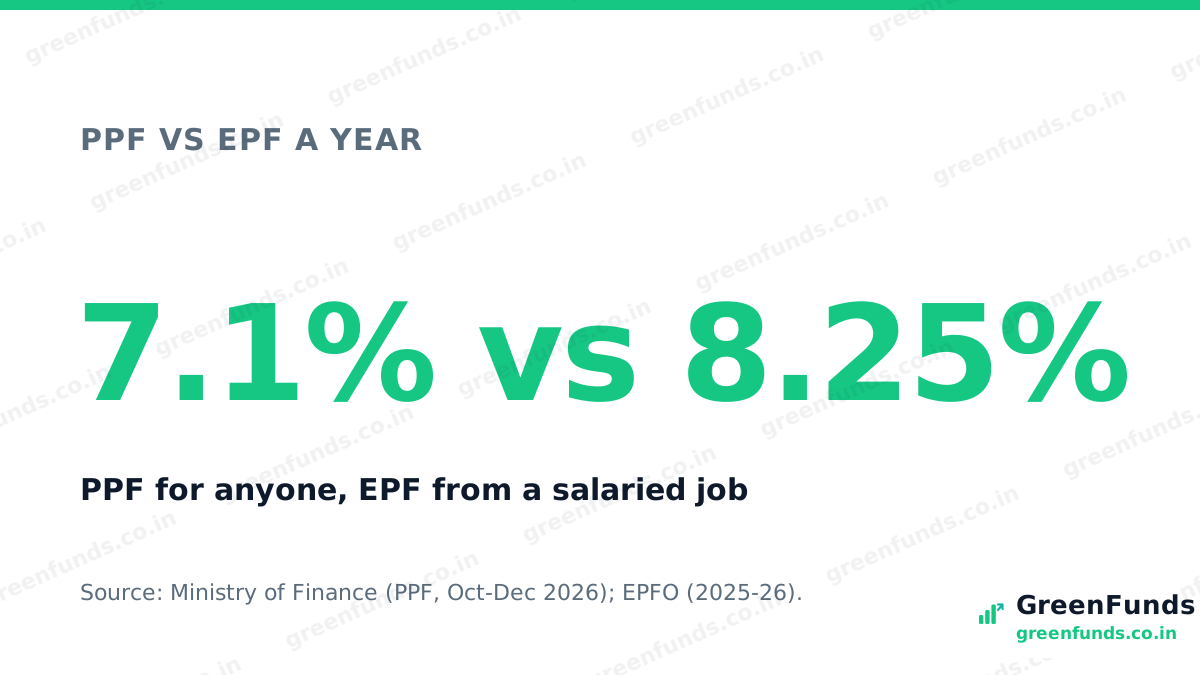
A provident fund is just a long-term savings pot, backed by the government, meant to build up money for your later years. India has two that sound almost the same: the Employees’ Provident Fund (EPF) and the Public Provident Fund (PPF). They do a similar job, but who can use them, and how money goes in, is quite different.
The core difference: a job, or anyone. EPF is tied to a salaried job. A slice of your salary goes into it automatically, and your employer puts in a matching amount. PPF is open to everyone, including the self-employed and those without a formal job. You open a PPF account yourself at a bank or post office and decide how much to add each year, up to a yearly limit.
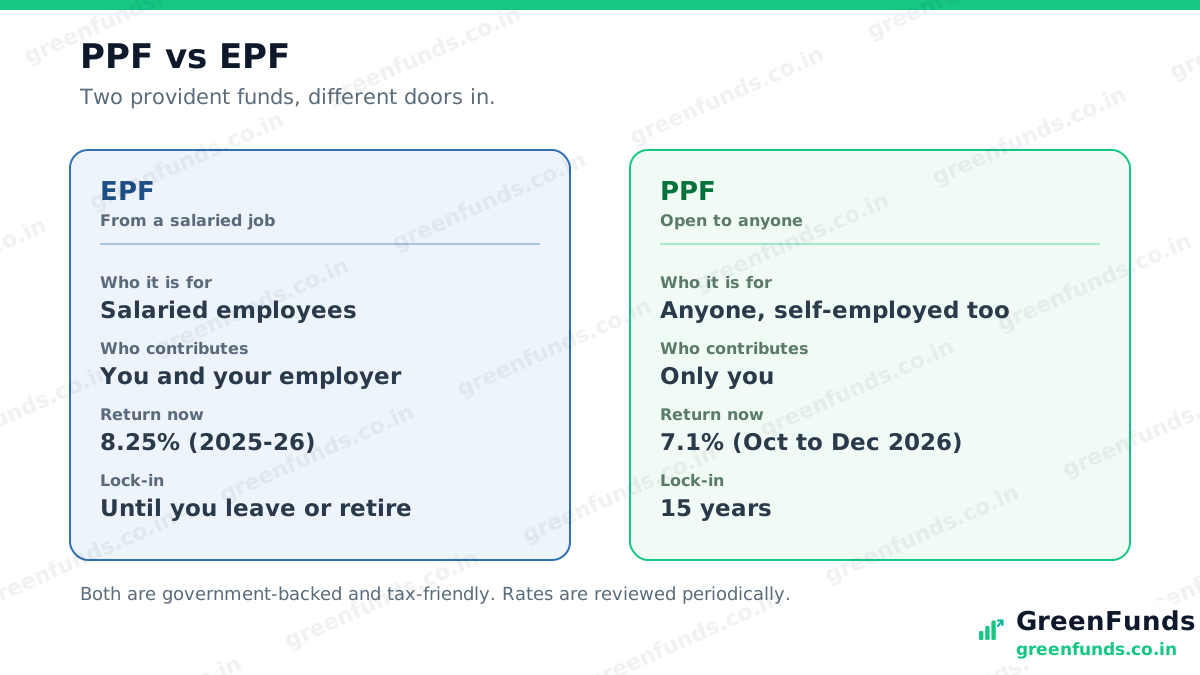
The returns, right now. For 2025-26 the EPF rate is 8.25% a year, set by the retirement fund body EPFO. PPF is at 7.1% a year for October to December 2026, which the government reviews every quarter. EPF is a little higher at the moment, but both are reviewed periodically, so treat today’s numbers as current, not fixed.
Did you know? The real edge of EPF is the employer’s matching contribution: for every rupee that leaves your salary into EPF, your employer adds its own share. That match is money you would not get by saving the same amount on your own, which is why EPF is a powerful base for a salaried person.
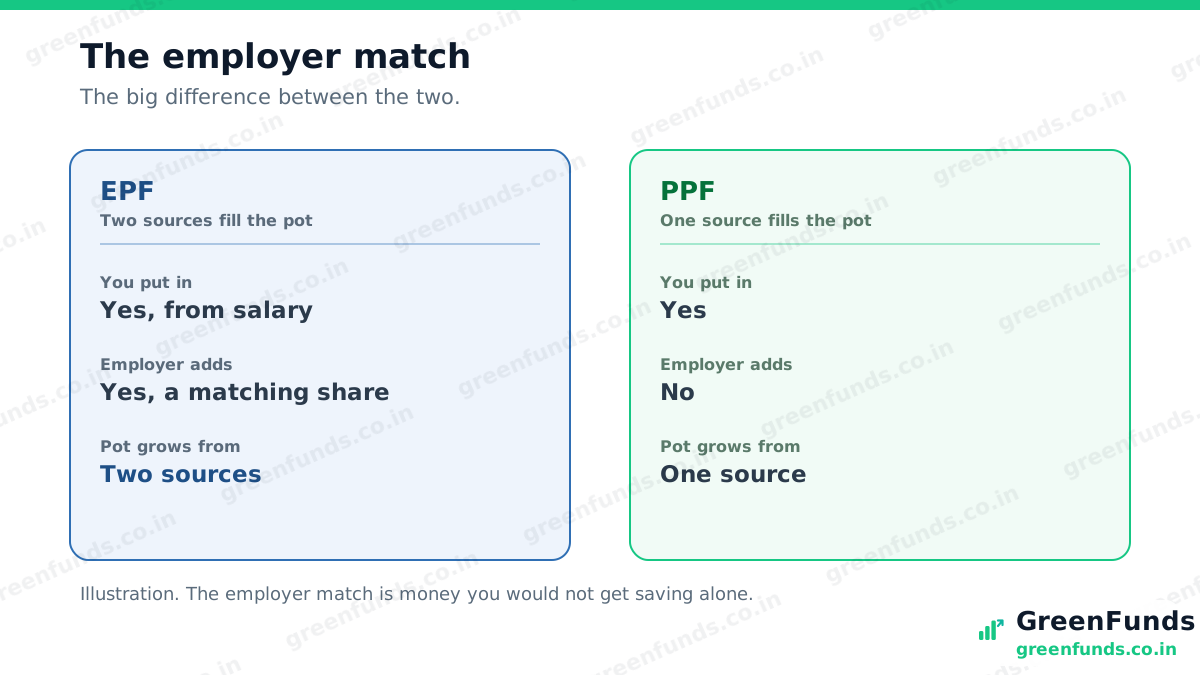
How to think about using them. They are not rivals; most salaried people can use both. EPF builds quietly in the background from your salary, with the employer match on top. PPF is the account you open yourself to save more, and it is the natural choice for anyone outside salaried employment. Both are safe, long-term and tax-friendly, which makes them a sensible base before adding market-linked options.
The takeaway. EPF comes with the job and the employer’s money; PPF is open to anyone and entirely yours to run. If you are salaried, you likely have EPF already, and a PPF account can sit alongside it. If you are self-employed, PPF is where to start.
More on retirement: the full retirement planning guide, NPS, the low-cost pension account, and the public provident fund in detail.
Questions people ask
What is the difference between PPF and EPF?
EPF, the Employees' Provident Fund, is tied to a salaried job: a part of your salary goes in and your employer adds a matching amount. PPF, the Public Provident Fund, is open to anyone, including the self-employed, and you open it yourself at a bank or post office. EPF comes with an employer contribution; PPF does not, but PPF is available to everyone.
Which gives a higher return, PPF or EPF?
For 2025-26 the EPF rate is 8.25% a year, set by the retirement fund body EPFO. PPF is at 7.1% a year for October to December 2026, set by the government each quarter. So EPF is currently a little higher, but both rates are reviewed periodically and can change, so check the latest figures.
Can I have both PPF and EPF?
Yes. A salaried person usually has EPF automatically and can also open a PPF account separately to save more. They are not mutually exclusive. Many people use EPF as the workplace base and PPF as an additional long-term, tax-free savings pot.
Is PPF or EPF better for a self-employed person?
A self-employed person is not part of EPF, which is linked to salaried employment, so PPF is the usual choice: anyone can open it, put in up to 1.5 lakh rupees a year, and get safe, tax-free, long-term growth. Confirm the current rules and limits before you start.
Source: EPF rate 8.25% for 2025-26 (EPFO). PPF rate 7.1% for Oct to Dec 2026 (Ministry of Finance). Rates are reviewed periodically, so check the current figures.
Flag a possible issue
Was this helpful?
Thanks for the signal.
Comments
Share your experience or a question. Be kind, stay on topic. This is reader discussion, not financial advice.
No comments yet. Be the first to share.