Why to avoid mixing insurance and investment
Keep protection and growth separate
A ULIP and an endowment plan both try to do two jobs in one product: insure your life and grow your money. It sounds convenient, but it usually means you get weak cover and weak returns, for a high cost. For most people, the better approach is to keep the two separate: term insurance for protection, and a mutual fund for growth.
The two products, in plain words
- ULIP (unit-linked insurance plan): part of your premium buys life cover, the rest is invested in market-linked funds, after several charges.
- Endowment plan: a traditional policy that mixes life cover with a low, savings-style return and pays out at the end of the term.
Both are sold as “protection plus savings in one”. The problem is in that “one”.
Why mixing is weak at both
When a single product does two jobs, it tends to do neither well.
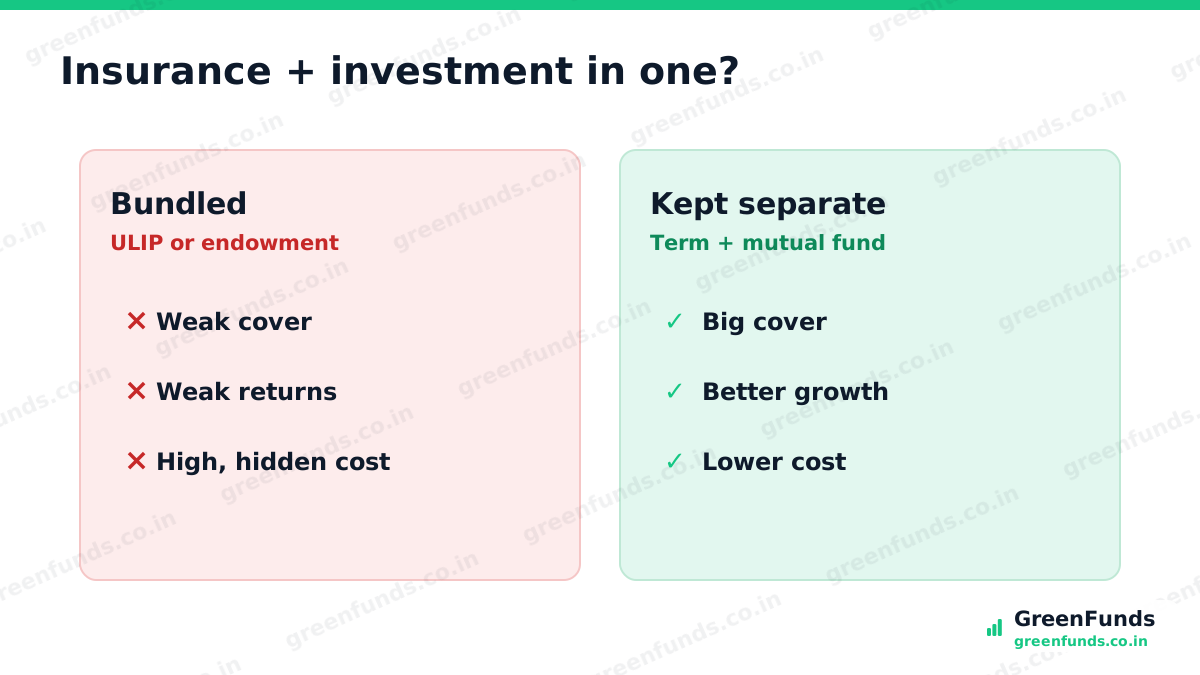
- The cover is small. The life cover in these plans is usually a fraction of what your family would actually need.
- The returns are modest. After charges, endowment returns are often low, and a ULIP’s are dragged down by fees, especially in the early years.
- The cost is high and hidden. Bundled products carry several charges that quietly eat your money.
The separate approach
Split the two jobs and each gets done properly.
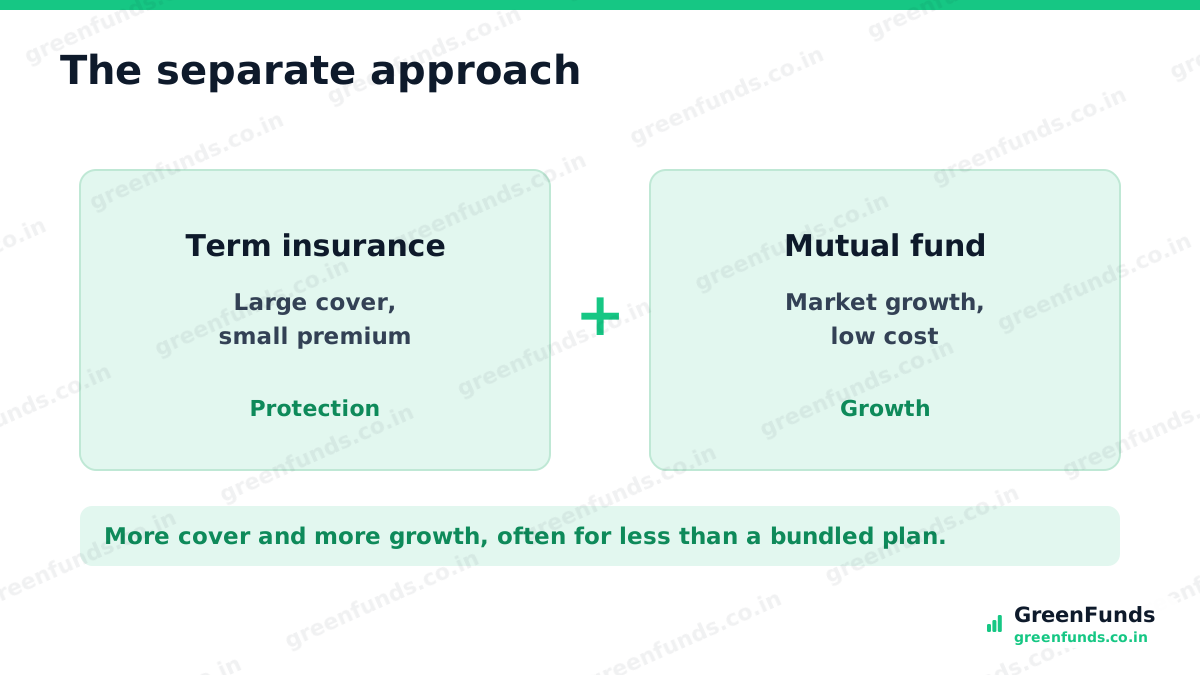
- Term insurance gives a large life cover for a small premium. That is its only job, and it does it well.
- A mutual fund, especially a low-cost index fund, grows your money with full flexibility.
For many people, term plus a fund costs less than a bundled plan and gives both more cover and more growth. You can also stop, switch or withdraw the investment freely, which a bundled policy makes hard.
When a bundled plan can still fit
It is not never. A ULIP or endowment may suit someone who would not invest on their own and needs the forced discipline, or certain tax and estate situations. The point is to choose it on purpose, not because it was sold as a clever two-in-one.
Already have one?
Do not cancel in a hurry. Surrendering early often means a loss.
- Read the policy, check the surrender value and the lock-in.
- Compare keeping it (or making it paid-up) against moving to term plus a fund.
- If it is large or complex, get qualified advice first.
Common mistakes
- Buying it for the tax deduction alone. The same deduction is available on term insurance and ELSS, without the weak combo.
- Mistaking the maturity amount for a good return. A big number after 20 years can still be a low yearly return once you do the math.
- Treating life cover as savings. Cover protects your family; savings grow your money. They are different jobs.
Insurance protects. Investments grow. Keep them apart, and each one works far better.
Next, see term insurance, or SIP and mutual funds.
Questions people ask
What is a ULIP?
A unit-linked insurance plan bundles life cover with investment in market-linked funds, inside one product. Part of your premium buys cover and part is invested, after various charges are deducted.
What is an endowment plan?
A traditional life insurance policy that also pays a lump sum if you survive the term. It mixes insurance with a low, guaranteed-style return, so it is sold as savings plus cover.
Why do experts say to avoid mixing insurance and investment?
Because bundling usually gives you weak cover and weak returns at a high cost. A pure term plan gives far more life cover for a smaller premium, and a mutual fund usually grows money better. Separating the two tends to beat the combo.
Is a ULIP or endowment ever a good idea?
They can suit a few specific needs, like a disciplined saver who would not invest otherwise, or certain tax or estate situations. But for most young earners, term insurance plus a mutual fund is simpler, cheaper and stronger. Check your own situation.
I already have a ULIP or endowment. What should I do?
Do not cancel in a panic; surrendering early can cost you. Read the policy, check the surrender value and lock-in, and compare keeping it with a paid-up option against switching to term plus a fund. If it is large or complex, take qualified advice.
Sources
- IRDAI (insurance regulator) and SEBI (markets regulator) consumer information Product features, charges and tax rules vary and change; read the policy document and verify current rules.