SIP vs lumpsum
Invest monthly, or all at once
A SIP means investing a fixed amount every month, a little at a time. A lumpsum means putting a large amount in all at once. Both can work, and the money goes into the same kind of fund either way. The right choice depends on whether you have the money now and how steady your nerves are.
What each one is
- SIP (systematic investment plan): say ₹5,000 on the 5th of every month, automatically. It matches how a salary arrives.
- Lumpsum: say ₹2 lakh invested in one go, perhaps from a bonus or savings.
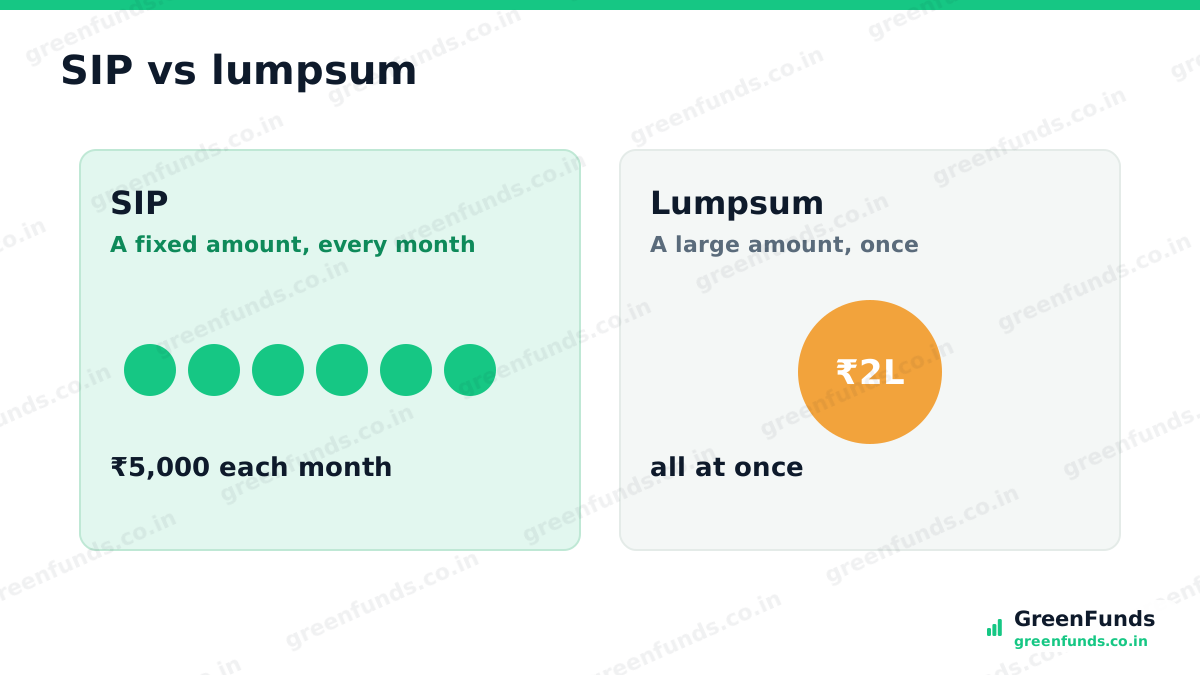
Same destination, different on-ramp. One drips money in over time; the other sends it all in today.
The quiet advantage of a SIP
A SIP spreads your buying across months, so you are not betting everything on one day’s price. When the market dips, your fixed amount simply buys more units; when it rises, it buys fewer. This is called rupee-cost averaging.
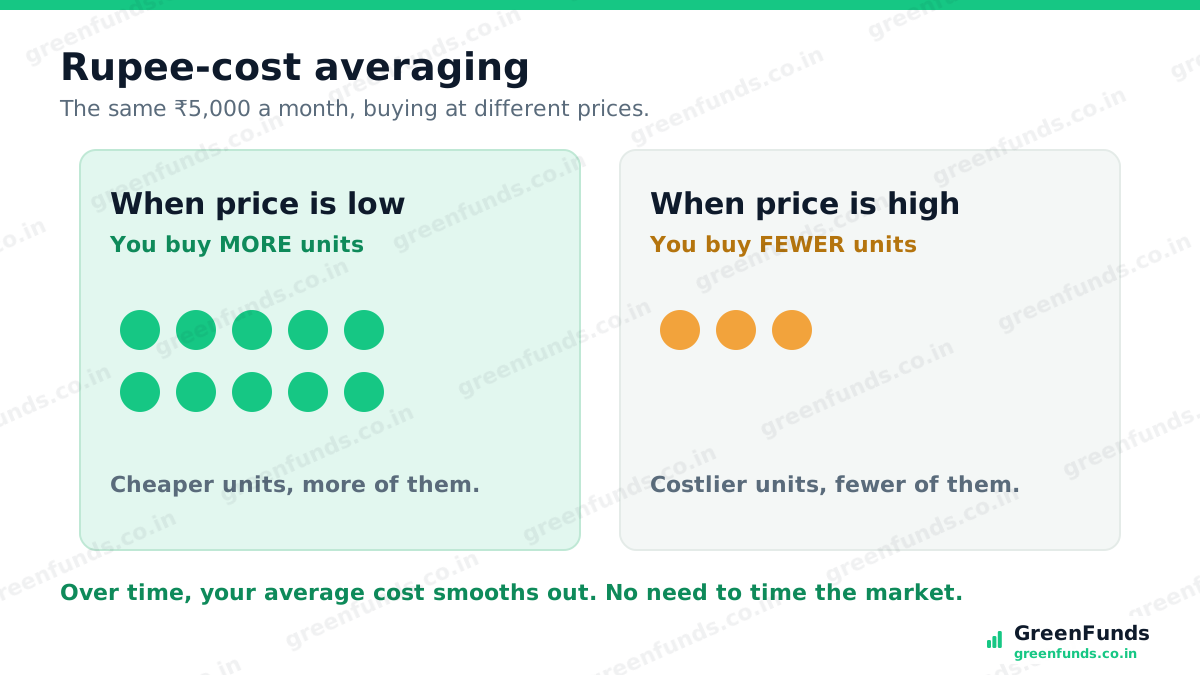
It will not always beat a lumpsum, but it removes the hardest part of investing, which is timing. You never have to guess the perfect day. See your SIP date is not your NAV date for how a SIP actually buys.
When a lumpsum makes sense
If you already have the money and a long horizon, investing it at once puts more of it to work sooner, which over many years often helps. The catch is nerves: if the market falls the week after, a lumpsum stings more.
A middle path is to spread a large amount over a few months, through a series of SIPs or an STP (systematic transfer plan from a safer fund). You give up a little of the all-at-once edge for a smoother ride.
How to choose
- Earning monthly? A SIP fits your cash flow and builds the habit. Start here.
- Have a lump sum and a long horizon? Investing it, rather than waiting, usually wins. Spread it if a dip would rattle you.
- Either way, do not wait for the perfect moment. Time in the market beats timing the market, as compounding shows.
Common mistakes
- Stopping a SIP when markets fall. Those are the months your money buys the most.
- Sitting on a lump sum for months, waiting for a crash that may not come, while it earns nothing.
- Thinking a SIP removes risk. It smooths your entry, but the fund still rises and falls.
For most people with a salary, a steady SIP into a simple index fund is the easy, sensible default.
Next, start with SIP and mutual funds, or see the power of compounding.
Questions people ask
What is the difference between a SIP and a lumpsum?
A SIP (systematic investment plan) invests a fixed amount every month, a little at a time. A lumpsum invests a large amount all at once. The money ends up in the same kind of fund; the difference is the timing of how it goes in.
Is a SIP better than a lumpsum?
Neither is always better. A SIP suits a monthly salary and removes the need to time the market. A lumpsum can do better if you already have the money and a long horizon, but it feels riskier if the market falls right after. Pick what matches your situation.
What is rupee-cost averaging?
With a SIP, your fixed amount buys more units when the price is low and fewer when it is high. Over time this averages out your cost, so you do not have to guess the perfect day to invest.
I got a bonus. Should I invest it all at once or spread it out?
Both are fine. Investing it at once puts more money to work sooner. If a sudden fall would worry you, you can spread it over a few months with a STP or a short series of SIPs. The bigger mistake is leaving it idle while you wait for the perfect moment.
Does a SIP guarantee a profit?
No. A SIP is a way of investing, not a product, and it carries the same market risk as the fund it buys. It smooths your entry price and builds discipline, but returns still move up and down and are never guaranteed.
Sources
- GreenFunds lessons on SIP, mutual funds and compounding Illustrations use assumed returns to explain the idea; real returns vary and are not guaranteed.