The NAV you get follows your money, not your tap
Cut-off times decide your price
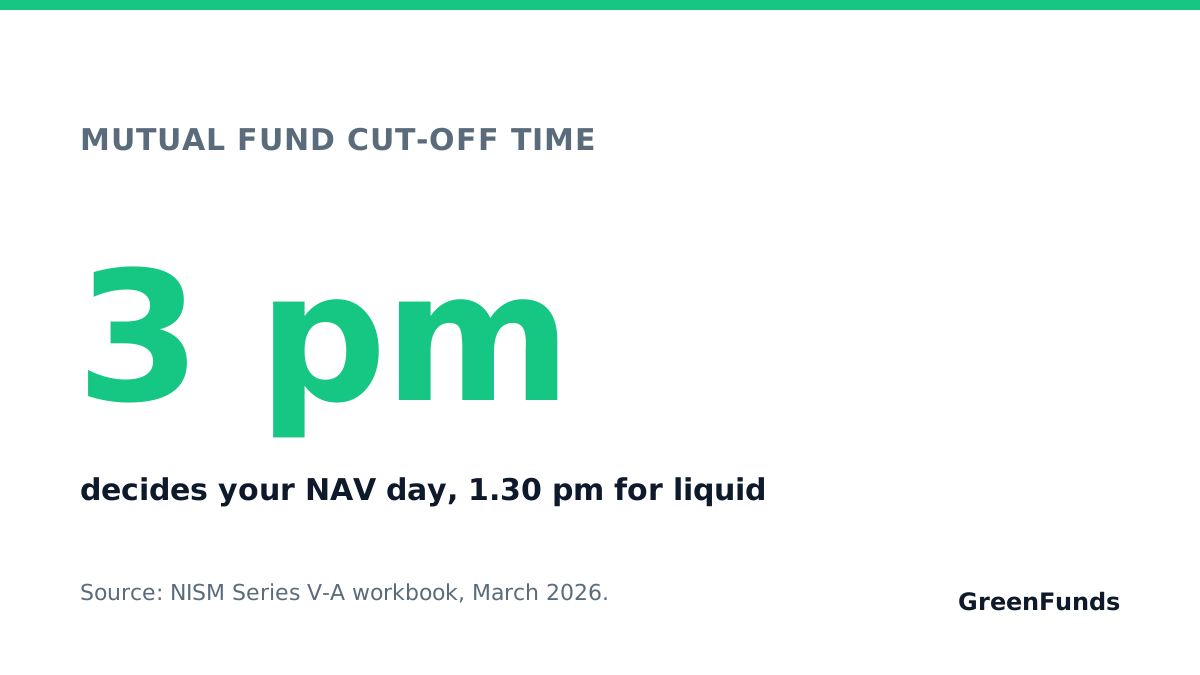
The rule. SEBI fixes a cut-off time to decide which day’s NAV applies to your order. For equity funds and most debt funds it is 3 pm. For liquid and overnight funds it is 1.30 pm.
The part people miss. For a purchase of any amount, what counts is when the money is actually available to the fund, not when you tapped buy. Pay late and you get the next business day’s NAV, however early you placed the order.
A rupee example. You start a ₹5,000 purchase on Monday morning. Your bank transfer lands on Wednesday afternoon, before that day’s cut-off. You get Wednesday’s NAV, not Monday’s.
Selling is simpler. Put a redemption in before 3 pm on a business day and you get that day’s NAV. Miss it and you wait for the next business day.
Liquid funds work backwards, which surprises people: get your application and your money in before the 1.30 pm cut-off and you receive the previous day’s closing NAV.
None of this matters much for a long-term SIP. It matters a lot if you are moving a large amount around a market move.
Why the rule exists at all. Without a cut-off, someone could watch the market all day, see it close up, and buy at a price set before the rise. The cut-off fixes one price per day for everyone, so no investor can act on information the others did not have.
What this means for a monthly SIP. Almost nothing. Over ten years the difference between one day’s NAV and the next averages out to noise, and chasing it is how people talk themselves out of automation. Set the date a day or two after payday so the money is definitely there, and stop thinking about it.
When it does matter. Moving a large lump sum, switching between schemes, or redeeming to meet a deadline. In those cases the extra day is real money or a missed payment, so check when your transfer actually clears rather than when you pressed the button.
This is general education, not financial advice. Figures are as reported by the source and may change.
Source: NISM Series V-A workbook, March 2026 edition.
Ready to try your first ₹100? Open a free account.
Compare beginner friendly investing apps and open an account in a few minutes.
Compare apps →