A ₹15 fund is not cheaper than a ₹450 one
NAV is not a price tag
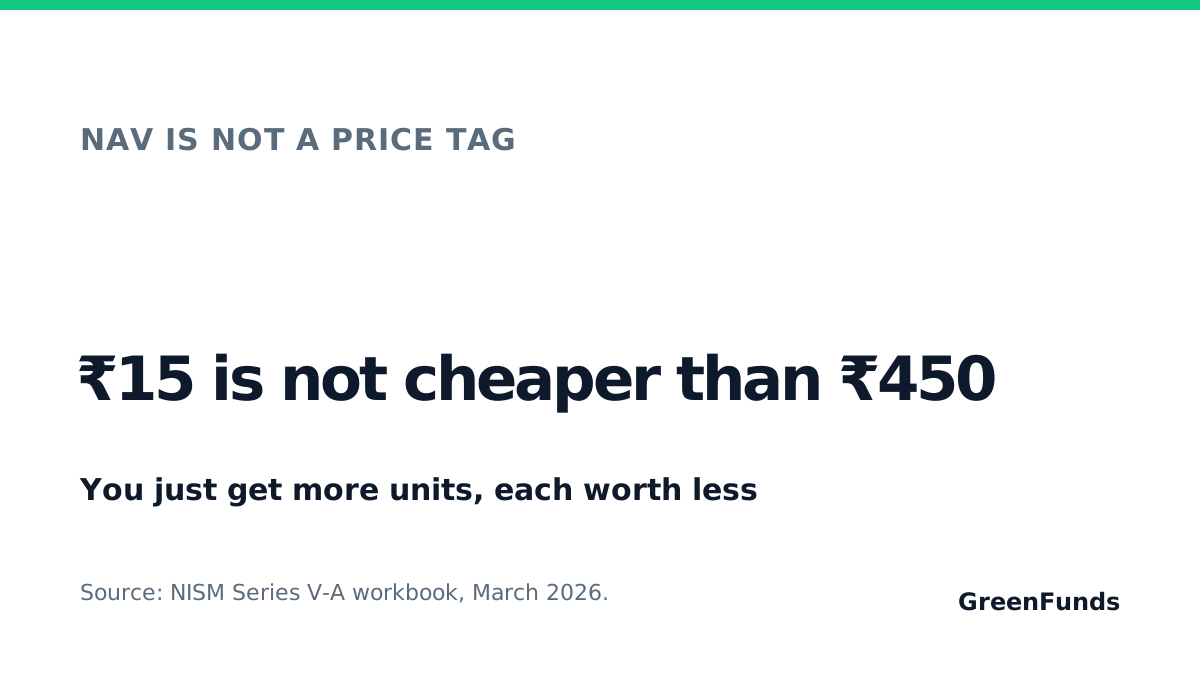
The mistake. People pick the fund with the lower NAV, the way you would pick the cheaper of two shirts. It feels like getting more for your money.
Why it is wrong. NAV is not a price tag. It is the value of one unit, worked out each business day by taking everything the scheme owns, subtracting what it owes, and dividing by the number of units. A low number mostly means the scheme is young, or has not grown much yet.
A rupee example. Put ₹10,000 into a fund at a NAV of ₹15 and you get 666.67 units. Put ₹10,000 into one at ₹450 and you get 22.22 units. If both rise 10 percent, both are worth ₹11,000. The unit count changed. Your money did not.
What actually decides your return. What the fund holds, and what it charges. Two funds holding the same companies will track each other whatever their NAV says.
So the question is never “which NAV is lower”. It is what the scheme owns, how long you can leave it alone, and the expense ratio coming off it every year.
Where the confusion comes from. Shares do work a bit like this. A share price reflects what the market will pay for one slice of a company, so comparing two share prices tells you something. A NAV is arithmetic, not an auction. It is assets minus liabilities divided by units, and nobody bids it up.
The test that settles it. Ask what would happen if the fund did a ten-for-one split tomorrow, turning a ₹450 NAV into ₹45. Your unit count would multiply by ten and your money would not move by a rupee. If a number can be changed without changing your wealth, it is not telling you how expensive something is.
What to compare instead. The expense ratio, what the scheme actually holds, how long it has run, and whether you are in the direct plan. Those four differences show up in your money. The NAV does not.
This is general education, not financial advice. Figures are as reported by the source and may change.
Source: NISM Series V-A workbook, March 2026 edition.
Ready to try your first ₹100? Open a free account.
Compare beginner friendly investing apps and open an account in a few minutes.
Compare apps →