That fund payout came out of your own money
IDCW is a withdrawal, not a bonus
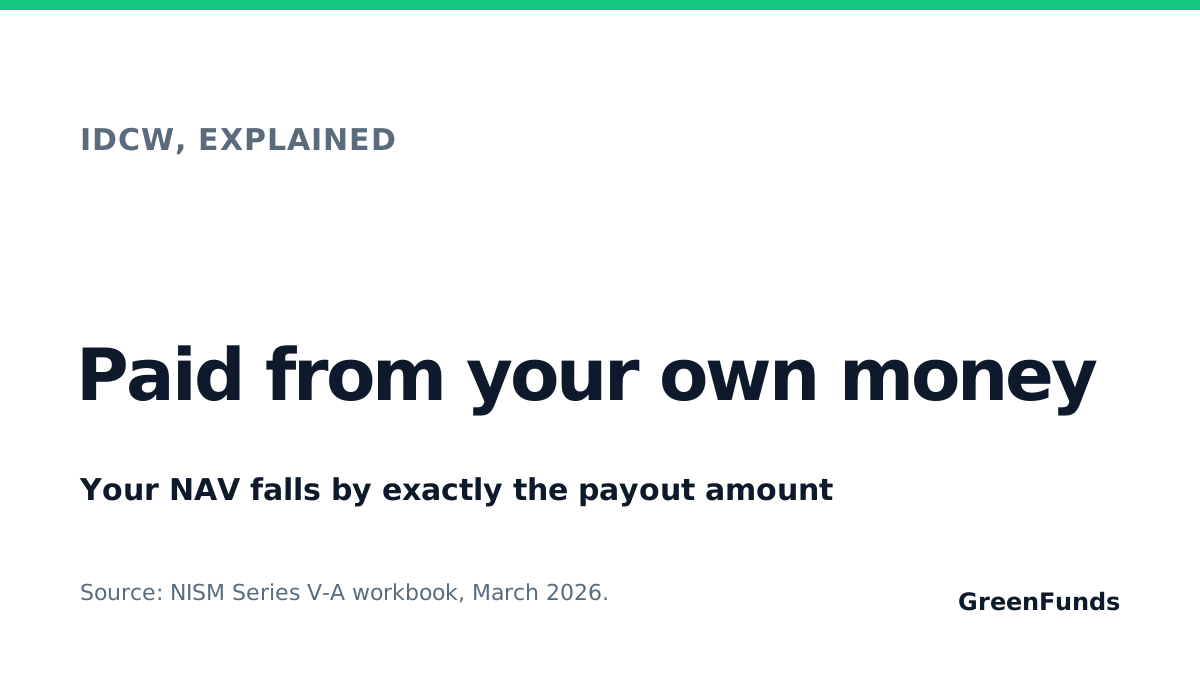
What it is. IDCW stands for Income Distribution cum Capital Withdrawal. It is the fund option that pays some money out to you instead of letting it stay invested.
Why it was renamed. It used to be called the dividend option, and people read that as a company dividend, money arriving from outside. It is not. The payout comes out of the scheme’s own value.
A rupee example. You hold 1,000 units at a NAV of ₹20, so ₹20,000. The scheme pays ₹2 per unit. You receive ₹2,000, and the NAV drops to ₹18, so your holding is now ₹18,000. Total: ₹20,000. Nothing was added.
The alternative. The growth option keeps every gain inside the scheme, so it stays invested and keeps compounding. For a long-term goal that is usually the cleaner choice.
When a payout still makes sense. If you genuinely need periodic money out, IDCW does that job. Just go in knowing it is a withdrawal with a formal name, not income the fund generated on top.
Why it still gets sold as a feature. A regular payout feels like income, and income feels like the fund is working. The number in your bank account is visible in a way that a rising NAV is not.
What it costs you. Money paid out stops compounding. Over a long horizon that is the whole game, which is why the growth option usually wins for a goal that is years away. There is also tax to consider on the payout, and the rules for that change, so check the current position rather than assuming.
When to choose it anyway. If you genuinely need money coming out at intervals and would otherwise redeem units by hand, IDCW automates that. Just treat it as a scheduled withdrawal from your own capital, which is what the renamed label now says plainly.
This is general education, not financial advice. Figures are as reported by the source and may change.
Source: NISM Series V-A workbook, March 2026 edition.
Ready to try your first ₹100? Open a free account.
Compare beginner friendly investing apps and open an account in a few minutes.
Compare apps →