Direct vs regular mutual fund plans
Same fund, minus the commission
Every mutual fund comes in two versions: a regular plan and a direct plan. They are the exact same fund, with the same manager and the same holdings. The only difference is the fee. A regular plan pays a commission to the distributor who sold it to you, and a direct plan does not, so the direct plan costs you less every year.
Where the difference comes from
When you buy a regular plan through an agent, app or bank, the fund pays them a commission for bringing your money in. That commission is built into the fund’s expense ratio, so you pay it quietly, every year, for as long as you hold.
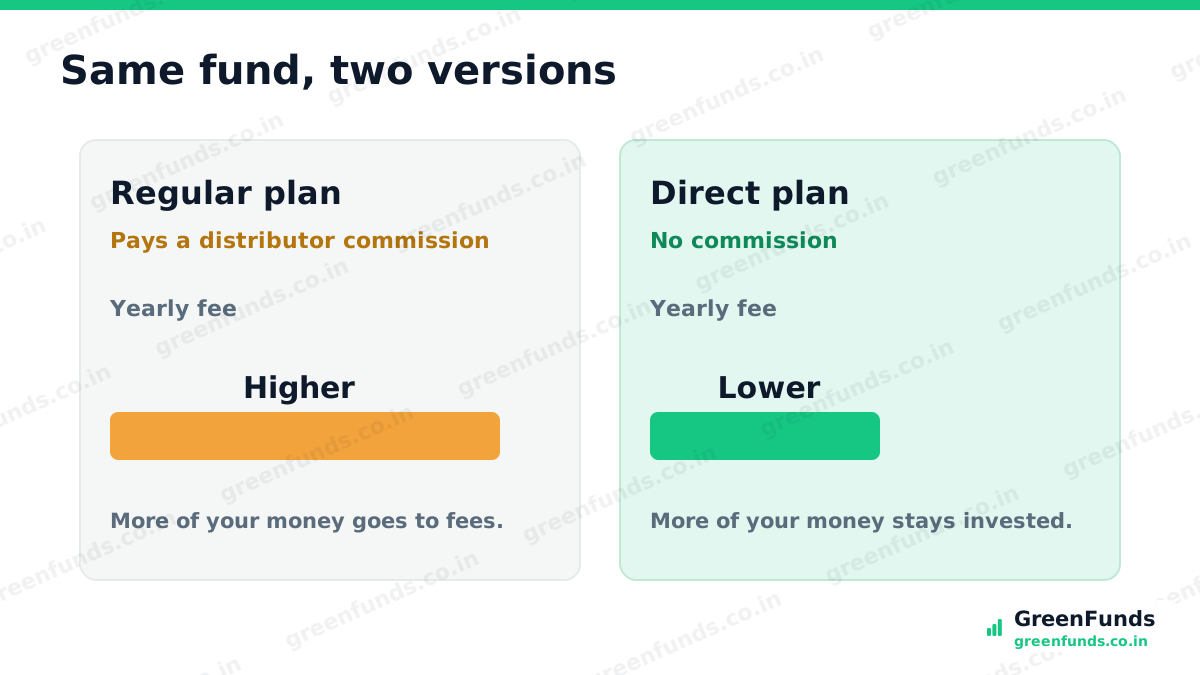
A direct plan cuts out that commission. Same fund, lower expense ratio, more of your money left to compound. SEBI requires every scheme to offer a direct option, so it is always available.
What the gap is worth
The fee saved is often just a few tenths of a percent a year. Small, until you remember you save it every year, and the saving itself compounds.
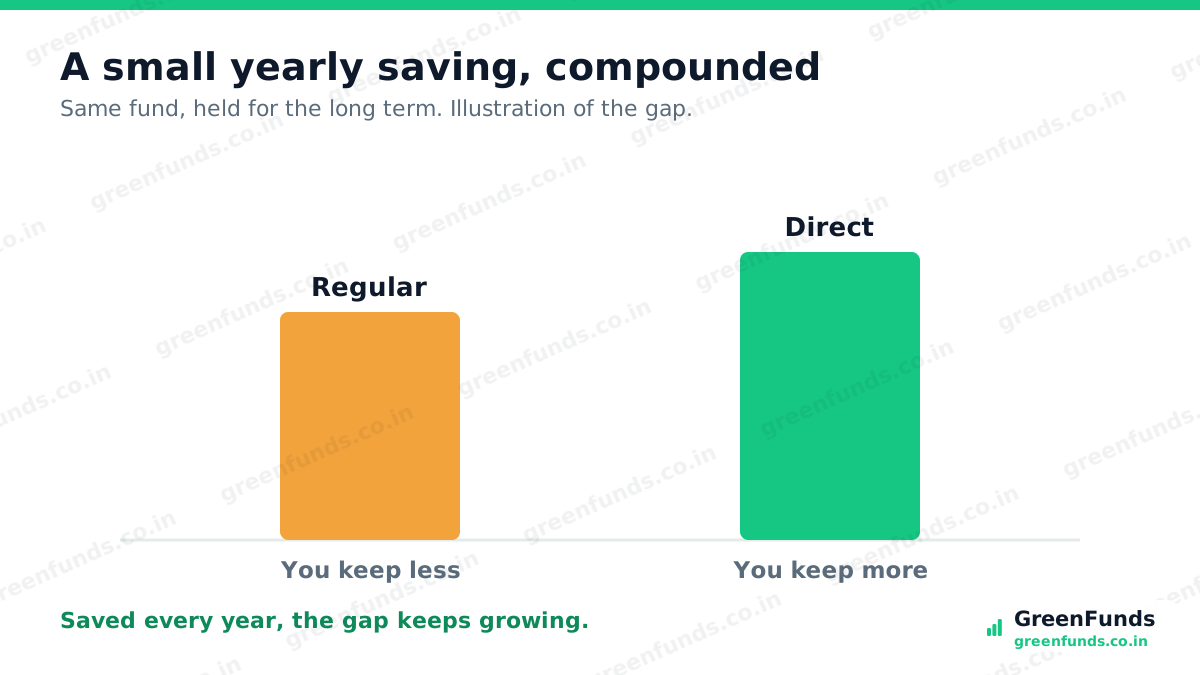
See the direct plan explainer for a worked rupee example, and one percent a year for why small fees matter so much.
The trade-off, honestly
A regular plan is not a scam. The commission pays for advice and hand-holding, which some people genuinely value, especially when starting out. The deal is simple:
- Direct plan: cheaper, but you pick and manage the fund yourself.
- Regular plan: costs more every year, but you get a distributor’s help.
If you are comfortable choosing a simple fund like an index fund and running a SIP, the direct plan keeps more money yours.
How to use this
- Check the scheme name. It says Direct or Regular. If unsure, it is probably regular.
- Buy direct from the fund house or a platform that offers direct plans.
- Switching? It counts as a sale, so check the exit load and any capital gains tax first.
Common mistakes
- Holding a regular plan without knowing it. Most first funds bought through a bank or agent are regular.
- Paying for advice you do not use. If you pick funds yourself, the commission buys you nothing.
Same fund, lower cost, kept to yourself. For a do-it-yourself investor, the direct plan is an easy win.
Next, read expense ratio explained, or SIP and mutual funds.
Questions people ask
What is the difference between a direct and a regular plan?
They are the same fund, same manager, same holdings. A regular plan pays a commission to the distributor who sold it, built into a higher expense ratio. A direct plan has no commission, so its expense ratio is lower and more of your money stays invested.
Is a direct plan really better?
For the same fund, a direct plan costs less every year, so it compounds to more over time. The trade-off is that you choose and manage the fund yourself, without a distributor's help.
How much more do direct plans return?
Only as much as the fee they save, which is often a few tenths of a percent a year. That sounds small, but over decades it compounds into a meaningful gap, because you save it every year.
Where do I buy a direct plan?
Directly from the fund house (AMC) website or app, or through platforms that offer direct plans. The scheme name usually says Direct. If it says Regular, it carries the commission.
Can I switch from a regular plan to a direct plan?
Yes, you can switch the same scheme to its direct option. Note that a switch counts as a sale for tax, so any capital gain may be taxable. Check the exit load and tax before switching.
Sources
- SEBI mutual fund rules on direct and regular plans Every scheme must offer a direct plan with a lower expense ratio; check the scheme factsheet for the exact difference.