One percent a year, and ₹35 lakh gone
Fees compound too
What it is. The expense ratio is the yearly fee a fund charges, as a percentage of what you hold. You never pay it as a bill. It comes out before the NAV is declared, so the return you see is already net of it.
Why it hides. A statement never shows you a fee line. Nothing is deducted from your bank account. The cost shows up only as growth you did not get.
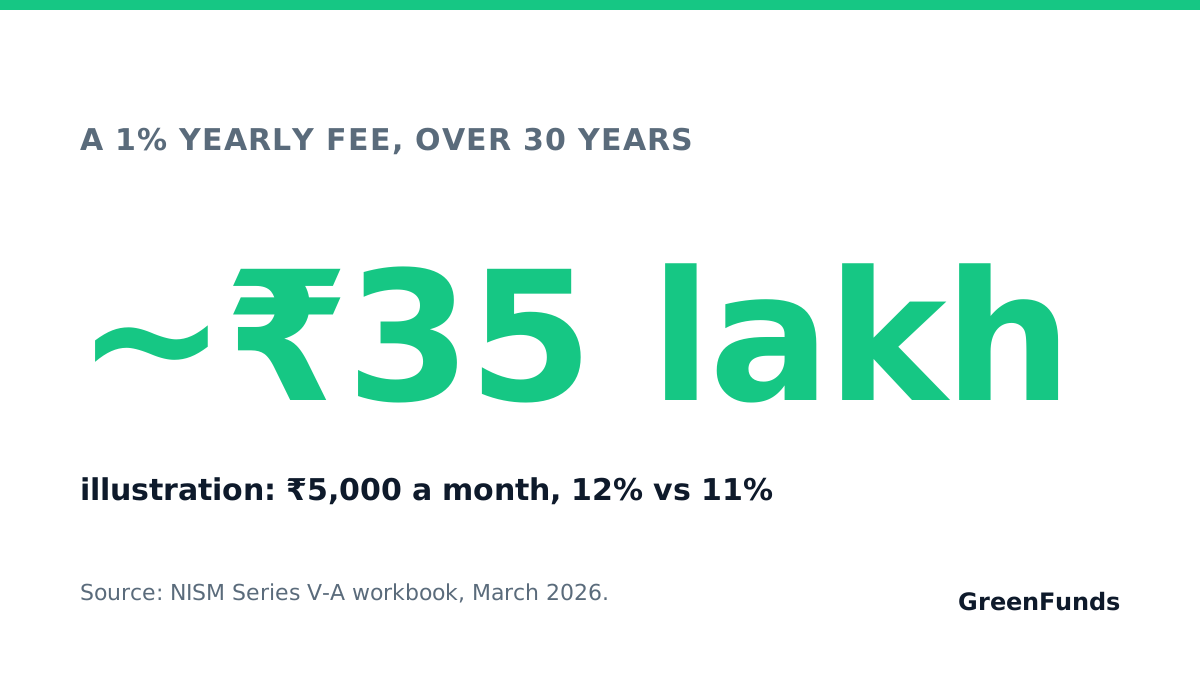
A rupee example. Put ₹5,000 a month away for 30 years. At an assumed 12 percent a year you end with about ₹1.75 crore. At 11 percent, about ₹1.40 crore. That single percentage point costs roughly ₹35 lakh.
Nothing about your effort changed between those two numbers. The only difference is one percent a year leaking out.
What to do with that. Compare expense ratios before you pick a fund, especially for index funds where the holdings are near identical and cost is most of what separates them. And check whether you are in a direct plan, which is the same scheme at a lower ratio.
The 12 percent here is an illustrative assumption used to show the shape of the idea, not a forecast.
Why the number is so large. The fee does not just take one percent of your money. It takes one percent of your money and every rupee that money would have earned, every year, for the whole period. The loss compounds exactly as the gain does.
Where to find it. The expense ratio is in the scheme document and on the fund house’s site, updated monthly. Index funds tracking the same index can differ by several tenths of a percent, and since they hold near identical companies, that difference is close to the whole story.
One thing worth more than the fee. Staying invested. An expensive fund held for twenty years usually beats a cheap one sold in a panic after three. Cost is the thing you can control most easily, which is why it is worth controlling, but it is not the largest lever.
This is general education, not financial advice. Figures are as reported by the source and may change.
Source: NISM Series V-A workbook, March 2026 edition.
Ready to try your first ₹100? Open a free account.
Compare beginner friendly investing apps and open an account in a few minutes.
Compare apps →