Digital gold: what it is, and why SEBI warns about it
Easy to buy in tiny amounts, but no market regulator stands behind it
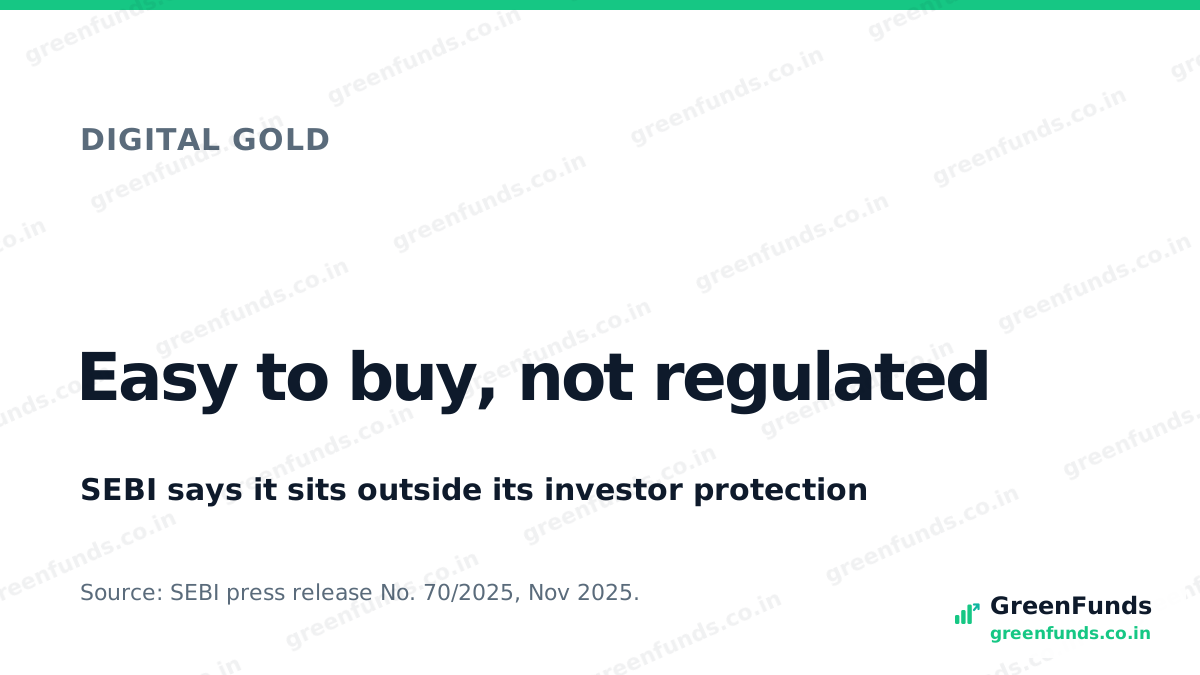
Digital gold is gold you buy on your phone. You pay as little as a few rupees in an app, and the seller says it buys matching physical gold and keeps it in a vault for you. It feels like owning a tiny bar of gold without the locker. The catch is that no market regulator stands behind it.
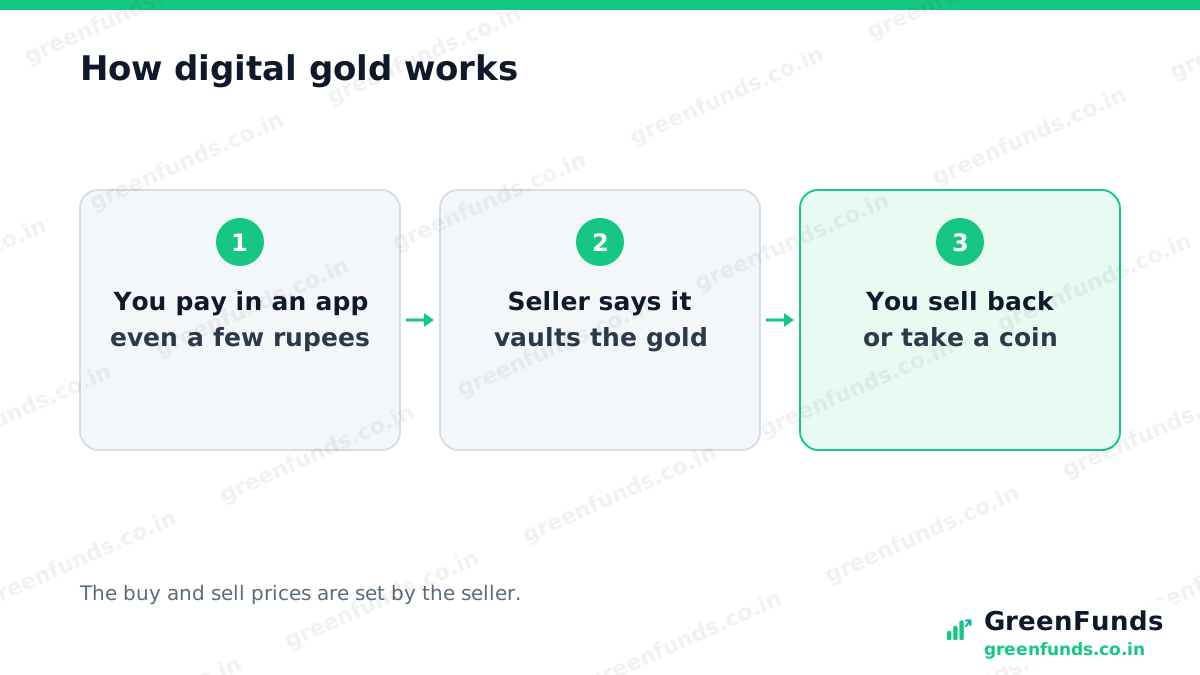
How it works. A gold company sells the product, usually through a payments or investing app. You see a live buy price, you pay, and grams of gold show up in your account. Later you can sell it back on the app, or ask for delivery as a coin or bar.
The regulator’s warning. On 8 November 2025, SEBI issued a public caution about digital gold. It said these products are not notified as securities or regulated as commodity derivatives, so they operate entirely outside its purview. In plain words: if the seller fails or the gold isn’t really there, the investor protection that covers a mutual fund or an exchange-traded product doesn’t apply. This wasn’t new, either. In 2021, after SEBI flagged the issue, the National Stock Exchange told its brokers to stop selling digital gold.
Did you know? SEBI’s November 2025 caution named the regulated routes to gold instead: gold exchange-traded funds, electronic gold receipts traded on the stock exchange, and exchange-traded gold derivatives. Gold mutual funds also sit under SEBI’s mutual fund rules. Check sebi.gov.in for the latest position before you rely on this.
What it really costs. The price you buy at and the price you can sell at are not the same. On top of that gap, you pay GST when you buy, some providers charge storage after a set period, and taking delivery adds making charges and delivery fees. An illustration: if the app’s sell price is 3% below its buy price and you pay 3% GST, gold has to rise about 6% before you’re simply back where you started. Check the actual buy and sell price on the same day in your app.
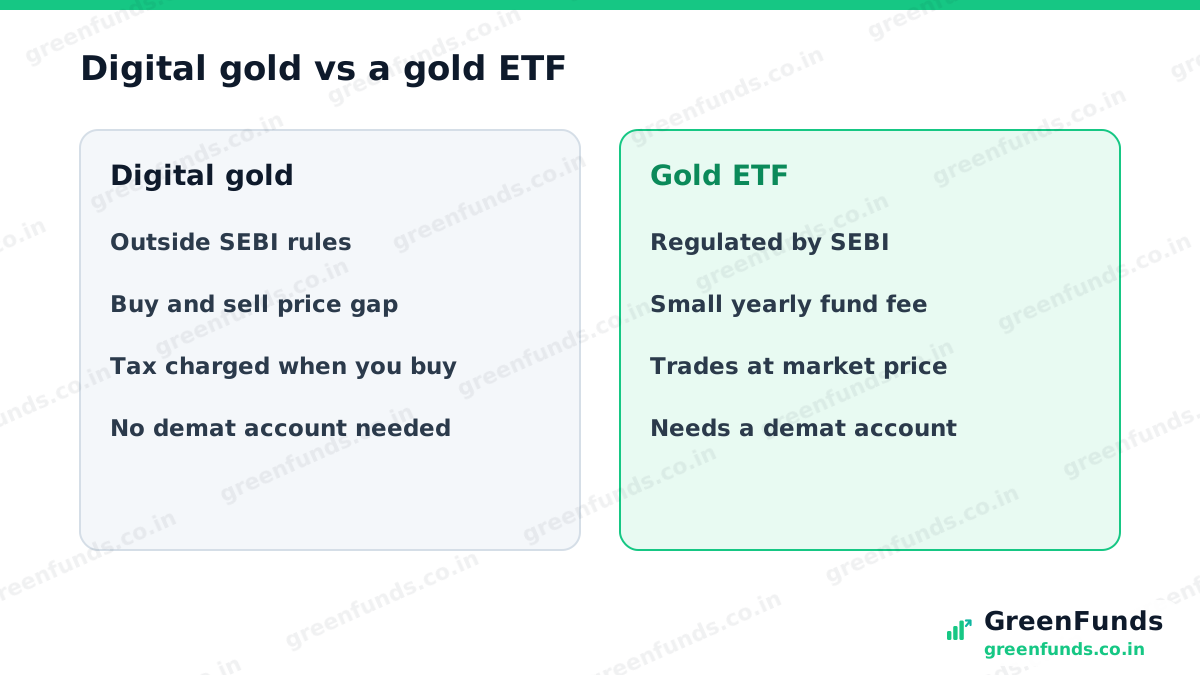
When people still use it. It’s genuinely easy, and for a few hundred rupees as a gift or a habit, the convenience is real. The question is whether you’re comfortable holding money with a seller that no market regulator supervises. For larger amounts, the regulated routes in our gold ETF vs gold fund guide do the same job with more protection.
The takeaway. Digital gold is convenient, but it’s outside SEBI’s rules, and the buy and sell gap plus GST make it costlier than it looks. Know what you’re holding, keep amounts modest, and compare it with a gold ETF or gold fund before you put serious money in.
More to read: gold as an investment, checking the hallmark on gold jewellery, and how to spot a fake investment.
Questions people ask
What is digital gold?
Digital gold is gold you buy online, often through a payments or investing app, in amounts as small as a few rupees. The seller says it buys and stores matching physical gold in a vault on your behalf. You can usually sell it back on the app or ask for delivery as coins or bars.
Is digital gold regulated by SEBI?
No. In a press release dated 8 November 2025, SEBI cautioned the public that digital gold and e-gold products are not notified as securities or regulated as commodity derivatives, so they operate outside its purview and its investor protection mechanisms do not apply. Check SEBI's website for any later update.
What are the regulated ways to own gold?
SEBI pointed investors to regulated routes such as gold exchange-traded funds (gold ETFs), electronic gold receipts traded on stock exchanges, and exchange-traded commodity derivatives. Gold mutual funds, which invest in gold ETFs, are also regulated by SEBI as mutual funds.
What does digital gold cost?
The main costs are the gap between the buy and sell price shown in the app, GST charged when you buy, and in some cases storage charges after a set period or making and delivery charges if you take physical coins. These vary by provider, so compare the buy and sell price on the same day before you start.
Source: SEBI press release No. 70/2025, 'Caution to public regarding dealing in Digital Gold', 8 November 2025 (sebi.gov.in); NSE circular to members on digital gold, August 2021, as reported. Check SEBI's site for the latest position.
Found this useful? You can buy us a coffee. It keeps GreenFunds free.Flag a possible issue
Was this helpful?
Thanks for the signal.
Comments
Share your experience or a question. Be kind, stay on topic. This is reader discussion, not financial advice.
No comments yet. Be the first to share.