How to spot a Ponzi scheme or fake investment
It pays old investors with new money, so it always collapses
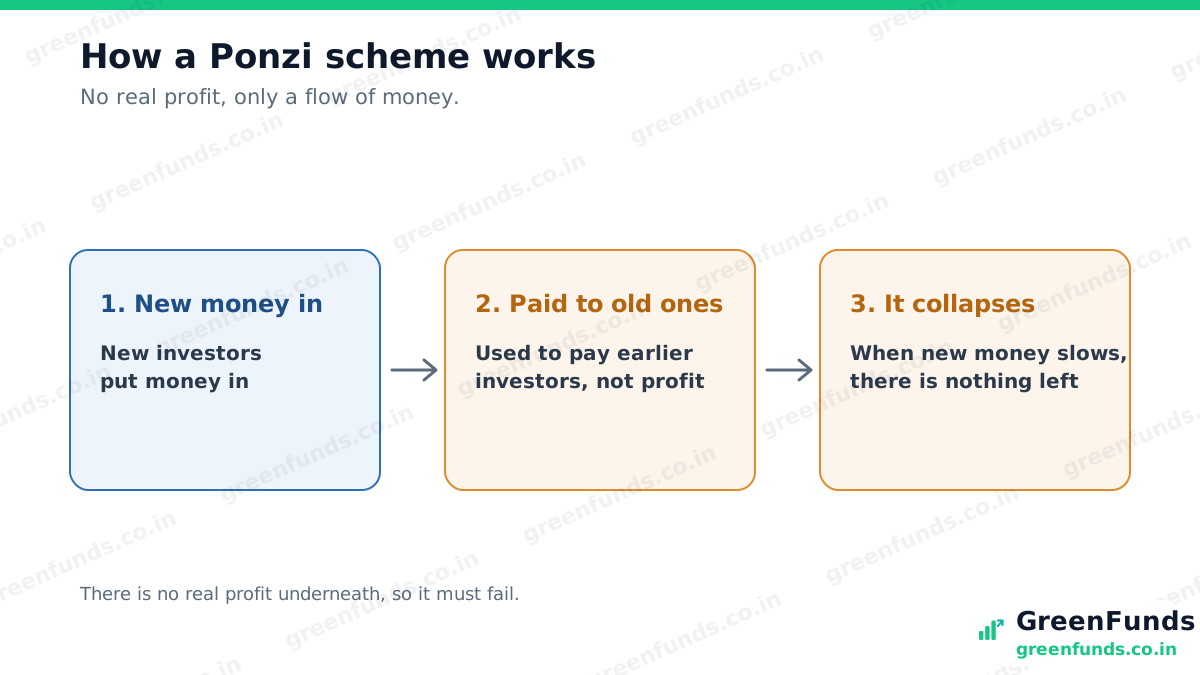
A Ponzi scheme is one of the oldest frauds, and it still works because it looks like a winning investment for a while. The trick is simple: it pays returns to earlier investors using the money from newer investors, not from any real profit. As long as new money keeps pouring in, everyone seems to be getting paid. The moment it slows, the whole thing collapses.
Why it always ends the same way. There is no real business or profit underneath, only a flow of money from new joiners to old ones. That means it mathematically must fail: when new investors stop coming, there is nothing to pay the rest, and the people who joined last lose everything. It is not a question of if, but when.
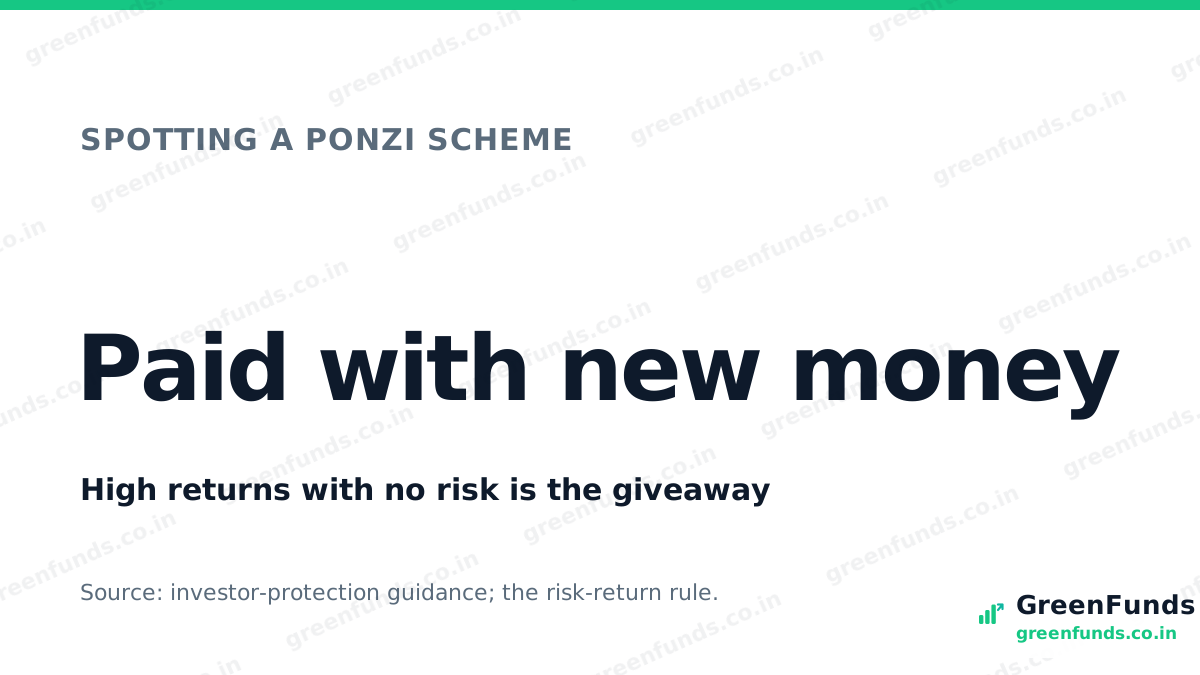
The one red flag above all. If you remember nothing else, remember this: high returns with no risk are impossible. In genuine investing, higher returns always carry higher risk. So a promise of a guaranteed, unusually high return with no chance of loss is the clearest sign of a scam, no matter how polished it looks. This is exactly the trap our lesson on risk and return warns about.
Did you know? The single giveaway of almost every investment fraud is the same line: “high returns, guaranteed, no risk”. That combination cannot exist in real investing. The moment you hear it, treat it as a scam, whoever is saying it, and however many people you know have “already made money”.
The other warning signs. Beyond the impossible promise, watch for these.
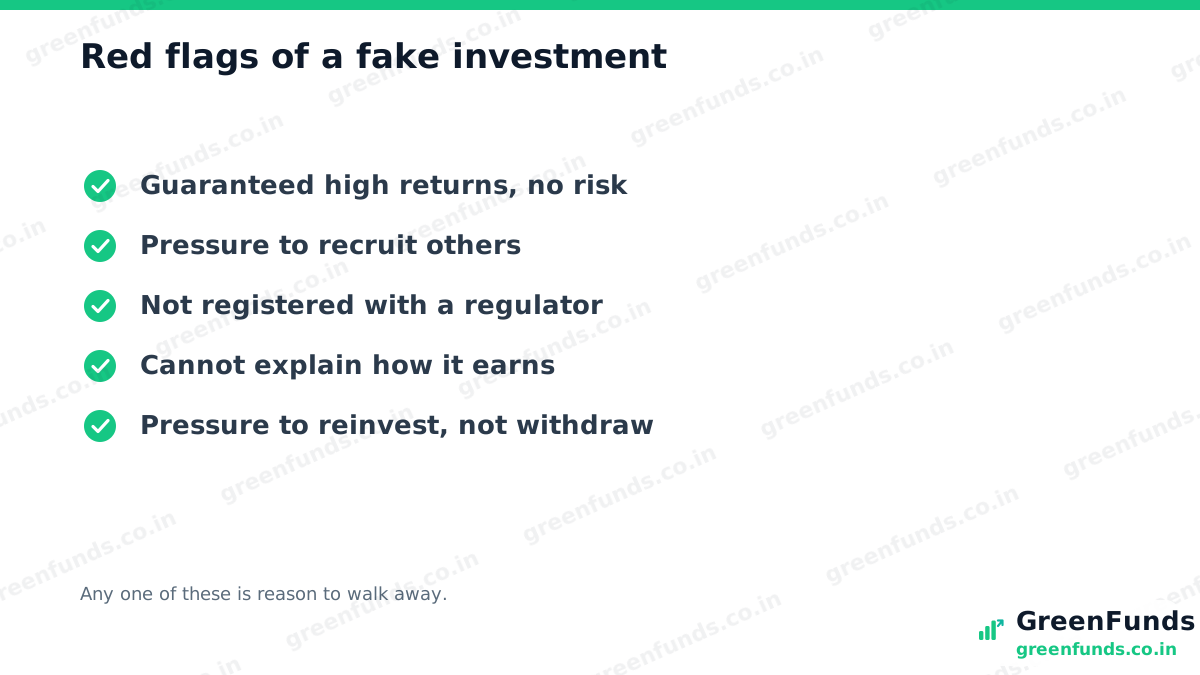
How to protect yourself. Before you put in a rupee, check that the entity is registered with the right regulator, such as SEBI for market products or the RBI for deposits, and that the product is actually permitted. Be especially wary of anything that pays you to recruit others, or that pushes you to reinvest your “returns” rather than let you withdraw. When something cannot clearly explain how it earns money, do not pay.
The takeaway. A Ponzi scheme survives on new money and collapses without it. The surest way to avoid one is the risk-and-return rule: there is no high return without high risk. Verify registration, distrust guaranteed returns, and walk away from anything built on recruiting others.
More on staying safe: understanding risk and return, common UPI scams, and the digital arrest scam.
Questions people ask
What is a Ponzi scheme?
A Ponzi scheme is a fraud that pays returns to existing investors using money from new investors, rather than from any real profit or business. It looks successful while new money keeps flowing in, but because there is no genuine income behind it, it collapses the moment recruitment slows, and most people lose their money.
What is the biggest red flag of a fake investment?
High returns with little or no risk. That combination is impossible in genuine investing, where higher returns always come with higher risk. If someone promises a guaranteed, unusually high return with no chance of loss, treat it as a scam, however professional it looks or whoever recommends it.
How can I check if an investment is genuine?
Confirm the entity is registered with the relevant regulator, such as SEBI for market products or RBI for deposits, and that the specific product is permitted. Be wary of anything that pressures you to recruit others, promises guaranteed high returns, or cannot clearly explain how it makes money. When in doubt, do not pay.
Is a scheme that asks me to recruit others a scam?
Very often, yes. When returns depend mainly on bringing in new members rather than on a real product or service, that is the structure of a Ponzi or pyramid scheme. The money is just being shuffled from new joiners to older ones, and it collapses when recruitment slows.
Source: General investor-protection guidance. Only invest through entities registered with the relevant regulator (such as SEBI or RBI); verify registration before paying.
Flag a possible issue
Was this helpful?
Thanks for the signal.
Comments
Share your experience or a question. Be kind, stay on topic. This is reader discussion, not financial advice.
No comments yet. Be the first to share.