India lost ₹981 crore to UPI scams in a year. Do not be the next one.
Verify before you pay
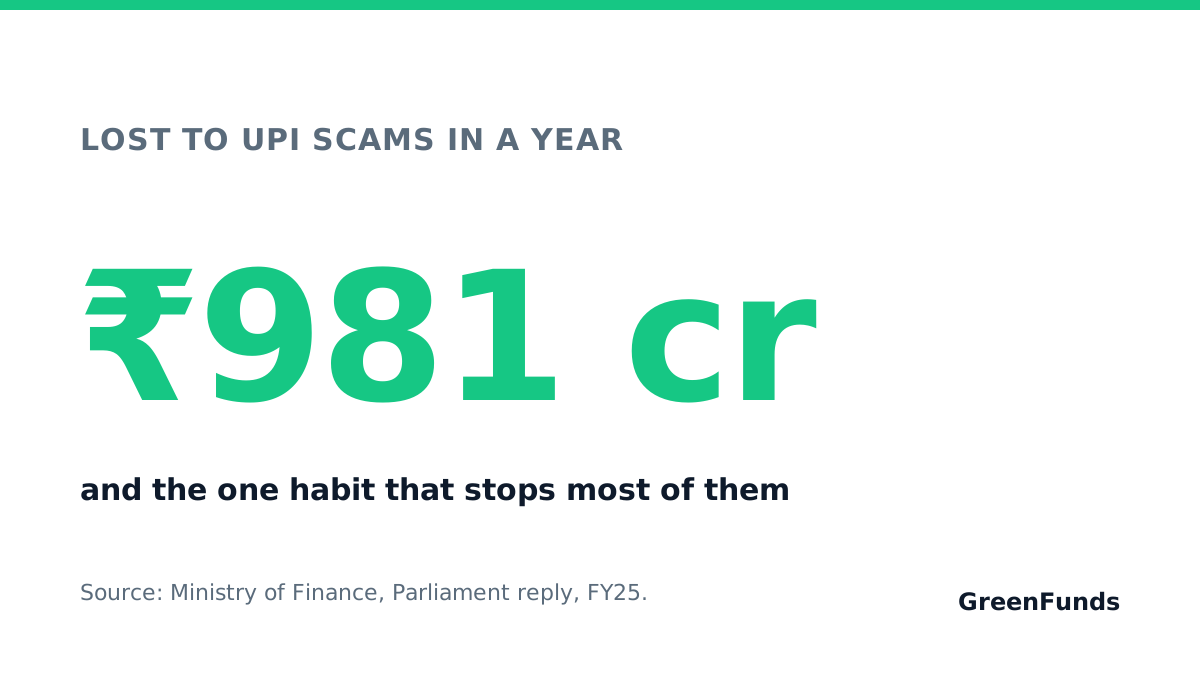
What happened. The Finance Ministry told Parliament that UPI frauds touched ₹981 crore in one year, across about 12.64 lakh cases.
Why it matters to you. If you use any UPI app, you are a target. Scammers do not hack your phone. They trick you into tapping pay yourself.
The concept. You never enter your UPI PIN to receive money. A PIN is only ever needed to send money out.
A rupee example. A buyer on a resale app says they will pay you ₹5,000. They send a QR code or a collect request and ask you to approve it to get the money. If you scan it and enter your PIN, ₹5,000 leaves your account, it does not come in. Money you receive never needs your PIN. That one rule stops most UPI scams.
Slow down for 10 seconds and ask one question: am I about to send money or receive it? If a refund or a reward is asking for your PIN, it is a scam. Every time.
How the numbers have moved. The Finance Ministry’s figures show ₹1,087 crore lost across 13.42 lakh cases in FY24, and ₹981 crore across 12.64 lakh cases in FY25. RBI separately reported online payment fraud rising sharply year on year. The case count is enormous, which tells you these are ordinary people, not careless ones.
The three shapes almost all of them take. Someone asks you to approve a collect request to receive money. Someone sends a QR code for a refund. Someone calls as bank or support and walks you through a screen while you enter your PIN. All three end with you authorising an outgoing payment.
Why the trick works. UPI is designed to be fast, and the confirmation screen looks much the same whichever direction the money is going. Under pressure, from a buyer waiting or a caller creating urgency, people approve the screen in front of them rather than read it.
The habit, stated once more. Before approving anything, read the screen and ask a single question: is this sending or receiving? Receiving money never needs your PIN. If a refund, a reward, a cashback or a prize is asking you to enter it, that is the scam, every time, with no exceptions.
If it has already happened. Report it immediately to your bank and on the national cybercrime portal. Speed matters, because a payment can sometimes be held before it settles. Feeling foolish afterwards is normal and is not a reason to delay.
This is general education, not financial advice. Figures are as reported by the source and may be updated.
Source: Ministry of Finance reply in Parliament, FY25 figures.
Ready to try your first ₹100? Open a free account.
Compare beginner friendly investing apps and open an account in a few minutes.
Compare apps →