Advance tax: paying your tax in four parts during the year
If tax isn't cut at source on all your income, you pay it in four instalments during the year
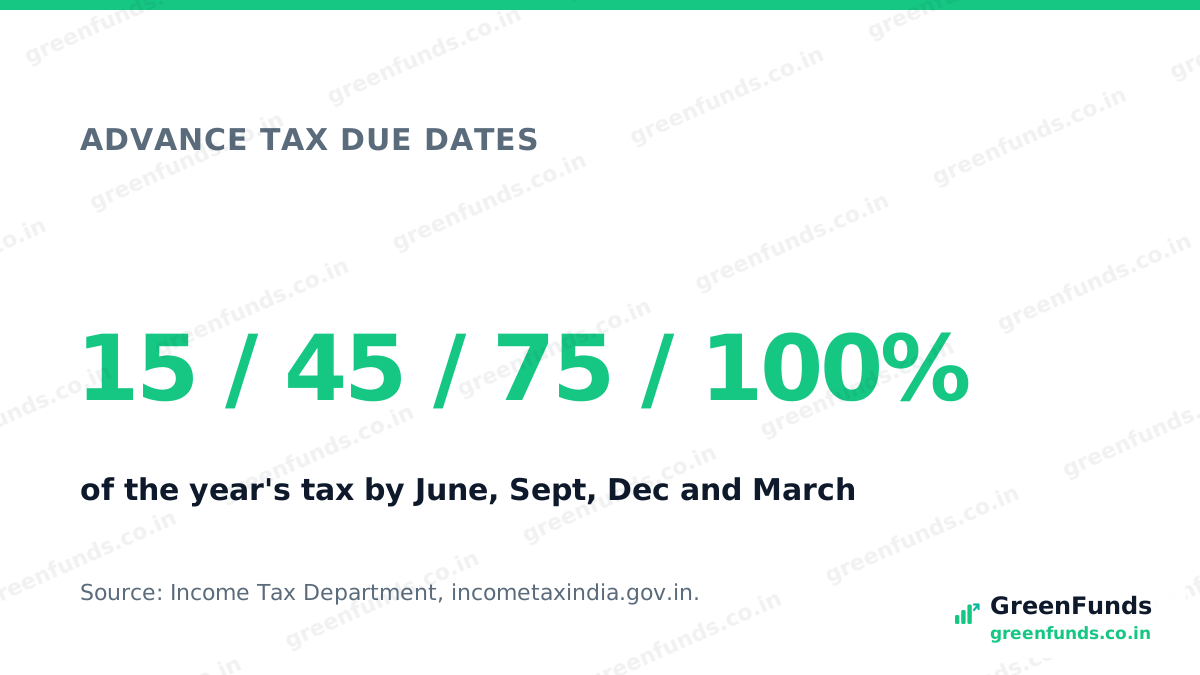
Advance tax is simply paying your income tax during the year, as you earn, instead of in one lump at the end. You pay it in four parts. If your employer or bank already cuts enough tax from your income, you may never need to think about it.
Who has to pay. Advance tax applies when your tax for the year, after the tax already cut at source (TDS), comes to 10,000 rupees or more, per the Income Tax Department. That usually means freelancers, consultants, people with a business, and salaried people with big extra income such as rent, interest or capital gains.
Who doesn’t. A resident senior citizen, aged 60 or more, with no business or professional income is exempt. And most salaried people with only a salary are covered by the tax their employer cuts each month.
The four due dates. You pay a growing share of the year’s expected tax by each date. The amounts are cumulative, so each date includes what you paid before.
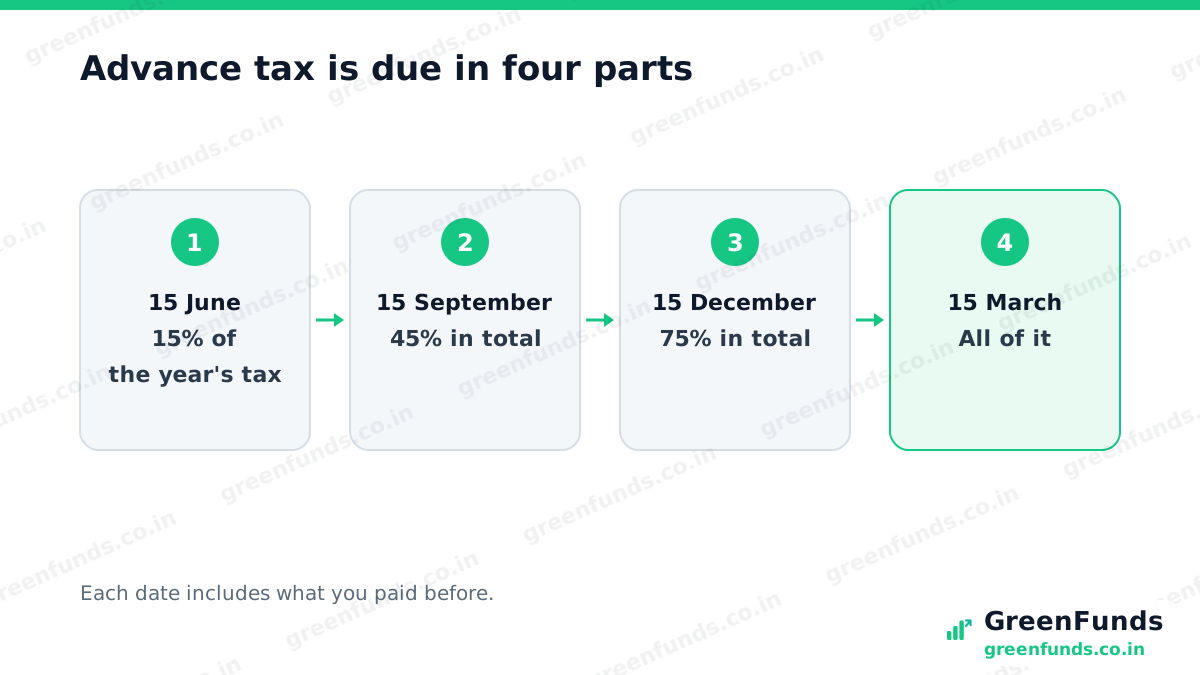
An example. Say you freelance and expect your tax for the year to be 80,000 rupees (an illustration). You’d pay at least 12,000 rupees by 15 June, bring the total to 36,000 by 15 September, to 60,000 by 15 December, and to the full 80,000 by 15 March.
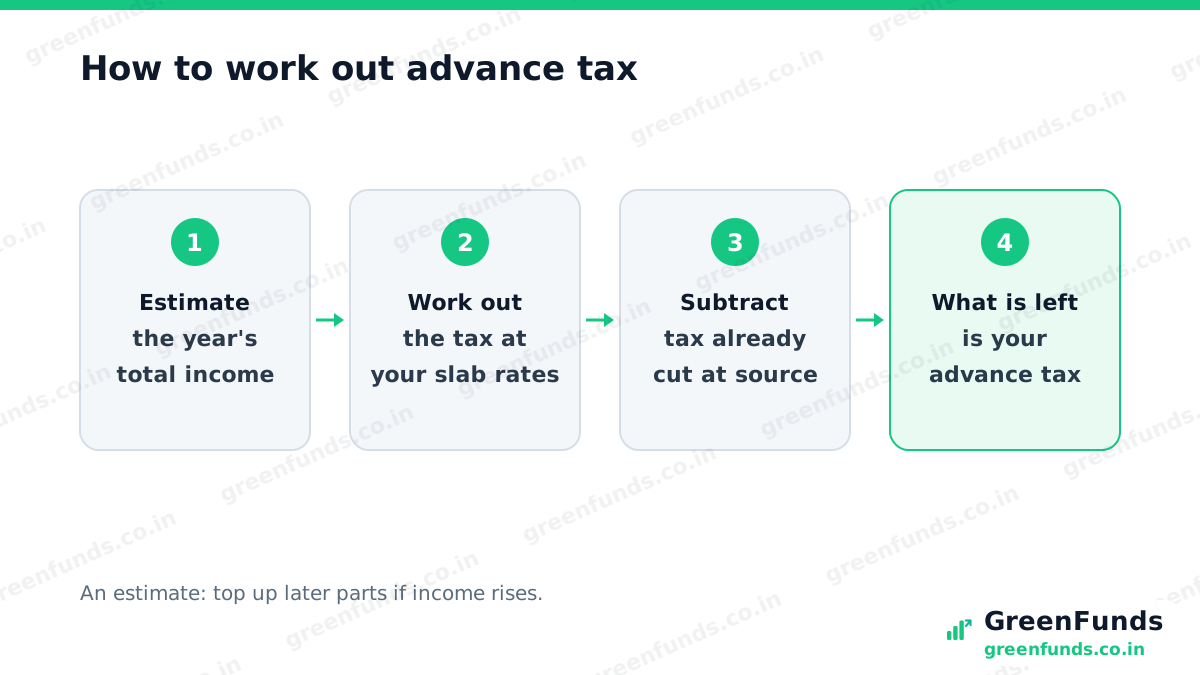
How to work out the amount. Estimate your income for the full year, work out the tax at your slab rates after any rebate, plus surcharge and cess if they apply, and subtract the TDS you expect. What’s left is your advance tax. It’s an estimate, so you can top up later instalments if your income turns out higher.
Did you know? The Income Tax Department says the four quarterly dates and amounts stayed the same when the new Income-tax Act, 2025 took over from 1 April 2026. Also, if you pay too much advance tax, you don’t lose it: the extra comes back as a refund when you file your return.
What if you pay late or too little. The department charges interest on the shortfall, both for missing an instalment and for paying less than most of the year’s tax by 31 March. It’s simple interest by the month, so a small delay costs little, but a whole year of underpayment adds up. Check the current interest rules on incometax.gov.in before you rely on any figure.
How to pay. You pay online through the e-Pay Tax service on the income tax portal, choosing advance tax as the payment type. The payment then shows up in your AIS and Form 26AS, and you claim it when you file your return.
The takeaway. If tax isn’t cut from all your income, pay it in four parts: 15% by June, 45% by September, 75% by December and the rest by March. It keeps interest off your bill and spreads the cost across the year.
More to read: how to file your income tax return, the new Income-tax Act, 2025, and how salary is taxed.
Questions people ask
What is advance tax?
Advance tax is income tax you pay during the year, in instalments, instead of paying it all when you file your return. The idea is pay as you earn. It applies when your tax for the year, after tax already cut at source, is 10,000 rupees or more.
What are the advance tax due dates?
Four dates: at least 15% of the year's tax by 15 June, 45% by 15 September, 75% by 15 December and 100% by 15 March. The amounts are cumulative. The Income Tax Department says these dates and amounts stay the same under the Income-tax Act, 2025. Check the current rules before you pay.
Do salaried people need to pay advance tax?
Usually not on salary, because the employer already cuts tax from it every month. But if you also earn interest, rent, freelance income or capital gains that has little or no tax cut from it, and the extra tax is 10,000 rupees or more, you may need to pay advance tax on that part.
Do senior citizens pay advance tax?
A resident senior citizen, aged 60 or more, who has no income from a business or profession does not have to pay advance tax, per the Income Tax Department. They can pay the tax due when they file the return.
Source: Income Tax Department, advance tax pages and FAQs on the transition to the Income-tax Act, 2025 (incometaxindia.gov.in). Rules change, check the current rules on incometax.gov.in.
Found this useful? You can buy us a coffee. It keeps GreenFunds free.Flag a possible issue
Was this helpful?
Thanks for the signal.
Comments
Share your experience or a question. Be kind, stay on topic. This is reader discussion, not financial advice.
No comments yet. Be the first to share.