Income tax refund: how to claim it, track it and fix a delay
If more tax was cut or paid than you owe, you get the extra back, but only after you file your return
An income tax refund is your own money coming back. If more tax was cut from your income, or you paid more, than you actually owe for the year, the extra is returned to you. You don’t apply for it separately: you claim it by filing your return.
Why refunds happen. The most common reason is tax cut at source, TDS, that turns out higher than your final tax. That happens when you have deductions your employer didn’t know about, when TDS is cut on FD interest though your income is low, or when you paid too much advance tax.
An example. Say 40,000 rupees of tax was cut from your salary and FD interest in the year, but your actual tax works out to 25,000 rupees (an illustration). File your return, and the 15,000 rupee difference is your refund.
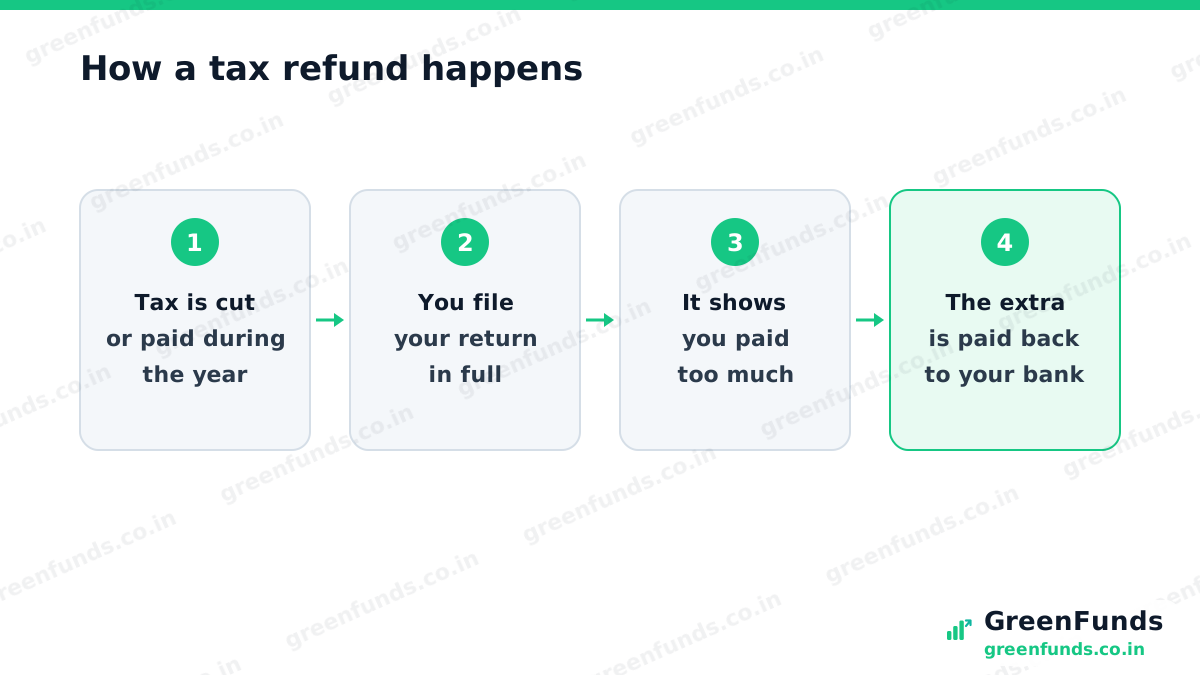
The steps to get it. File your income tax return, and match it to your AIS and Form 26AS so nothing is out of line. Then e-verify the return, because an unverified return isn’t processed. Finally, make sure your bank account is validated on the portal: only a validated account can receive a refund, per the Income Tax Department.
How to track it. Log in to the e-filing portal and check the status of your return. It shows whether the return has been processed and whether the refund has been issued.
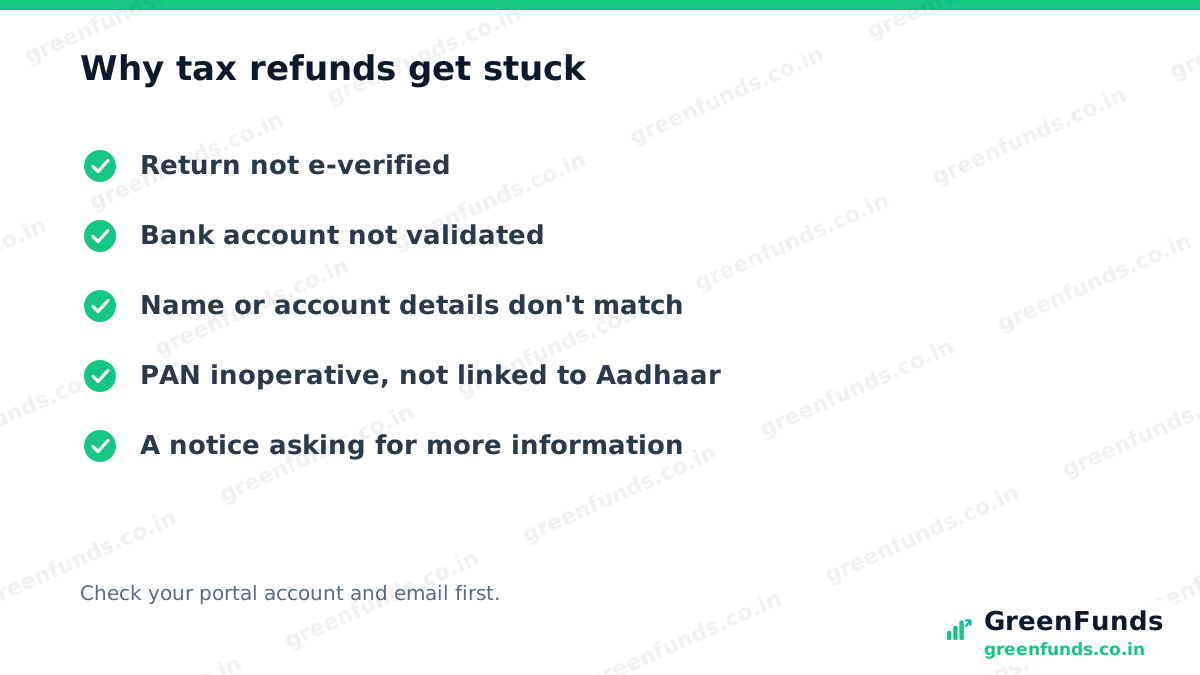
If it’s stuck. Most delays trace back to one of a few causes. The bank account isn’t validated, or its details don’t match. The PAN is inoperative, often because it isn’t linked to Aadhaar, and the department says a refund can’t be issued then. Or the department has sent a message asking for more information, so check your email and portal.
Did you know? If a refund fails, for example because a bank account was closed, you can ask for it again through the Refund Reissue service on the portal, after validating a working account. And the law usually pays you simple interest on a refund, at 0.5% a month, so a late refund comes with a little extra.
Bank validation takes time. The portal says validating a bank account can take about 10 to 12 working days to update. You can still file while it’s in progress, but the refund is credited only once validation is done. So validate early, before you file.
The takeaway. A refund is extra tax coming home. File your return on time, match it to your AIS, e-verify it, and keep a validated bank account on the portal. Check the current rules on incometax.gov.in.
More to read: how to file your income tax return, TDS on FD interest, and is a gift taxable?.
Questions people ask
How do I claim an income tax refund?
By filing your income tax return. There is no separate refund form. If the tax cut or paid during the year is more than the tax you owe, the return shows a refund, and after it is processed the department pays it into your validated bank account.
How do I check my income tax refund status?
Log in to the income tax e-filing portal and check the status of your filed return. It shows whether the return has been processed and whether the refund has been issued.
Why is my income tax refund delayed?
Common reasons: you haven't e-verified the return, your bank account isn't validated on the portal, the name or account details don't match, your PAN is inoperative because it isn't linked to Aadhaar, or the department needs more information. Check your portal account and email for a message.
Do I get interest on a late income tax refund?
Usually yes. The law pays simple interest on refunds, at 0.5% for every month or part of a month, in the cases it lists. Check the current rules for how it applies to you.
Source: Income Tax Department e-filing portal: My Bank Account FAQs, Refund Reissue user manual, ITR status user manual (incometax.gov.in). Rules change, check the current portal.
Found this useful? You can buy us a coffee. It keeps GreenFunds free.Flag a possible issue
Was this helpful?
Thanks for the signal.
Comments
Share your experience or a question. Be kind, stay on topic. This is reader discussion, not financial advice.
No comments yet. Be the first to share.