TDS on FD interest: Form 121 replaced 15G and 15H
Banks cut tax on interest above a yearly limit, and it comes back only through your return
When your fixed deposit earns interest, your bank may cut a slice as tax before paying you. That slice is TDS, tax deducted at source. It’s not extra tax, just an advance on your bill, and the forms to stop it changed in 2026.
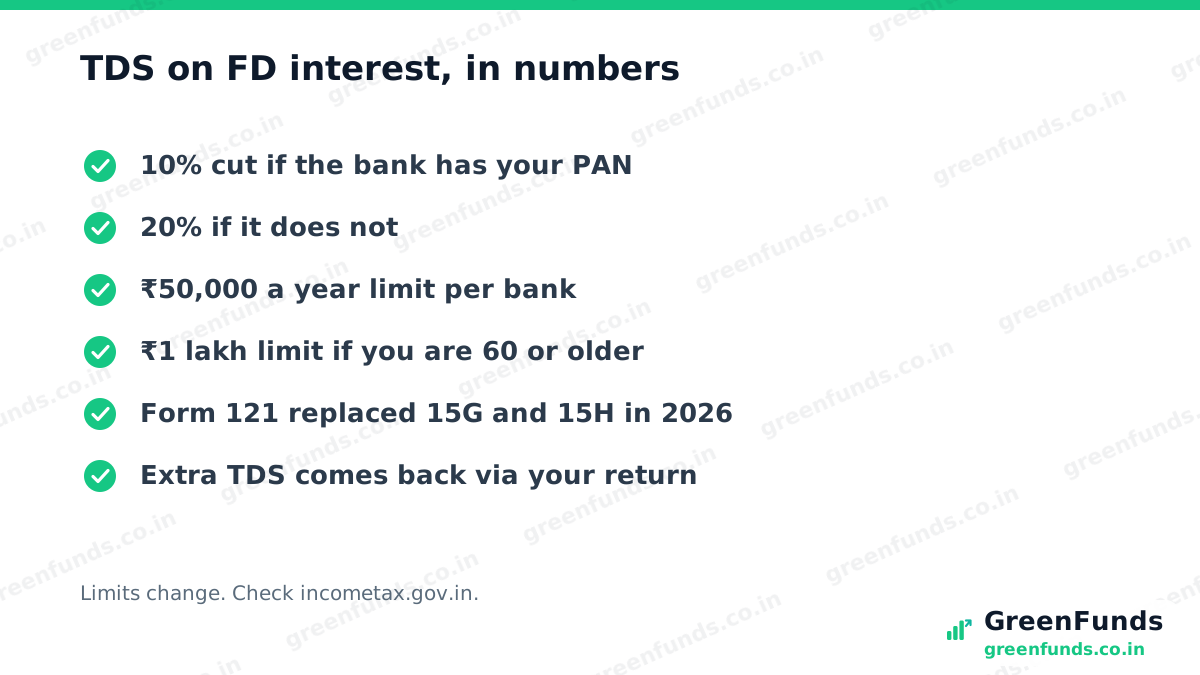
What changed. From 1 April 2026, India’s new Income-tax Act, 2025 and its rules took over. Forms 15G and 15H, the old way to stop TDS on interest, are gone. One form, Form 121, now does both jobs.
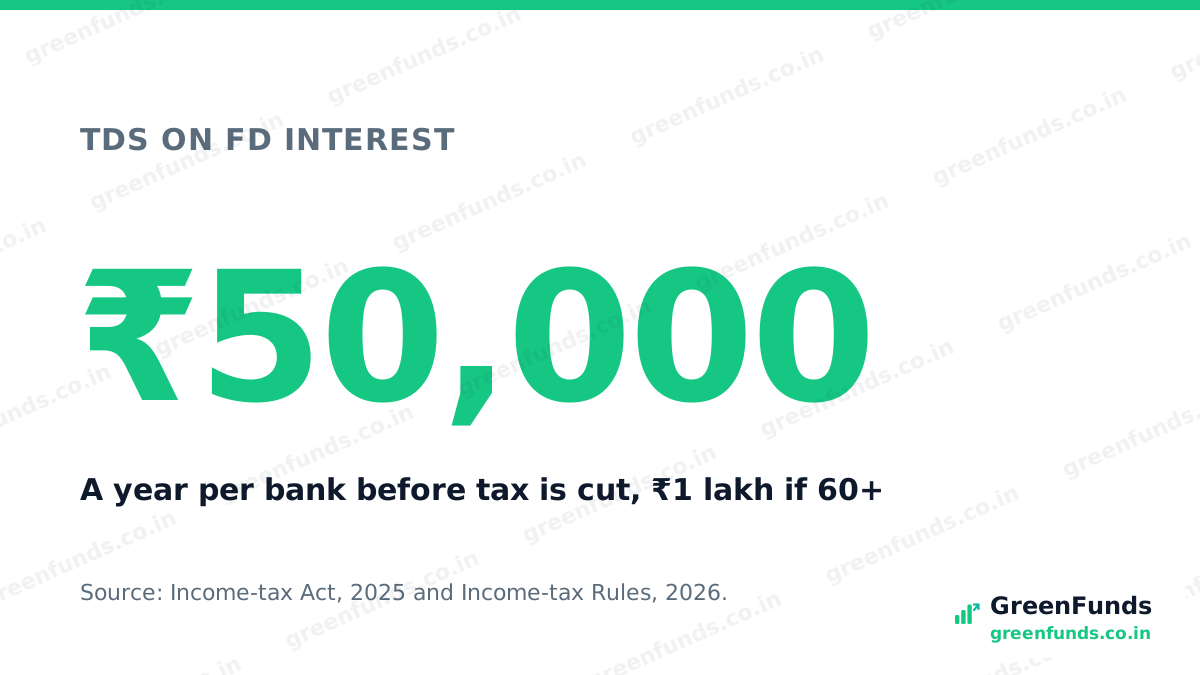
When the bank deducts. TDS kicks in once your interest from one bank crosses ₹50,000 in a year. If you are 60 or older, the limit is ₹1 lakh. The same limits apply to co-operative banks and post office deposits. The bank counts the interest from all your deposits with it.
The rate. It’s 10% if the bank has your PAN. Without a PAN, it doubles to 20%. If your tax works out lower, the extra comes back only when you file your return.
In rupees. Say you have ₹8 lakh in a fixed deposit at 7.5%. That earns ₹60,000 a year, above the ₹50,000 limit, so the bank deducts 10%, or ₹6,000. Without a PAN on record, it would deduct ₹12,000. Your actual tax could be more, less or nil. TDS is only the starting point.
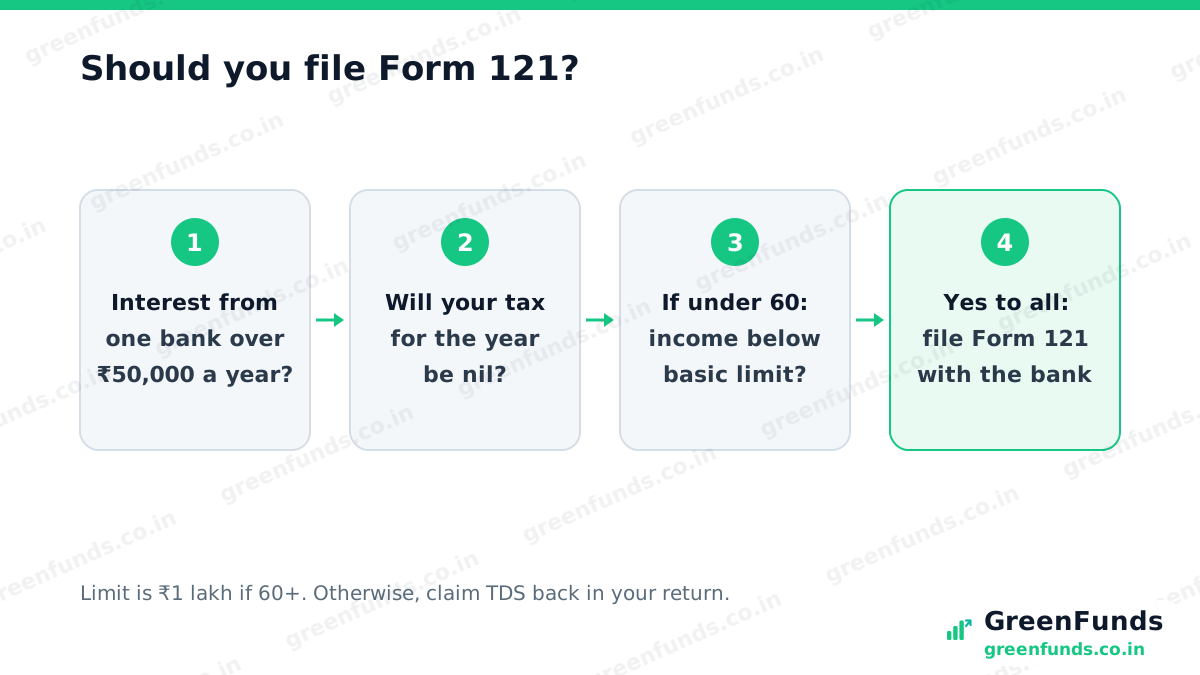
Who can file Form 121. You can file it with your bank if you are a resident and your tax for the year will be nil, after deductions and rebate. If you are under 60, your total income must also stay below the basic exemption limit. If you are 60 or older, that extra limit doesn’t apply. Without a valid PAN, the form is invalid.
A common trap. Many people under 60 owe no tax because of the rebate, yet earn more than the basic exemption limit. They can’t use Form 121. For them, the route is simple: let the bank deduct, then claim it back by filing your return.
What to do now. File Form 121 at the start of each tax year, before interest is credited, since it covers one year. Check that every deposit account has your PAN. And before you file your return, open your Annual Information Statement on incometax.gov.in. It lists every rupee of TDS deducted in your name.
More to read: Form 16, explained, the old vs new tax regime, and the Senior Citizen Savings Scheme.
Questions people ask
How much interest can I earn before the bank deducts TDS?
From banks, co-operative banks and post office deposits, TDS starts once your interest from that payer crosses ₹50,000 in a year. If you are 60 or older, the limit is ₹1 lakh. These limits have applied since 1 April 2025 and carried into the new Income-tax Act, 2025.
What is the TDS rate on FD interest?
10% if the bank has your PAN. If it does not, the bank deducts at 20%. So linking your PAN to every deposit account matters.
Are Form 15G and Form 15H still valid?
No. From 1 April 2026, both were replaced by a single form, Form 121, under the Income-tax Rules, 2026. It does the same job: it asks the bank not to deduct TDS because your tax for the year will be nil.
How do I get back TDS that was deducted when I owe no tax?
File your income tax return for that year. The return works out your actual tax, and any extra TDS comes back as a refund. Check the deducted amount in your Annual Information Statement on incometax.gov.in before you file.
Source: Income-tax Act, 2025 (section 393, TDS on interest; section 397, no-PAN rate) and Income-tax Rules, 2026 (rule 211, Form 121), in force from 1 April 2026; Income Tax Department, Form 121 FAQs; Finance Act 2026 (10% rate). Limits change, check incometax.gov.in.
Found this useful? You can buy us a coffee. It keeps GreenFunds free.Flag a possible issue
Was this helpful?
Thanks for the signal.
Comments
Share your experience or a question. Be kind, stay on topic. This is reader discussion, not financial advice.
No comments yet. Be the first to share.