India's new Income-tax Act: same tax, new rulebook
The new Act rewrites the rulebook, not your tax bill, but the words and section numbers changed
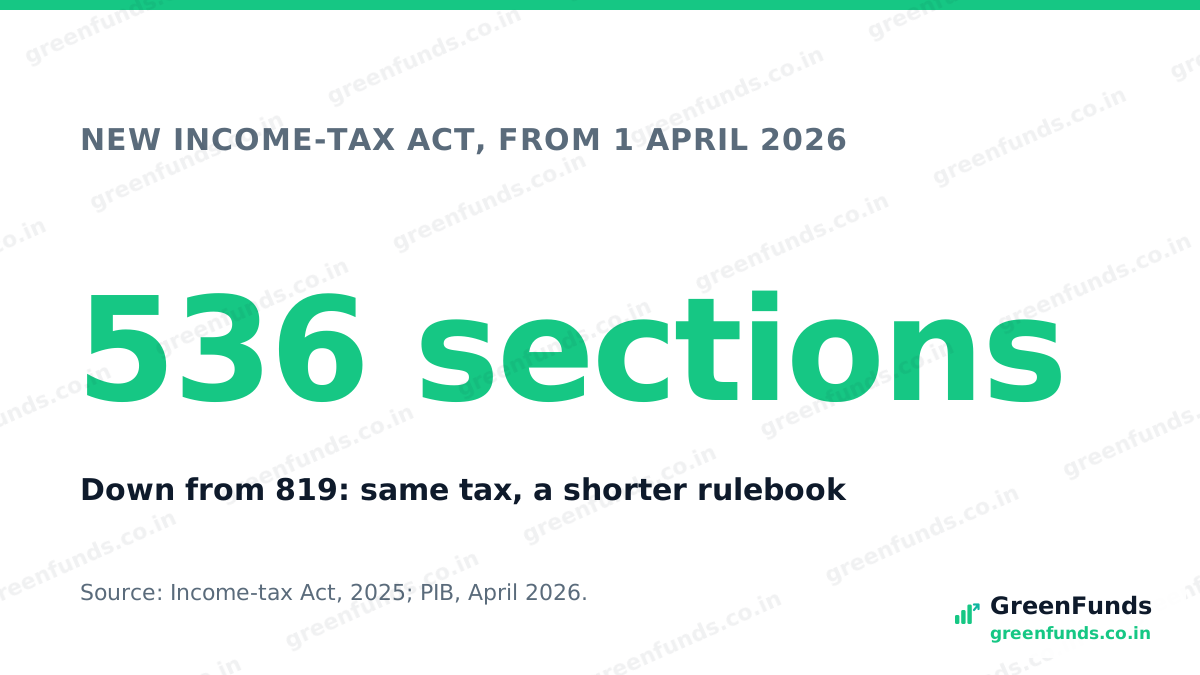
India has a new income tax law. The Income-tax Act, 2025 replaced the 1961 law from 1 April 2026. It’s the same tax in a cleaner rulebook, but a few words and numbers you know have changed.
What happened. Parliament passed the new Act in August 2025, and it took over on 1 April 2026. The government says it simplifies the law without changing the underlying tax policy. It’s much shorter: 536 sections against 819, and 23 chapters against 47.
Why it matters to you. Your tax bill doesn’t change because of it. But your employer’s tax certificate, your bank and your tax filing now speak the new law’s language. Knowing three changes saves you a lot of confusion.
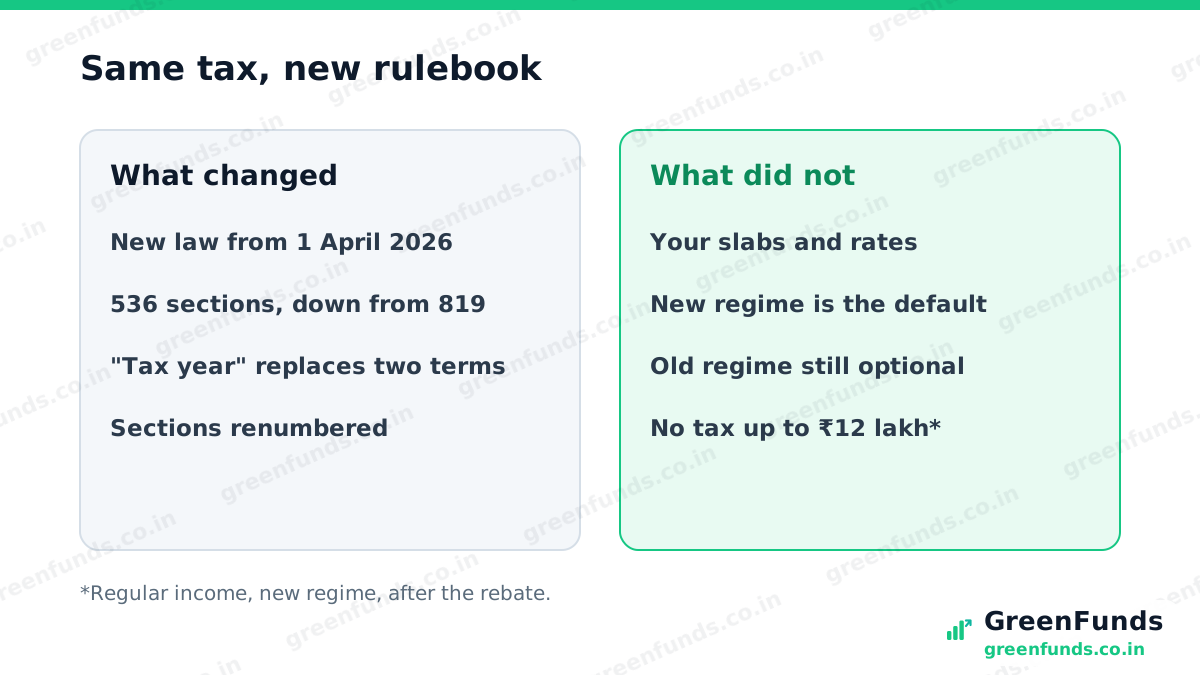
Change 1: one “tax year”. The old law used two names for one year: the year you earned, and the assessment year after it. The new Act just says tax year. Income from April 2026 to March 2027 is tax year 2026-27.
Change 2: new section numbers. Familiar sections have moved. The section 80C deduction of up to ₹1.5 lakh, for PPF, ELSS and the like, now sits in section 123. The rebate that makes regular income up to ₹12 lakh tax-free under the new regime is now section 156. The deduction or rebate itself stays the same. To look up any old section, use the Income Tax Department’s mapping tool on incometaxindia.gov.in.
Change 3: new forms. The rules were rewritten too, with 190 forms instead of 399. The best-known swap: Forms 15G and 15H, used to stop tax cut on interest, are now one form, Form 121. Read more in our guide to TDS on FD interest.
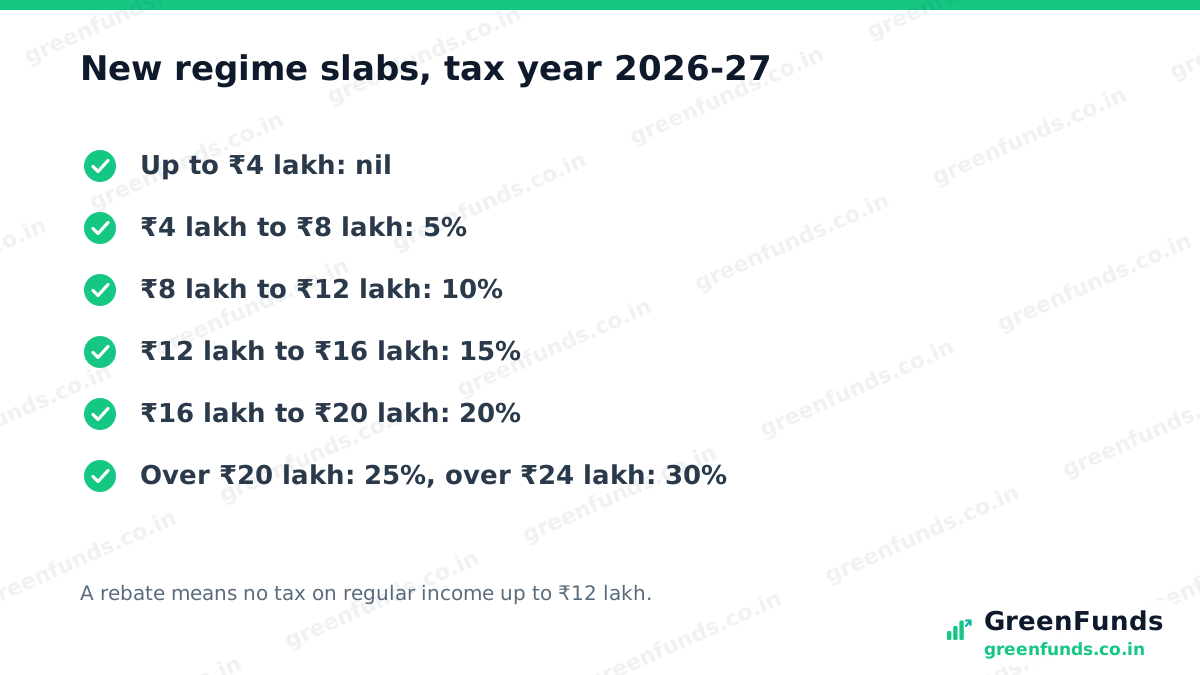
What did not change. The new regime is still the default, and you can still opt for the old one. The new-regime slabs are the same: nil up to ₹4 lakh, then 5% to 30% in steps. With the rebate, regular income up to ₹12 lakh owes no tax. For a salaried person, the ₹75,000 standard deduction stretches that to ₹12.75 lakh of salary.
Your old income, your old law. Money you earned up to 31 March 2026 is still handled under the 1961 Act. So the return you filed in 2026 used the old terms. The new law applies from your 2027 return, for income earned from April 2026.
Return due dates. For tax year 2026-27, most salaried people and others must file by 31 July 2027. Business or professional income that needs no audit gets until 31 August.
What to do now. Nothing urgent. Keep claiming the same deductions, under their new numbers. When you see an older guide, or our own pages, mention 80C, it means the same deduction. And when a tax document says “tax year”, it’s simply the year you earned the money.
More to read: old vs new tax regime, how to file your return, and Form 16, explained.
Questions people ask
When did the new Income-tax Act come into force?
On 1 April 2026. Parliament passed the Income-tax Act, 2025 on 12 August 2025, and it received the President's assent on 21 August 2025. It repealed the Income-tax Act, 1961.
Did my income tax slabs change under the new Act?
No. The government said the Act simplifies the law without changing the underlying tax policy. Under the new regime, income up to 4 lakh rupees is not taxed, and rates rise in steps to 30% above 24 lakh. A rebate means no tax for regular income up to 12 lakh rupees.
What happened to section 80C?
The deduction still exists, under a new number. The familiar deduction of up to 1.5 lakh rupees for things like PPF, ELSS and life insurance now sits in section 123 of the new Act, read with its Schedule XV. It still applies only if you choose the old regime.
Which law applies to income I earned before April 2026?
The old 1961 Act. Income earned up to 31 March 2026, and its return, follow the old law and its terms. The new Act applies to income earned from 1 April 2026, which is tax year 2026-27.
Source: Income-tax Act, 2025 (No. 30 of 2025), Gazette of India, 21 August 2025; Finance Act, 2026; Income-tax Rules, 2026; PIB, 1 April 2026; Income Tax Department FAQs on the new Act. Rules change, check incometax.gov.in.
Found this useful? You can buy us a coffee. It keeps GreenFunds free.Flag a possible issue
Was this helpful?
Thanks for the signal.
Comments
Share your experience or a question. Be kind, stay on topic. This is reader discussion, not financial advice.
No comments yet. Be the first to share.