Senior Citizen Savings Scheme: safe, steady income after 60
A government scheme paying quarterly income at a safe, high rate
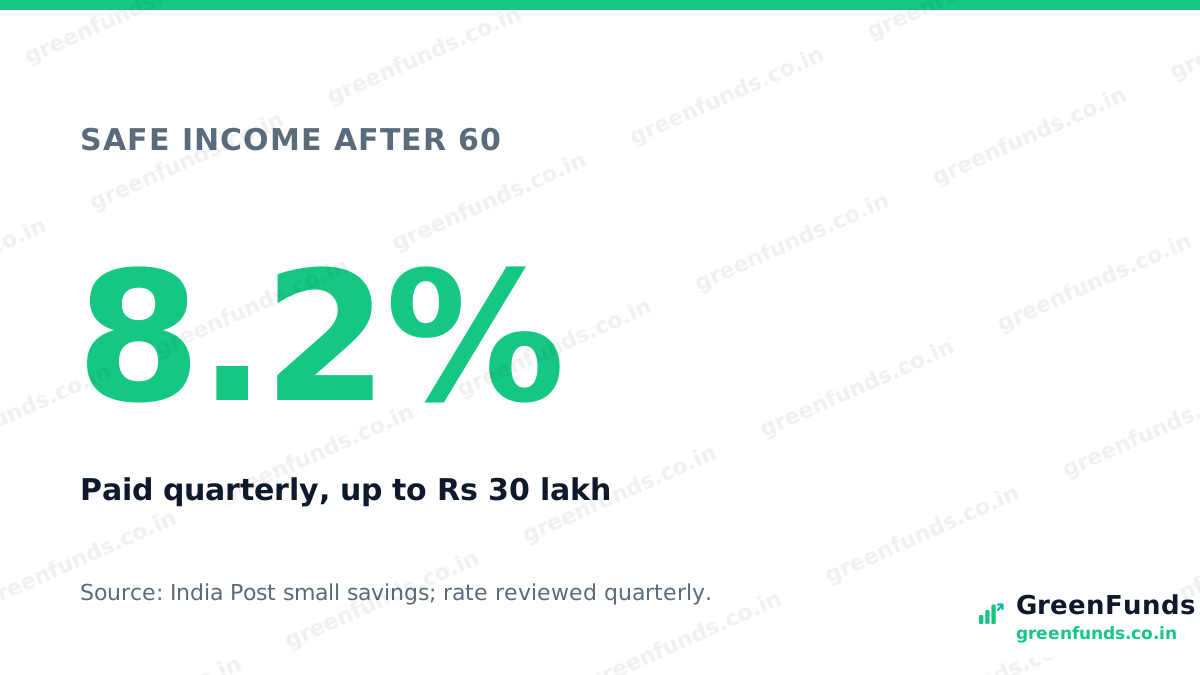
After retirement, the question changes from growing money to drawing a safe, steady income from it. The Senior Citizen Savings Scheme is a government option built for exactly that: park a lump sum, and receive interest every quarter at a high, safe rate, with the government standing behind it.
How it works. If you are 60 or over, you can deposit a lump sum into the scheme, and it pays you interest every three months. The rate is set by the government, the capital is safe, and the term is five years, which you can extend. It turns a pile of retirement savings into a predictable income stream without market risk.
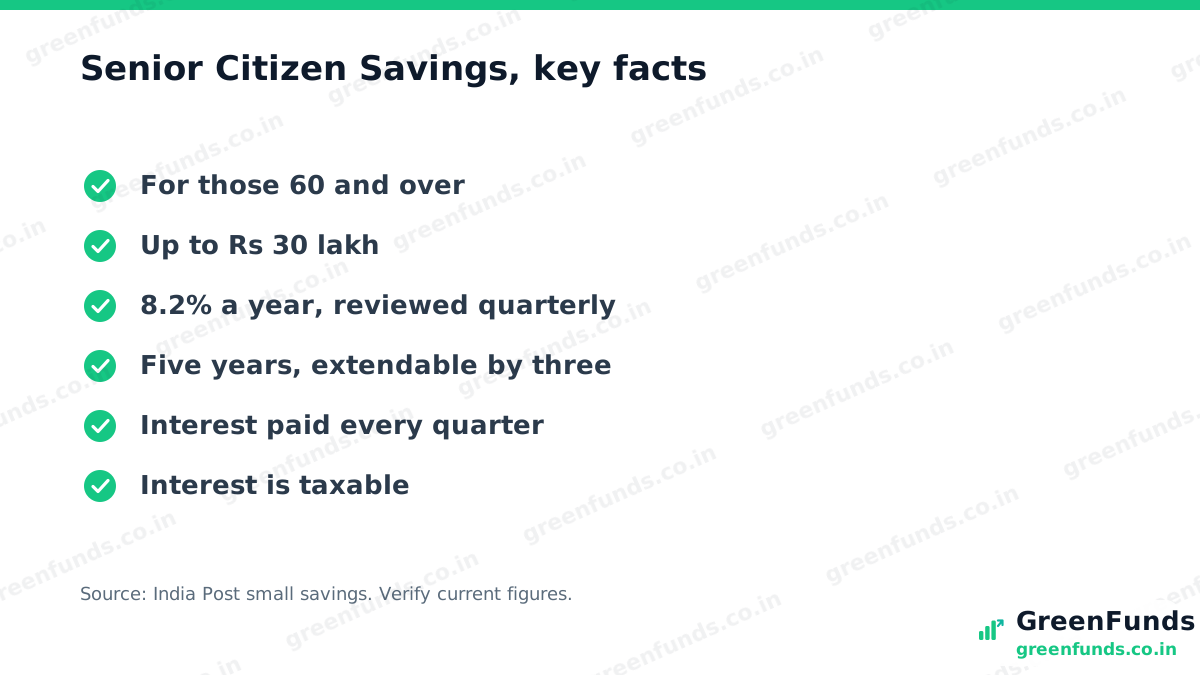
What it pays. The rate is 8.2% a year, paid quarterly, which is among the highest of the safe government schemes. You can invest up to 30 lakh rupees per individual. For a retiree who wants dependable income without watching markets, that combination of a high rate and government backing is the main appeal.
Did you know? Unlike the public provident fund or Sukanya Samriddhi, where the interest is tax-free, the interest from the Senior Citizen Savings Scheme is taxable, added to your income at your slab. It is still attractive for safe income, but the tax treatment is the key difference to weigh against tax-free options.
How it compares with a bank deposit. A retiree could also use a bank fixed deposit for income. The difference is in the backing and the rate.
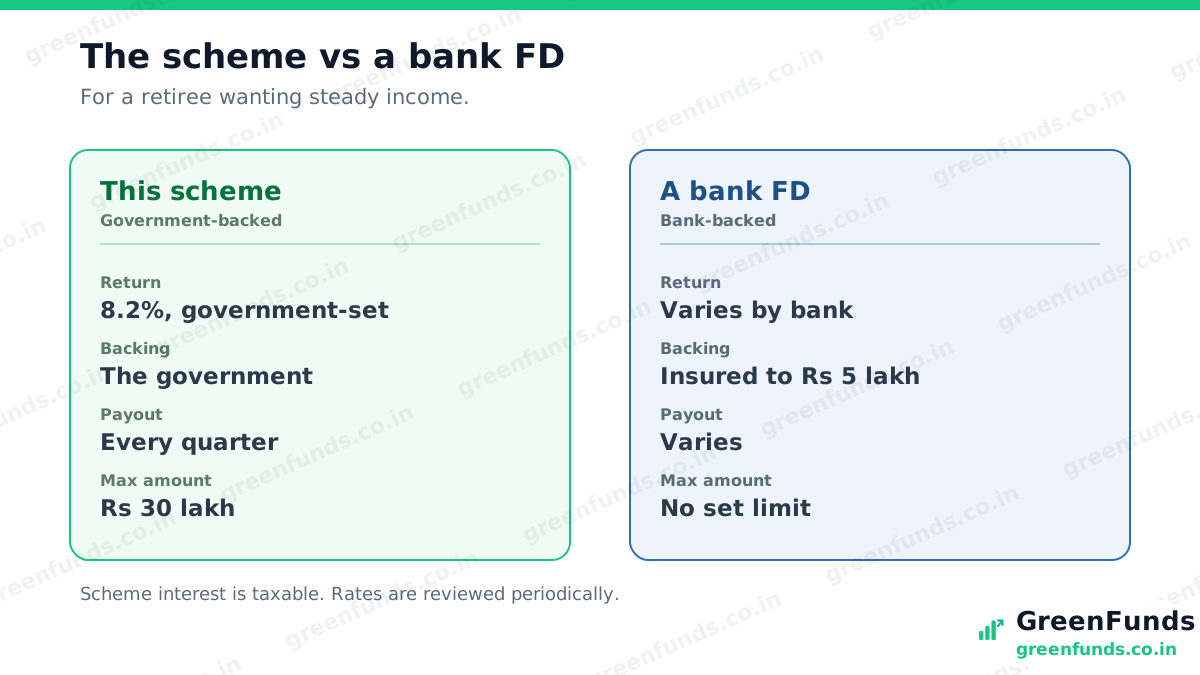
The trade-offs. The money is largely locked for the term, with early withdrawal allowed at a small penalty, and the 30 lakh rupee cap means large savings need other homes too. And because the interest is taxable, a retiree in a higher slab keeps less of it than a tax-free scheme would give.
The takeaway. The Senior Citizen Savings Scheme is one of the safest, highest-paying ways for people over 60 to draw steady income, backed by the government. Just remember the interest is taxable, and the 30 lakh rupee cap, when fitting it into a retirement plan.
More to read: the retirement planning guide, PPF versus EPF, and FD versus debt fund for steady money.
Questions people ask
What is the Senior Citizen Savings Scheme?
It is a government savings scheme for people aged 60 and over (with some earlier-exit cases). You put in a lump sum, and it pays you interest every quarter at a safe, government-set rate. It is designed to give retirees a steady, low-risk income from their savings, backed by the government.
What is the SCSS interest rate and limit?
The rate is 8.2% a year, paid quarterly, which is among the highest of the safe government schemes. You can invest up to 30 lakh rupees per individual. The term is 5 years, extendable by a further 3 years. The rate is reviewed periodically, so confirm the current figure before investing.
Is the interest from SCSS taxable?
Yes. Unlike the public provident fund or Sukanya Samriddhi, the interest from the Senior Citizen Savings Scheme is taxable, added to your income and taxed at your slab. The deposit may qualify for a deduction on the old regime, but the quarterly interest you receive is taxed. Factor that in when comparing it with tax-free options.
Who can open a Senior Citizen Savings Scheme account?
Mainly those aged 60 and over. Some people can join earlier, such as certain retirees who have taken voluntary retirement, subject to conditions. A spouse can be a joint holder. Check the exact eligibility and documents with your bank or post office, as the rules have specific cases.
Source: India Post small savings scheme. Rate 8.2% a year, interest paid quarterly (reviewed by the Ministry of Finance). Maximum investment Rs 30 lakh per individual; tenure 5 years, extendable. Verify current figures on indiapost.gov.in.
Flag a possible issue
Was this helpful?
Thanks for the signal.
Comments
Share your experience or a question. Be kind, stay on topic. This is reader discussion, not financial advice.
No comments yet. Be the first to share.