Rent vs buy a home: a fair way to compare
Compare the full cash cost of each, not the EMI against the rent
Figures checked 2026-11-01
Renting and buying are both sensible ways to have a home. The common mistake is comparing this month’s rent with the EMI on a loan and calling it a decision. A fair comparison looks at every rupee each option costs, upfront and every month, and at what each option lets you do.
What buying really costs upfront. A bank won’t lend the full price. RBI caps a home loan at 90% of the home’s value for loans up to 30 lakh rupees, 80% above that up to 75 lakh, and 75% above 75 lakh. The rest is your down payment. On top of that come stamp duty and registration, which differ by state and which RBI doesn’t let banks fold into the loan for most homes. So the cash you need on day one is far more than a few months’ rent.
The illustration. Here is one set of made-up numbers to show the method. Use your own city’s figures.
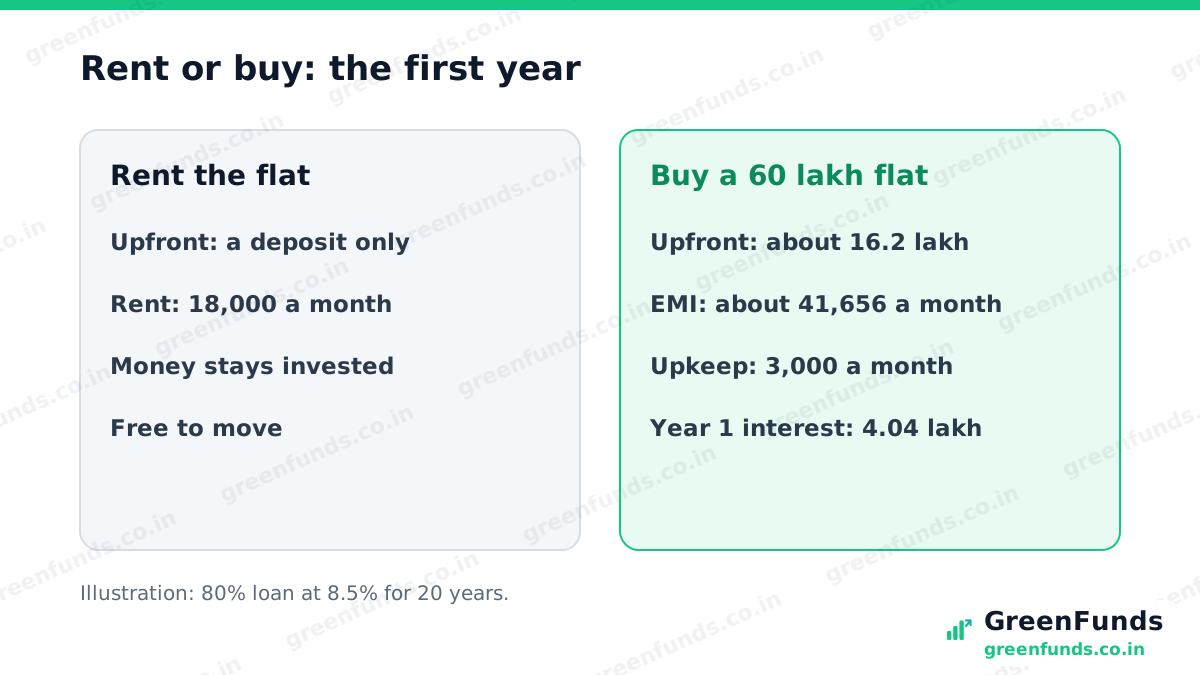
Say a flat costs 60 lakh rupees. The loan is above 30 lakh, so the bank lends up to 80%: 48 lakh rupees. Your down payment is 12 lakh. Assume stamp duty and registration of 7% (it varies by state), which is 4.2 lakh. That’s 16.2 lakh rupees before you move in.
At an assumed 8.5% for 20 years, the EMI on 48 lakh rupees is about 41,656 rupees. Add 3,000 rupees a month for maintenance, and owning costs about 44,656 rupees a month. The same flat rents for 18,000 rupees a month in this example.
Why the EMI isn’t all cost. In the first year, about 4.04 lakh rupees of your EMIs go to interest and only about 95,500 rupees reduce the loan. That interest is a pure cost, like rent. The principal part isn’t: it becomes ownership. Over the full 20 years, the interest adds up to about 52 lakh rupees, more than the loan itself. Our lesson on how an EMI works shows why early EMIs are mostly interest.
Did you know? In this illustration, the yearly rent is about 3.6% of the flat’s price. Renters often compare that figure with their loan’s interest rate and with what their down payment could earn elsewhere. It’s a quick way to see how expensive buying is relative to renting in your area.
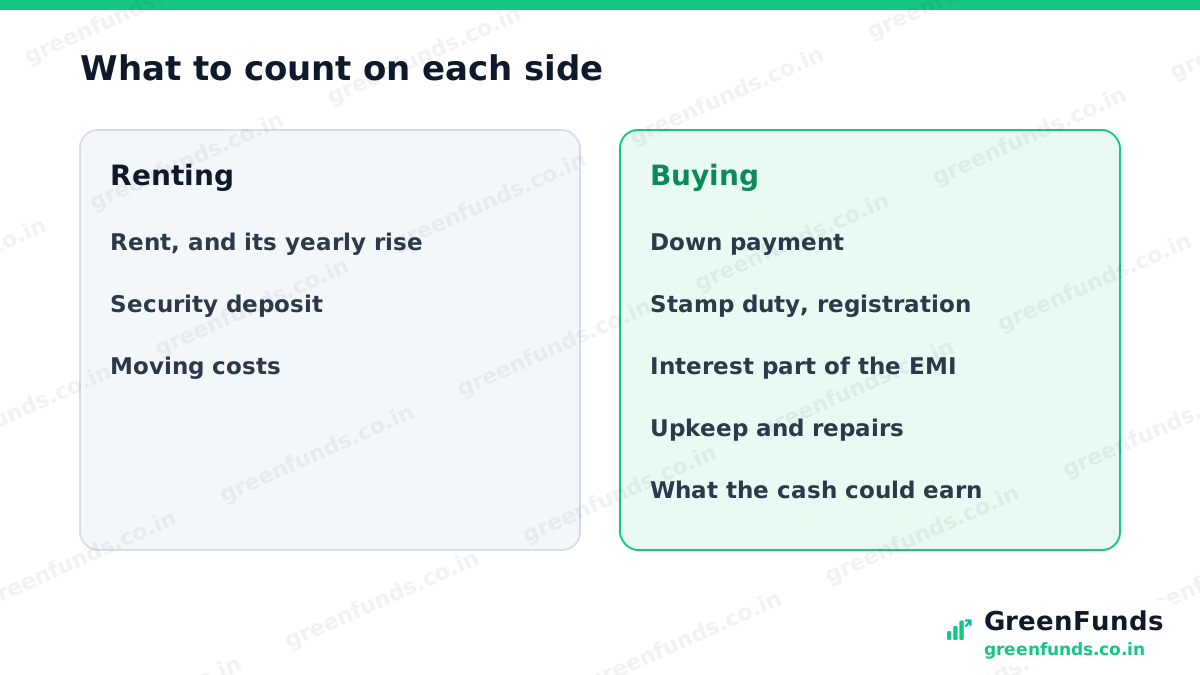
What a fair comparison includes.
What numbers can’t capture. Buying gives you stability and a home no landlord can ask you to leave. Renting lets you move for a job, upsize later, and keep your savings invested and reachable. A home is also hard to sell quickly, so it can’t double as your emergency fund. How long you’ll stay matters most: the upfront costs only spread out if you stay put for years.
The takeaway. Don’t set rent against EMI. Add up the upfront cash, the interest part of the EMI, maintenance and what your down payment could have earned, then weigh that against rent and flexibility. If you plan to buy, saving the down payment is a natural sinking fund goal. Whichever you choose, a will makes sure a home you own reaches the right people.
More to read: home loan basics, should you prepay a loan, and managing an irregular income.
Questions people ask
Is it better to rent or buy a home in India?
Neither is better for everyone. Buying gives you stability and an asset, but ties up a large down payment and adds costs like stamp duty, interest and maintenance. Renting keeps your money free and lets you move, but rent rises over time. Compare the full cash cost of each for your city, your time horizon and how settled you are.
How much down payment do I need for a home loan?
RBI caps how much of a home's value a bank can lend. For loans up to 30 lakh rupees, the cap is 90%. For loans above 30 lakh and up to 75 lakh rupees, it's 80%, and above 75 lakh rupees, 75%. You pay the rest as the down payment, and stamp duty and registration can't be counted in the home's value for this.
What costs do people forget when buying a home?
Stamp duty and registration, which vary by state and are paid upfront. The interest on the loan, which is most of the EMI in the early years. Maintenance and society charges, repairs, and property tax. And the return your down payment could have earned if you'd kept it invested.
Why is comparing rent with EMI misleading?
Because the EMI is only one part of the cost of owning. Part of it builds your ownership, while the interest part is a pure cost like rent. Meanwhile, the down payment and stamp duty are large upfront costs that renting doesn't have. A fair comparison puts all of these side by side.
Sources
- RBI, Master Circular on Housing Finance (RBI/2025-26/16, 1 April 2025) Loan-to-value caps for individual housing loans: 90% up to 30 lakh rupees, 80% above 30 lakh and up to 75 lakh, 75% above 75 lakh. Banks may not include stamp duty, registration and documentation charges in the property cost, except where the cost does not exceed 10 lakh rupees.