Debit card vs credit card: how each works, and which is safer
One spends your money, the other spends the bank's
Figures checked 2026-10-31
A debit card spends money that is already yours, sitting in your bank account. A credit card spends the bank’s money, and you pay it back later. They look the same and swipe the same, but that one difference changes almost everything else.
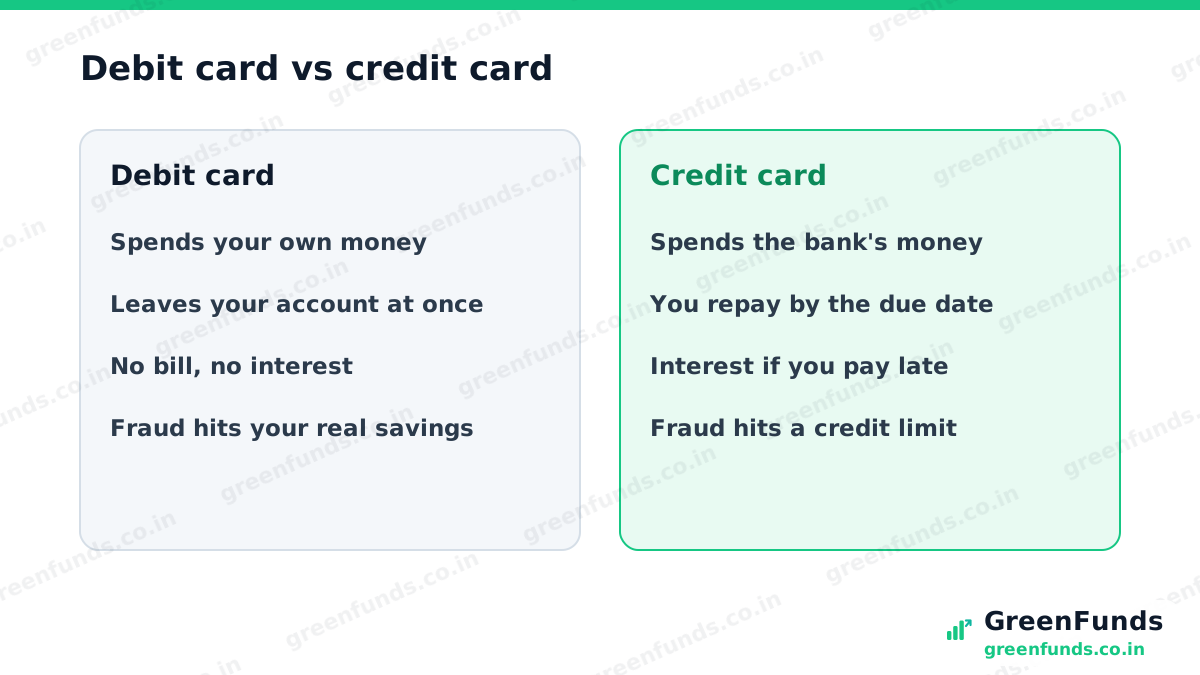
How a debit card works. You pay 2,000 rupees, and 2,000 rupees leaves your account right away. There is no bill and no interest. You cannot spend what you do not have, which is why a debit card is a good brake if you tend to overspend.
How a credit card works. You pay 2,000 rupees, and the bank pays the shop. At the end of the billing cycle you get one bill for everything. Pay the full amount by the due date and it costs nothing extra. Pay less, and interest starts on what is left, at rates far higher than most loans. Our guide to your first credit card bill walks through the cycle.
What fraud costs you on each. This is where people get surprised. RBI’s rules on unauthorised transactions cover both cards the same way: report a fraud within three working days of the bank’s alert and, if it was not your fault, you pay nothing. That is called zero liability. Report within four to seven working days and your loss is capped at between 5,000 and 25,000 rupees, depending on the account or card.
The difference is where the money sits while the bank checks. With a debit card, the stolen amount has already left your savings account. RBI says the bank must credit it back within 10 working days of your report, but until then your rent money may be gone. With a credit card, the fraud sits on the card’s limit, and your savings stay untouched while you dispute it.
Did you know? Under RBI rules, the bank, not you, has to prove you were at fault in an unauthorised electronic transaction. Your job is to report quickly. Check the current rules before you rely on them; RBI updates its directions.
Which card to reach for. There is no single winner. It depends on what you are doing.
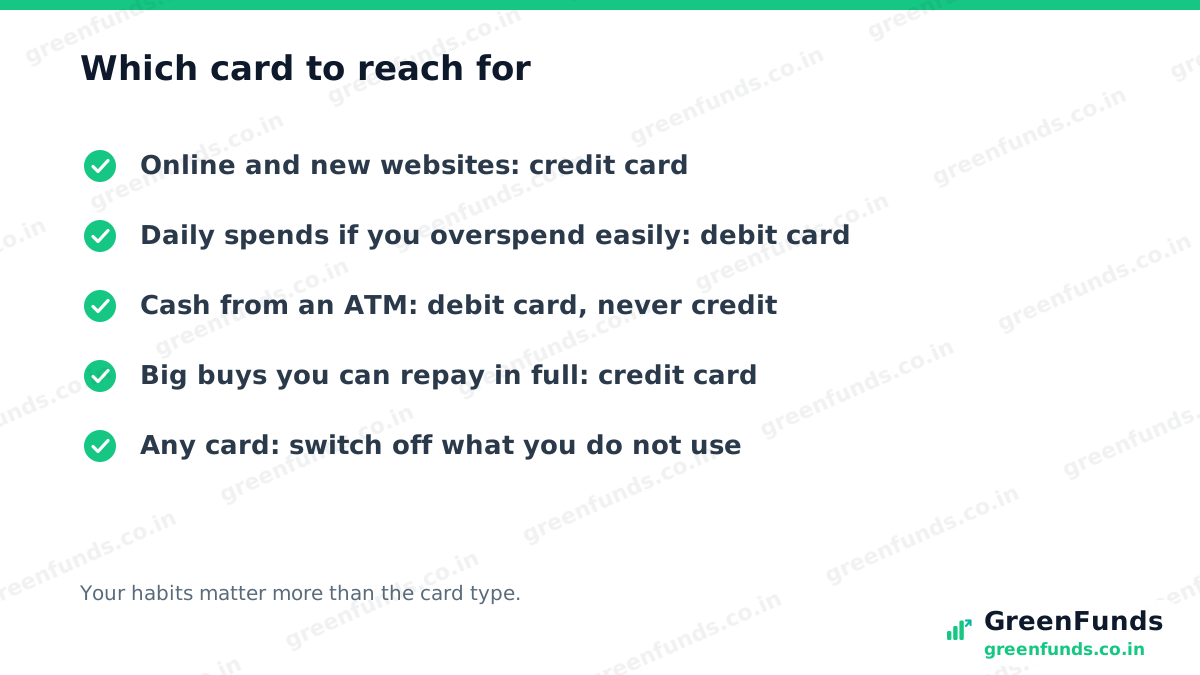
Never take cash from an ATM on a credit card. That is a cash advance: most cards charge a fee and start interest from day one, with no free period. And whichever card you carry, use your banking app to switch off online, international or contactless use when you do not need it.
The one rule that matters most. A credit card is only cheaper and safer if you pay the full bill every month. Paying just the minimum due turns it into one of the most expensive loans around. If that sounds like you, a debit card is the safer everyday choice.
The takeaway. A debit card spends your money now, and a credit card spends borrowed money you repay later. Use credit online and for planned buys you can clear in full, debit for cash and everyday control, and report any fraud fast, whichever card it is.
More to read: the credit cards pillar, the minimum due trap, and activating your first credit card.
Questions people ask
What is the main difference between a debit card and a credit card?
A debit card takes money straight from your bank account the moment you pay. A credit card pays with the bank's money, and you get a bill later. If you pay the full bill by the due date, a credit card costs no interest. If you do not, interest piles up fast.
Is a credit card safer than a debit card for online shopping?
Often, yes. If someone misuses a debit card, the money leaves your own account and you wait for the bank to return it. With a credit card, the fraud sits on the card's limit while you dispute it, so your savings stay untouched. RBI's liability rules protect both if you report quickly.
Should I withdraw cash from an ATM with a credit card?
Avoid it. A cash withdrawal on a credit card is a cash advance: most cards charge a fee and start interest from the day you withdraw, with no interest-free period. Use your debit card for ATM cash.
Does using a debit card build my credit score?
No. A debit card spends your own money, so there is no loan to report. A credit card used well, with the full bill paid on time, does build a credit history over time.
Sources
- RBI, Customer Protection: Limiting Liability of Customers in Unauthorised Electronic Banking Transactions, 6 July 2017 Applies to debit and credit cards alike. Check the current RBI rules.