"Your card is ready, just confirm your address": what that call is
A credit card call is a sales offer you can say no to
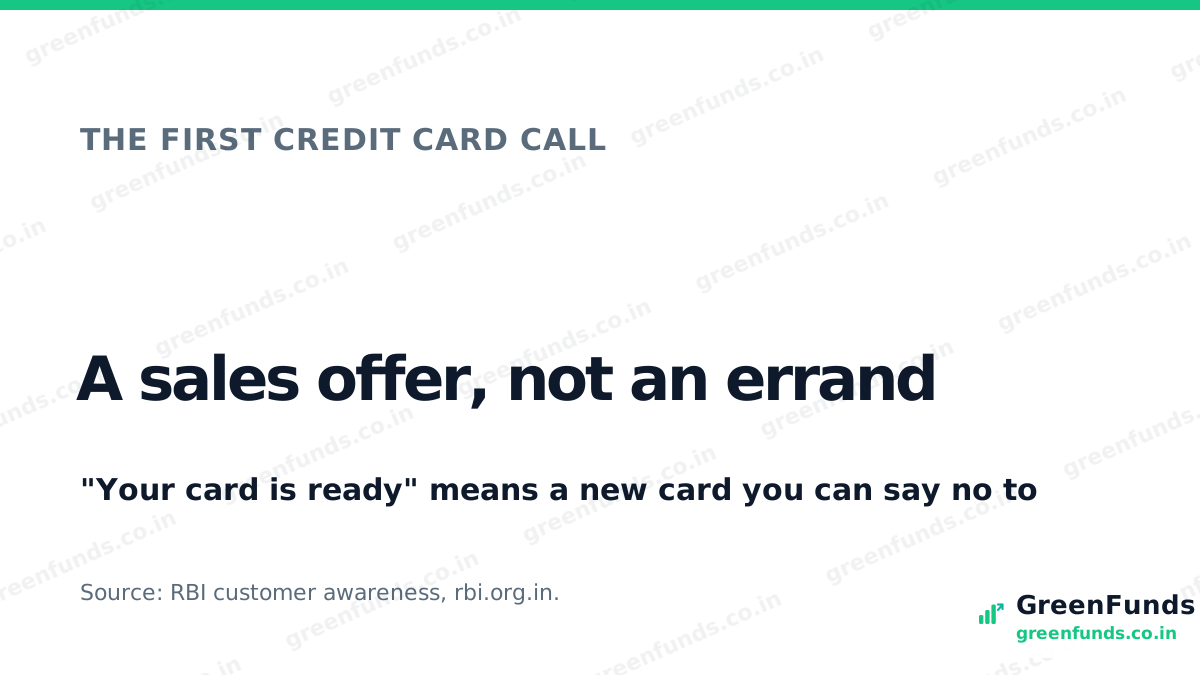
A bank calls and says your credit card is ready, you just need to confirm your address. It sounds like paperwork for something already in motion. It is not. It is a sales offer for a new credit card, and you can say no.
Why the call is usually real. When your salary account opens, the bank can see a steady salary coming in, so it pre-approves you for a card and calls to sell it. So “your card is ready” is often technically true. The card can be issued. What the wording hides is that nothing is pending until you agree.
The trick is in the wording, not a lie. “Just confirm your address” reframes a decision as an errand. Confirming the address is the moment you consent to a new credit product, with its fees, its interest and its bill. A sales call is dressed up as one last admin step, so you say yes without realising you are choosing.
Why first salary earners get these calls. You have a steady salary the bank can pre-approve against, no card yet, and a lot of new paperwork from just opening the account. Many people do not yet know a card is optional and separate from the account. That mix is exactly what makes the pitch land, which is why the calls start soon after your first salary.
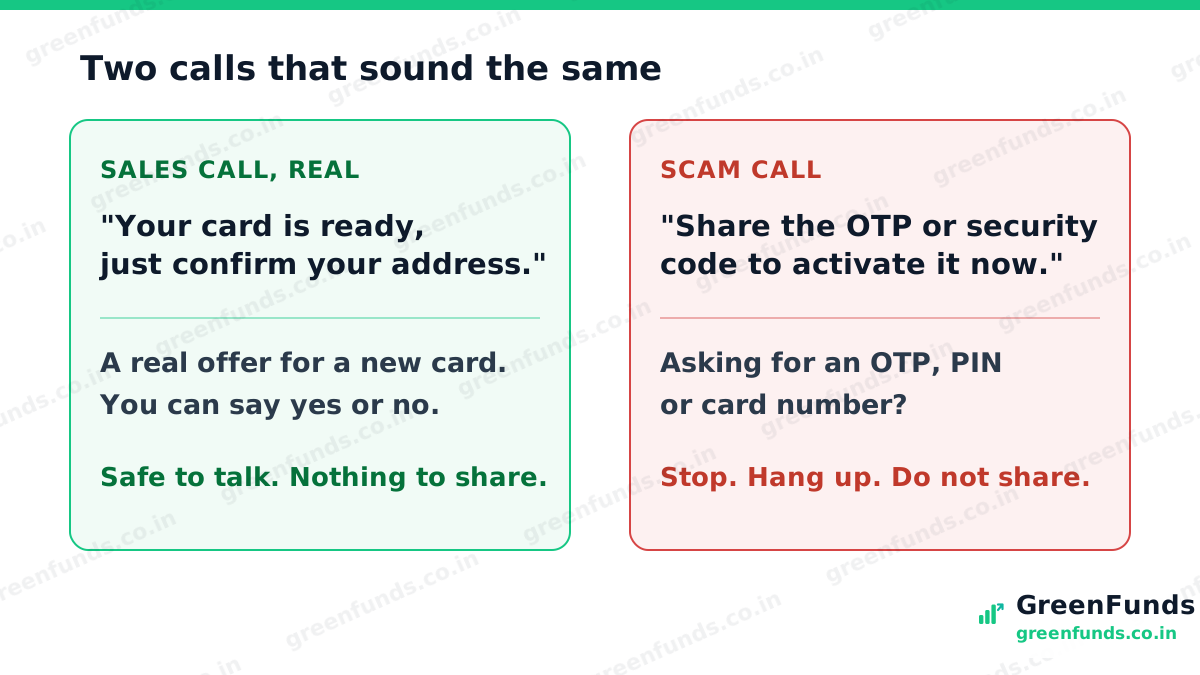
Where it tips into an actual scam. There is a fraud version of this exact call, and the reader needs to tell them apart. A genuine bank sales call never needs your OTP, full card number, the security code, or your PIN, and never sends a link to “activate” the card. The moment any of those is asked for, it is fraud, not sales. See the rule that also stops most fraud: your UPI PIN never receives money, and the fake-link trick that empties accounts.
What to do on the call. Slow it down. You can:
- Ask straight out: “Are you offering me a new credit card?” This forces the real context out.
- Say “Send me the full terms and fees in writing first.” A genuine offer survives that. A pushy one folds.
- Confirm nothing sensitive, share no OTP, card number or security code, and remember you can simply decline. The account works fine without a card.
Did you know? Credit cards in India are growing fastest among the young. Around 45% of new cards go to people under 30, per RBI and CRIF High Mark data cited in our credit card trap explainer. A steady first salary is what makes that pre-approval possible, which is why the offer calls arrive so soon.
The bottom line. The call being real does not mean the card is a must. It is a product being sold to you, on the bank’s timing, with wording built to feel like a formality. Treat it as a decision, ask for the terms, and know that no is a complete answer.
Next, once you decide to get one: free, annual-fee or secured, which first card fits. Already have a card and a bill? See the minimum due trap, how to get out of credit card debt, and how credit scores work.
Questions people ask
A bank called saying my credit card is ready. Is it genuine?
Often the call itself is genuine. When your salary account opens, the bank can pre-approve you for a card and call to sell it. The catch is the wording: 'just confirm your address' makes a sales offer sound like a pending step. You are agreeing to a new credit product, and you can say no.
Do I have to take the credit card the bank is offering?
No. A credit card is optional. Your salary or savings account works fully without one. 'Your card is ready' does not mean you already asked for it, so you are free to decline.
How do I know if the credit card call is a scam?
A real sales call never needs your OTP, full card number, security code or PIN, and never sends a link to 'activate' the card. The moment any of those is asked, it is fraud, not sales. Hang up and call the number on the bank's website.
What should I ask on a credit card offer call?
Ask directly: 'Are you offering me a new credit card?' That forces the real context out. Then ask for the full terms and fees in writing or on email before you agree to anything. A genuine offer survives that. A pushy one does not.
Why do banks push credit cards to people with their first salary?
New salary earners are easy to pre-approve off a steady salary, have no card yet, and are often unsure a card is optional. That makes them a prime sales target, which is why the calls start soon after the first salary lands.
Source: RBI customer awareness (sachet.rbi.org.in and rbi.org.in); RBI and CRIF High Mark data on card growth. Confirm current guidance there.
Flag a possible issue
Was this helpful?
Thanks for the signal.
Comments
Share your experience or a question. Be kind, stay on topic. This is reader discussion, not financial advice.
No comments yet. Be the first to share.